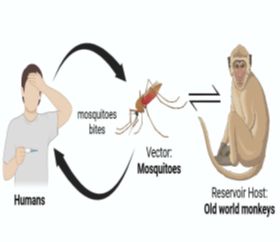
Mosquitoes may be best known for their bites and buzzing, but they also play a deadly role in transmitting Plasmodium parasites that cause malaria (1,3). The primary Plasmodium species known to cause malaria in humans are Plasmodium falciparum, P. vivax, P. ovale, and P. malariae. In addition to these species, Plasmodium knowlesi is a significant cause of monkey malaria (simian malaria) in Southeast Asia, particularly in Malaysia. The reservoir hosts of P. knowlesi are Old World monkeys, and human infection occurs through bites from infected mosquitoes.


The current article describes data obtained during an investigation in Sarawak, Malaysia, from June 11 to August 22, 2019, of malaria cases among 115 adults and children who presented to three hospitals with suspected malaria symptoms, such as fever, headaches and chills, within 48 hours of enrollment into the study (4). Data collected through questionnaires, microscopy observations, and PCR assays on patients’ blood samples were used to diagnose malaria cases and identify potential risk factors of P. knowlesi transmission in the area. The findings indicated a high prevalence (45.2%) of P. knowlesi malaria based on PCR assays among the 115 patients. Most enrolled patients (87 %, n = 100) had no prior history of malaria infection. The majority did not use mosquito control measures, and only 15 patients (13 %) reported traveling outside Sarawak in the four years preceding enrollment. The major risk factors identified among participants included male sex, agricultural work, and proximity to forested areas, among others. A previous study identified P. knowlesi as the predominant cause of malaria in Malaysia (1), whereas the incidence of malaria caused by P. falciparum and P. vivax has decreased substantially (2). Given that P. knowlesi is a zoonotic disease with no documented cases of human-to-human transmission (5), the authors advocate for a One Health approach as a sustainable solution to mitigate the health impact of malaria in the region. A major focus of the One Health approach should be reducing exposure to malaria vector mosquitoes by minimizing dense vegetation around households and increasing the use of mosquito bed nets among residents.
Malaria remains a leading cause of mortality in endemic regions, highlighting the need for continued research. This study offers valuable insights into the disease's dynamics and risk factors in Malaysia.
References
- Woolley SD, Beeching NJ, Lalloo DG, Rajahram GS. Is the rise of Simian Zoonotic malarias a public health problem caused by humans? A review of simian malaria in humans. IJID One Health. 2023/12/01/ 2023;1:100002. doi:https://doi.org/10.1016/j.ijidoh.2023.100002.
- Chin AZ, Maluda MCM, Jelip J, Jeffree MSB, Culleton R, Ahmed K. Malaria elimination in Malaysia and the rising threat of Plasmodium knowlesi. J Physiol Anthropol. 2020 Nov 23;39(1):36. doi: 10.1186/s40101-020-00247-5.3. White GB. Malaria vector ecology and genetics. Br Med Bull. 1982 May;38(2):207-12. doi: 10.1093/oxfordjournals.bmb.a071760.
- Abdelgadir A, Fieldhouse JK, Toh TH, Bailey ES, Ting J, Chua TT, Dahian K, Lee JSY, Hii KC, Naim AE, Lim KME, Narayanan PAL, Tiew ES, Suhaili MR, and Gray GC. Assessment of Risk Factors Associated with Plasmodium knowlesi Infection in Sarawak, Malaysia IJID One Health 2025;DOI:10.1016/j.ijidoh.2025.100102
- Chin AZ, Avoi R, Atil A, Awang Lukman K, Syed Abdul Rahim SS, Ibrahim MY, Ahmed K, Jeffree MS. Risk factor of plasmodium knowlesi infection in Sabah Borneo Malaysia, 2020: A population-based case-control study. PLoS One. 2021 Sep 10;16(9):e0257104. doi: 10.1371/journal.pone.0257104.