Emergency Medicine Simulation Fellowship
The University of Texas Medical Branch (UTMB) Emergency Medicine Simulation Fellowship is a 12-month, post-graduate fellowship housed within the Sealy Department of Emergency Medicine in collaboration with the UTMB Health Education Center (HEC). The fellowship is designed to prepare emergency medicine physicians for academic careers as simulation educators, scholars, and program leaders.

For more information about the UTMB Emergency Medicine Simulation Fellowship, contact:
Katie Branch, PhD, MSN, RN, FNAP, CHSE
Vice President of Interprofessional Education and the Health Education Center
Matthew Talbot, DO
Associate Program Director, Emergency Medical Services
Danielle O'Connell, MD
Associate Program Director of Critical Care & Simulation
Fellowship Design
Although the Accreditation Council for Graduate Medical Education (ACGME) does not accredit Emergency Medicine Simulation Fellowships, this program is intentionally structured to align with the ACGME Common Program Requirements (Fellowship) to ensure rigor, oversight, educational quality, and learner well-being consistent with nationally recognized graduate medical education standards. While this fellowship is structured to reflect the intent and expectations of the ACGME Common Program Requirements (Fellowship) it also aligns with Society for Academic Emergency Medicine (SAEM) Fellowship Approval Standards and the Society for Simulation in Healthcare (SSH) Fellowship Accreditation Standards.
Start Date: July 1st
Duration: 12 months
Positions: One fellow per yearEligibility Criteria
Applicants must: Have successfully completed an ACGME accredited Emergency Medicine residency. Be board-eligible or board-certified in Emergency Medicine. Hold or be eligible for an unrestricted Texas medical license. Demonstrate a strong interest in academic medicine and simulation-based education.
Appointment and Selection
Fellows are selected through a standardized application and interview process overseen by fellowship leadership and UTMB institutional hiring processes. Appointment is for a one-year, non-renewable term. Must be board-certified or board eligible in Emergency Medicine and hold an unrestricted Texas medical license prior to start date.
Application Process
Curriculum Structure
The curriculum is organized into longitudinal domains aligned with ACGME educational principles:
1. Foundations of Simulation Education
- Adult and experiential learning theory
- Psychological safety and learner-centered design
- Simulation pedagogy and instructional design
- Fundamental concepts in medical education
2. Teaching, Debriefing, and Learning
- Debriefing Assessment for Simulation in Healthcare (DASH), guided debriefing
- Feedback across learner levels
- Large and small-group debriefing facilitation
3. Research, Quality Improvement, and Scholarship
- Emergency Department needs assessment for Quality Improvement (QI)
- Research study design, ethics, and data analysis
- Integration of simulation education into the emergency department
- Dissemination of scholarly work
4. Technical Skills and Simulation Operations
- High-fidelity patient simulators, standardized patients, XR platforms (Lumeto, Virti)
- Scenario programming and logistics
- Operation of Simulation Recording and Evaluation System
- 5. Leadership, Administration, and Simulation Directorship
- Simulation Center governance
- Budgeting and resource planning
- Accreditation standards
6. Simulation-based Curriculum Development and Evaluation
- Mass casualty and disaster interprofessional simulation
- Systems evaluation for potential integration of simulation-based education into other UTMB residencies and fellowship programs.
7. Career Development and Professional Growth
- Educator portfolio development
- Academic Curriculum Vitae (CV) refinement
- National professional networking
Fellow Evaluation
Fellows receive: Ongoing formative feedback through monthly meetings with one of the Fellowship Directors. Formal written evaluations at 6 and 12 months by the Fellowship Directors including assessment of teaching, professionalism, scholarship, and leadership with input from HEC leadership.
Program Evaluation
- Annual program review
- Fellow exit interview conducted by the Fellowship Program Directors
- Continuous quality improvement based on feedback and outcomes
Compensation and Benefits
Fellows practice clinically as attending physicians in the UTMB Emergency Department for approximately 50-60 hours per month. Clinical responsibilities are designed to support professional development and maintain clinical competence.
Work hours are monitored to ensure compliance with ACGME principles of patient safety, fatigue mitigation, and well-being.
The fellowship prioritizes fellow well-being through a reasonable clinical workload, access to UTMB wellness resources, mentorship and career coaching, and the promotion of psychological safety within the learning environment.
Salary: $68,000-$70,000 annually
Benefits: Full UTMB benefits package
Meet the 2026-2027 UTMB Emergency Medicine Simulation Fellow
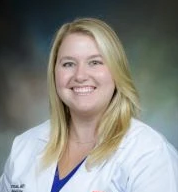
Ashlyn Herman, MD