
At a Glance
Modality
In person
Length
36 credits; approximately 20 months
Est. Cost
Approximately $16.5K in-state
Cohort Feel
3–5 students
Faculty Access
Contact
Who this degree is for
Students who want deeper quantitative training for research- or data-intensive work in the health sector – and who want to analyze clinical, biomedical, population, EHR, claims, omics, image, or device data.
Great Fit If You Come From
- Math / Statistics
- Computer Science
- Biology
- Psychology
- Public Health
- Health Sciences
- Biomedical Sciences

Multiple Electives
Choose by the methods and data you want to work with. Many skills cross over.
Biostatistics Electives
Study design & statistical modeling
- Mixed models
- Survival analysis
- Causal inference
- Clinical trials
Data Science Electives
Computation & biomedical data integration
- Machine learning
- Deep learning
- NLP / LLMs
- Visual analytics
- EHR / Epic
- Wearables & imaging
Crossover: AI, machine learning, statistical computing, and shared data sources such as EHR, claims, surveys, omics, devices, All of Us, and clinical trials.
What you could do with this degree
Academic medicine
Biostatistician, statistical analyst, research staff.
Pharma & biotech
Clinical-trial analytics, regulatory evidence, biomarker and omics work.
Government / agencies
FDA, NIH, public-sector research, and data-intensive programs.
Clinical Research Organizations
Trial support, analysis plans, reporting, and subcontracted research.
Health data teams
EHR analytics, visualization, machine learning, and biomedical informatics.
PhD preparation
Statistics, biostatistics, data science, or related fields.
After you earn this degree, you'll be able to...
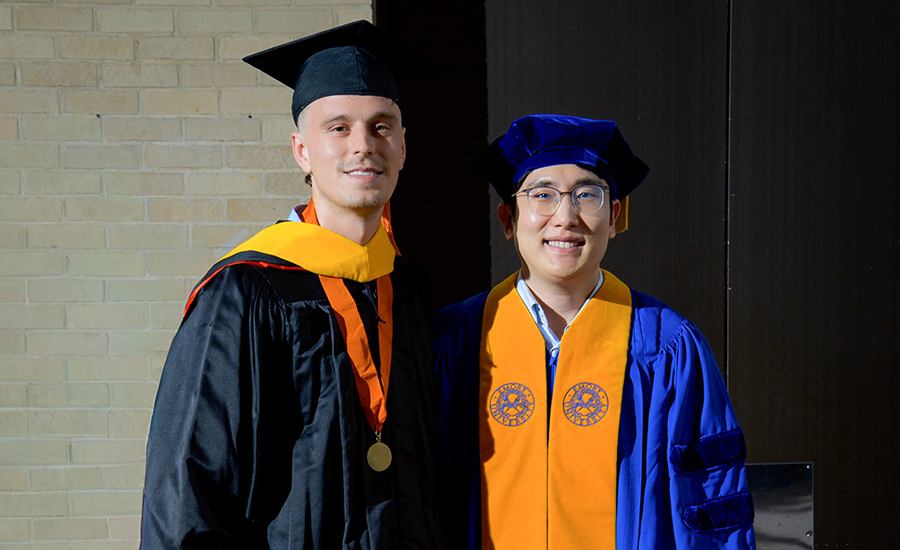
You Belong Here
A small, faculty-connected community.
The MS is intentionally personal – people know your name and notice when you need support. Build real relationships with faculty and learn alongside peers from many backgrounds.
- 3–0
per cohort - ~0
faculty mentors - 0+
SPPH students