Aerospace medicine has been shaping the future of flight and space exploration for over 50 years—and the journey is just getting started. As aviation continues to grow, commercial spaceflight takes off, and humanity sets its sights on the Moon, Mars, and beyond, the demand for qualified experts has never been higher.
MS in Aerospace Medicine
Now Accepting Applications from Interdisciplinary Professionals
Apply via SOPHAS
This exciting field thrives on collaboration. Physicians, engineers, nurses, researchers, dentists, audiologists, physiologists, and other specialists all play a critical role in protecting and advancing human health in the skies and in space.
To meet this growing demand, the University of Texas Medical Branch is expanding its accredited (CEPH) Master of Science in Aerospace Medicine program to welcome professionals from a wide range of disciplines. Join a dynamic community working at the intersection of medicine, technology, and exploration—and help shape the future of human flight.
Launch your next mission with UTMB. Come learn with us!

Apply via SOPHAS
Eligibility
The Aerospace Medicine MS is an intensive, 12-month, 34 credit, in-person degree. Applicants must be willing to relocate to the Galveston/Houston area for the duration of the training. The MS in Aerospace Medicine is now accepting applications from the following interdisciplinary specialties:
- Audiologists (AuD)
- Dentists (DDS, DMD)
- Doctoral-level professionals (PhD, PsyD, and related fields)
- Flight Nurses (CFRN)
- Nurses (MSN, DNP, BSN with work experience)
- Optometrists (OD)
- Paramedics (NRP, EMT-P, EMT-B with work experience)
- Pharmacists (PharmD, MS)
- Physical Therapists (DPT, MPT)
- Physician Assistants (MSPAS, MHS, MCHS, MPAS)
- Physicians (MD, DO)
- Physiologists (MS, PhD)
- U.S. and international military members with documented clinical and/or research need for the MS in Aerospace Medicine
- Engineering with a strong background in biology, physiology, and related sciences
- Epidemiology, Biostatistics, Data Science with a strong background in biology, physiology, and related sciences
- If you do not see your profession on this list, but feel you are qualified, please reach out. Deviations from the above will be reviewed on a case-by-case basis.
International equivalents to the above degrees (e.g., MBBS) will be considered on a case-by-case basis with appropriate documentation.
International applicants attending on an F-1 visa should review UTMB's visa requirements, estimated costs, and I-20 request process before applying. F-1 Visa Information for SPPH Students
Academic Study and Degree Requirements
The Master of Science in Aerospace Medicine meets the credit hour requirements set forth by the Council on Education for Public Health (CEPH) and the American Board of Preventive Medicine (ABPM). The curriculum is built around three foundational pillars.
-
1
Aerospace specialty courses
-
2
Courses in core public health knowledge areas — Biostatistics, Epidemiology, Health Policy, Environmental Health, and Social/Behavioral Sciences
-
3
Completion of a mentored capstone thesis and presentation
Curriculum
You can begin the program in either the summer or the fall. Students who start in July take their semesters in the order summer, fall, spring. Students who start in August take them in the order fall, spring, summer. The required courses are the same in both pathways — only the order of the semesters changes.
- 01
Introduction to Epidemiology
- 02
Biostatistics and Data Management
- 03
Biostatistics Lab
- 04
Aerospace Medicine I
- 05
US Healthcare Systems
Option to substitute for Approaches to Academic and Professional Writing
- 06
Mentored Capstone Thesis
Spring Semester
10 credits
- 01
Preventive Medicine and Behavioral Health
- 02
Environmental Medicine
- 03
Global Health Policy, Practice & Delivery
- 04
Mentored Capstone Thesis
- 05
Elective
- 01
Principles of Aviation and Space Medicine (PASM)
- 02
Introduction to Occupational Injury
- 03
Mentored Capstone Thesis
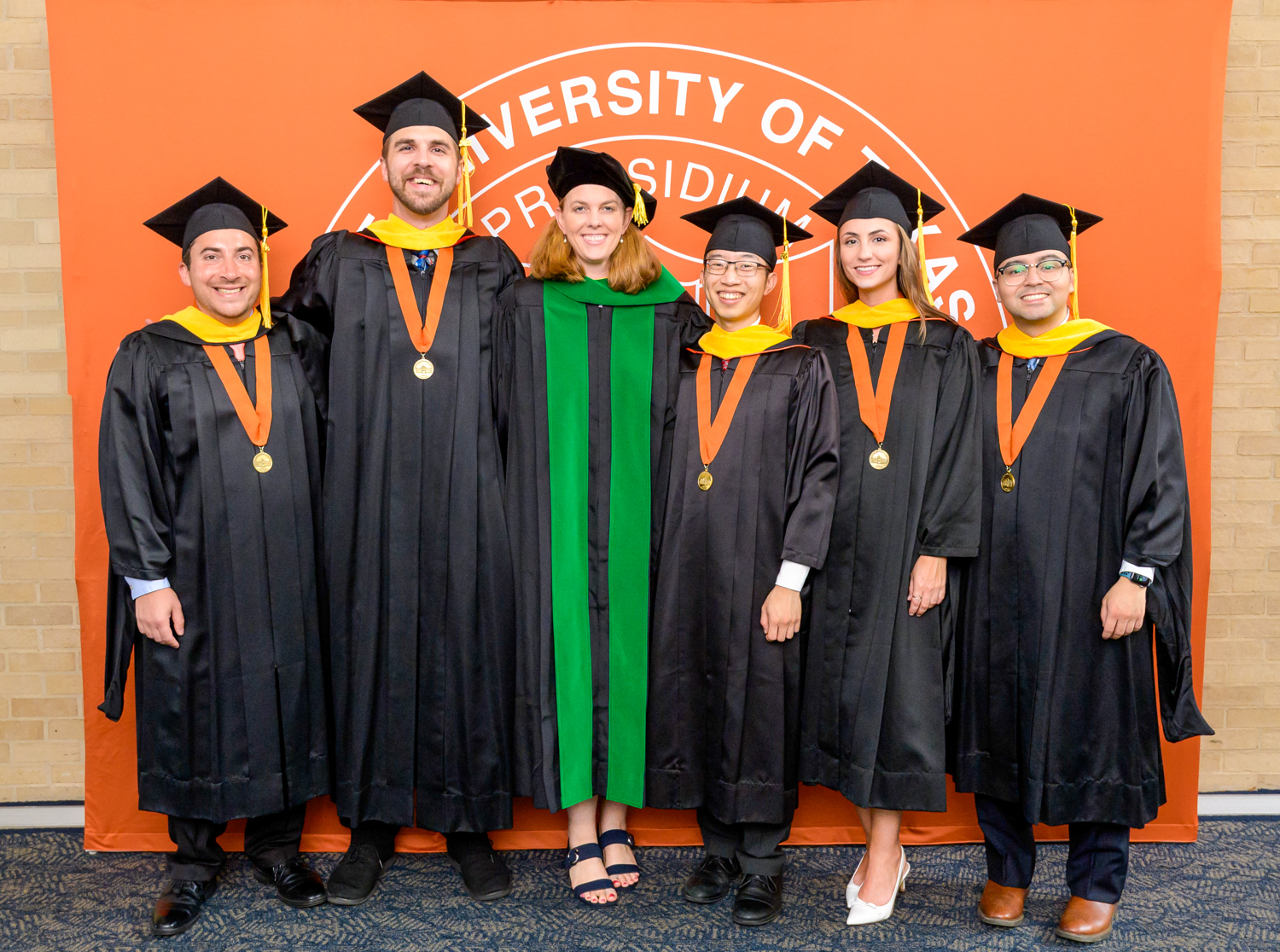
MS in Aerospace Medicine graduates with Program Director Dr. Amy Kreykes at 2025 commencement
Aerospace Medicine Specialty Content
These courses cover the full breadth of physiologic, environmental, operational, and engineering challenges facing physicians and specialists who work in aviation and space medicine. Topics include:
- Accident and mishap investigation
- Acoustics and vibrations
- Acute care and surgery in spaceflight
- Aerodynamics, orbital mechanics, and kinematics
- Aerospace dentistry considerations
- Aerospace forensics
- Aerospace pharmacy considerations
- Aerospace radiation
- Atmosphere, hypoxia, and hypercarbia
- Aviation (fixed and rotary wing) principles of flight and flight controls
- Biomedical and systems engineering
- Clinical aerospace medicine
- Commercial spaceflight considerations
- Emerging aerospace technology
- Environmental control systems
|
- Human factors
- Human physiologic response to aviation and space environments
- Human response to transient and sustained acceleration, and altered-gravity environments
- Hypobaric and hyperbaric exposures, sequelae, and treatment
- Immunology in spaceflight
- Infectious disease prevention for spaceflight
- Leadership, management, and administration
- Lunar and Martian dust considerations
- Medical certification
- Medical operations for the flight surgeon
- Medical systems
- Military aerospace medicine considerations
- Nutrition in spaceflight
|
- Occupant protection and restraint systems
- Operational aerospace medicine
- Operational medical support in isolated and confined environments
- Probabilistic risk assessment
- Requirements writing
- Risk assessment and management
- Safety and survivability in civil aviation
- Spaceflight vehicle design considerations
- Spacesuit development
- Spatial disorientation
- Telemedicine
- The flight environment
- Thermal loads
- Toxicology
|
Council on Education for Public Health (CEPH) Competencies
The MS in Aerospace Medicine is designed to prepare graduates to:
- Discuss the principles of aviation and space medicine to enhance health, promote safety, and improve performance of persons who work or travel in the aviation and spaceflight environment.
- Identify the factors that influence the health of persons who work or travel in the aviation and spaceflight environment.
- Identify adverse health outcomes and treatment options following exposure to occupational hazards.
- Apply primary, secondary, and tertiary prevention approaches to disease and injury prevention for persons who work or travel in the aviation and spaceflight environment.
- Evaluate environmental hazards and recommend methods to reduce exposure and mitigate risk.