“Alcohol is woven into the fabric of many cultures, and from college parties to family gatherings, it's hard to avoid," UTMB’s Dr. Christine Kley tells Parade for a story on how alcohol causes inflammation.
The answer to why we don’t vaccinate against avian flu in the U.S. lies in a combination of science, economics, and global trade policies, write Drs. Megan Berman and Richard Rupp in their latest Vaccine Smarts column.
"Now it looks like we have new strains of virus that may escape some of the immunity associated with the other strains of viruses that could exacerbate the epidemics among animals and wildlife," UTMB’s Dr. Gregory Gray tells Reuters after a new strain of bird flu has been detected in U.S. dairy cattle. This news was also reported in VOA, Dairy Herd Management, AgWeek, and other national and international outlets.
“If you can understand how these drugs are accessing the brain and where they are acting, then potentially that could guide future drug development to be able to better target these regions,” UTMB’s Dr. Kevin Williams tells Men’s Health for this story on how the popular weight loss drug Ozempic can affect the brain.
Drs. Norbert Herzog and David Niesel explore how animals can act as reservoirs for viruses and other infectious microbes in their latest Medical Discovery News column.
Medical Xpress reports on a quick test for tick-borne spotted fever rickettsioses developed by researchers at UTMB and the University of Houston. In their paper, the group describes how an enzyme present in all groups of Rickettsia was used as a marker for a test that can quickly diagnose tick-borne spotted fever rickettsioses.

Perinatal mood and anxiety disorder was discussed during the latest segment with Houston Moms and the conversation covered everything from signs and symptoms to how to ask for help.
“I really want to see Texas lead. I think this is ideal for Texas,” said UTMB’s Dr. Jochen Reiser during comments at The Brain House in Davos. Reiser spoke about the interest by state leaders to fund research on brain health.
UTMB researchers identified a potential new treatment for Marburg virus, the Daily News reports. In a study published in Nature Medicine, UTMB’s scientists showed that the oral drug Obeldesivir “was associated with a survival rate of 80 percent” in nonhuman primates. “This is one of those things where you can hopefully really head off or deal with an outbreak, or better control it, if you can give a pill or a tablet that somebody can take,” Dr. Thomas Geisbert tells the Daily News.
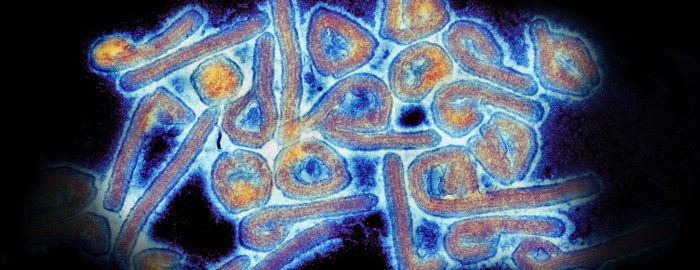
Oral obeldesivir, an anti-viral drug, prevents Marburg disease in non-human primates according to research conducted at the University of Texas Medical Branch’s Galveston National Laboratory, in collaboration with Gilead Sciences and the National Institute of Allergy and Infectious Diseases.
UTMB’s Dr. Giulio Taglialatela commented on a study that examined how the time it takes to get to the rapid eye movement stage of sleep is related to Alzheimer’s disease. “While the observation is interesting and deserving further development, the current study is on a limited number of patients, compromising its full statistical power,” Taglialatela told Medical News Today. His comments were also reported in MA Clinique and AOL.

The University of Texas Medical Branch has been recognized as one of Healthgrades’ 250 Best Hospitals for 2025, placing it among the top five percent of hospitals nationwide for overall clinical performance. This prestigious honor—which the university also received in 2023 and 2024—reflects UTMB Health’s unwavering commitment to providing exceptional, patient-centered care and achieving outstanding clinical outcomes.
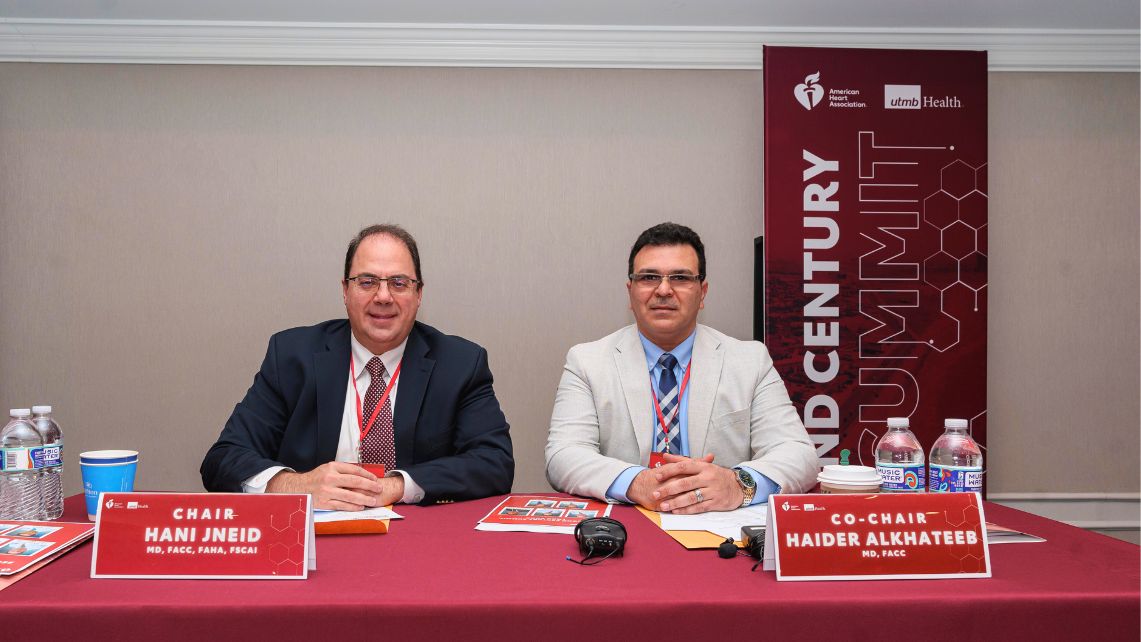
The American Heart Association and The University of Texas Medical Branch hosted the first of what is planed to be an annual cardiovascular symposium in Galveston earlier this month.
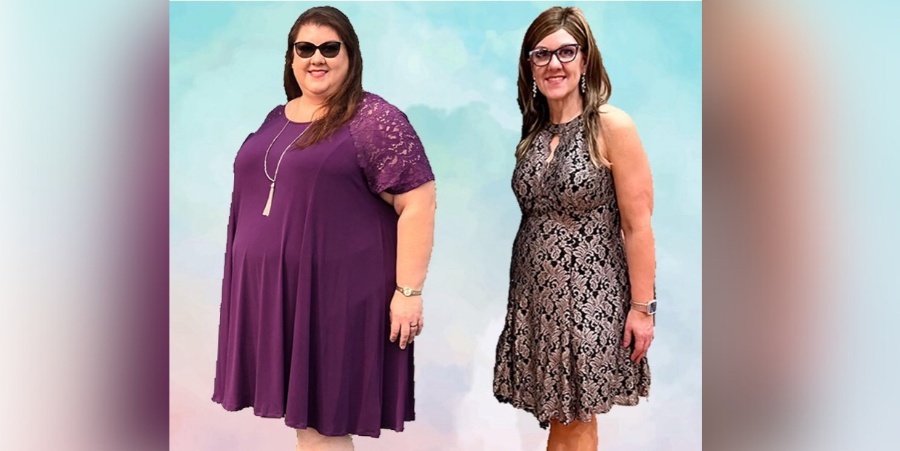
Did you know the UTMB Health Bariatrics team includes a dedicated dietitian and social worker to support patients on their journeys? They also host monthly support groups for pre-and-post-surgery individuals.
Adding more parks, green space and opportunities to visit nature could provide a number of health benefits, UTMB’s Dr. Kim Gushanas tells Community Impact. “Exposure to sunlight, soil, the colors green and blue ... have been attributed to health outcomes,” she said.
Individuals who take time to regularly play have improved mood, lower stress levels, and improved overall health, writes Dr. Samuel Mathis.
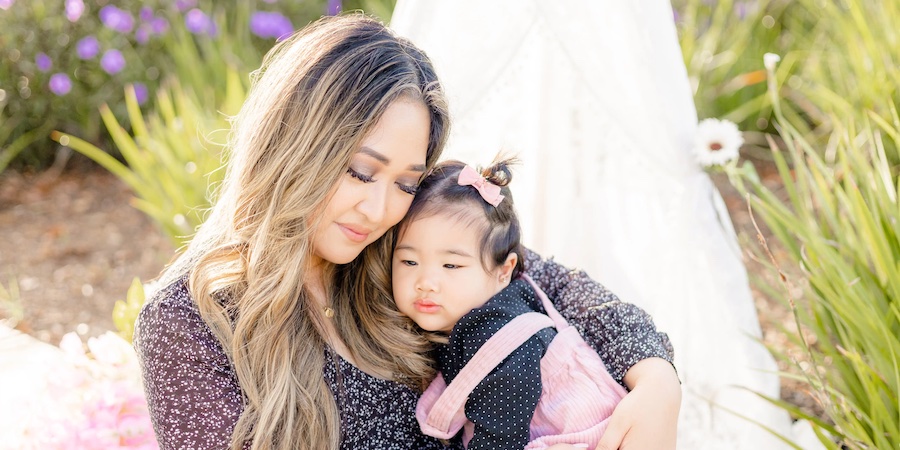
In an effort to end the stigma around maternal mental health, UTMB Health clinicians share their journeys battling perinatal mood & anxiety disorder, also known as PMAD, which can present as conditions such as psychosis, anxiety, depression, or more.
.png?sfvrsn=9f434255_1 "MicrosoftTeams-image (30)")
The University of Texas Medical Branch is making waves this week at the World Economic Forum's annual meeting in Davos, Switzerland, by highlighting the critical importance of brain health on a global scale.

The online master’s program provided by the School of Nursing at the University of Texas Medical Branch has once again been deemed one of the best in the nation. UTMB’s School of Nursing ranked 10th in the country according to the U.S. News & World Report 2025 Best Online Master’s in Nursing Programs released today.
Scientists estimate that close to 50 percent of dementia cases can be delayed or prevented, write Drs. Norbert Herzog and David Niesel in their Medical Discovery News column. A recent study lists risk factors for dementia and their potential to delay or prevent the disease.