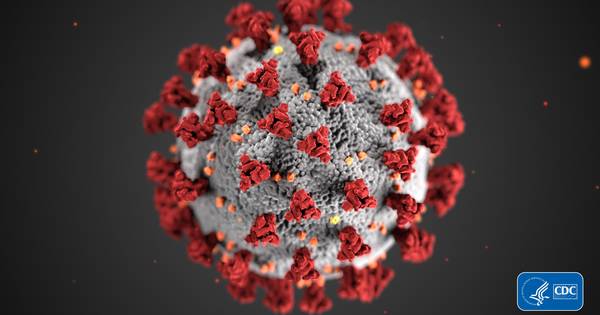
In a study published Jan. 12 in Scientific Reports from Nature, UTMB researchers describe how they developed a behavioral test to determine anosmia—the loss of the sense of smell—for hamsters that were infected with severe acute respiratory syndrome coronavirus-2 (SARS-CoV-2).

The Level 1 Neonatal Facility Designation reflects the facility’s documented capabilities and history of providing a specific level of care to infants.
Even if omicron is milder, “it seems to be still doing quite a bit of damage in unvaccinated people,” said University of Texas Medical Branch virologist Vineet Menachery. “The good news is that there does seem to be a trend that this virus is less severe than previous waves, especially if you're vaccinated.” For those who got their shots, "the threat of severe disease is probably off the table for most people,” he said. “On the other hand, for people who are not vaccinated, I think the threat is just as big as it was in March of 2020.” International news outlets ran the Voice of America story, including the Zimbabwe Star. Several U.S. outlets also ran this story.
Getting infected with flu and COVID at the same time is rare, but it is starting to happen. “The symptoms are similar,” said Dr. Janak Patel, director of the Department of Infection Control & Healthcare Epidemiology at UTMB. The medical branch is seeing a 30 to 40% positivity rate for COVID. However, the flu is only around 4%. Still, within the last week, UTMB has seen three cases of “flurona,” including one in a child. Patel said all patients are doing well, provided they got a quick and accurate diagnosis. “I don't think we should be scared,” he said. “We know how to take care of both of these illnesses.” In other reports, Fox News and Salon referenced Dr. Patel’s comments from the ABC affiliate report.
It means you have COVID, said Dr. Megan Berman, an associate professor of internal medicine at The University of Texas Medical Branch. False negatives can occur for a variety of reasons, such as being tested too soon after exposure. The virus may simply not be detectable yet in the body, or the sample may not be sufficient, she said.
Your baby will come when she is good and ready, not because of anything you do at home to jumpstart the delivery process, said Dr. Shannon Clark, a professor of maternal-fetal medicine at the University of Texas Medical Branch in Galveston. Clark debunked seven common myths. “Most of the old wives’ tales about things you can do to start labor won't hurt, but they won't help either,” she said.
In the latest Vaccine Smarts column, Drs. Megan Berman and Richard Rupp share a cautionary tale of a rare, but avoidable, injury caused by a vaccine. “People should make sure that prior to receiving vaccines, the administering health professional is fully informed of their health conditions and medications,” the column stated.
In the latest Medical Discovery News Column, Drs. Norbert Herzog and David Niesel deliver good news. Researchers in Spain and at the Brigham and Women’s Hospital in Boston have shown that the consumption of chocolate in the morning or evening leads to a number of changes in the body that can impact burning fat and reducing glucose levels in postmenopausal women.
China put up barriers to studying the origins of COVID-19, leading to a conflict that means less scientific collaboration and more mistrust among global powers that must work together to head off the next disaster. Dr. James Le Duc, retired director of the Galveston National Laboratory, a top U.S. biocontainment facility, urged the director of the Wuhan lab in an email at the beginning of the pandemic to investigate whether the new virus could have resulted from a lab accident. Now, Le Duc doesn’t communicate with colleagues in China on work matters, he said. “Science is shared,” he said. “When you interfere with those collaborations it hurts everybody and is just very sad.”
Hospitals in Houston could run out of the antibody treatment sotrovimab within the next two weeks. The University of Texas Medical Branch told Fox News on Saturday that its four-hospital network is using sotrovimab with the patients who need it most and are waiting on the next shipment. UTMB chief medical officer Dr. Gulshan Sharma told Fox News that the hospital system had allocation prior to Christmas and that it is looking for the next allocation date early 2022. "Based on our current usage it could last for [the] next 10-14 days," Sharma said.
Dr. Gregory Gray, a professor of Internal Medicine at the University of Texas Medical Branch, said that as at-home testing becomes increasingly popular, clinical- and hospital-gathered data about COVID-19 will become increasingly inaccurate as a measurement of the disease in the overall population. He suggested officials may have to move to conducting cohort studies where infection rates are determined through antibody testing of groups over time.
Faced with increased demand and dwindling supplies, the University of Texas Medical Branch is rationing an antibody treatment shown to be effective against COVID-19, restricting the medicine to the sickest and most at-risk people, including some who are unvaccinated. People eligible for the antibody treatment include those not expected to mount an adequate immune response and some unvaccinated people, including anyone 65 years of age or older, said Dr. Gulshan Sharma, the medical branch’s chief medical officer.
The University of Texas Medical Branch’s four-hospital network will likely run through its remaining 600 doses of sotrovimab in 10 days, said Dr. Gulshan Sharma, the system’s chief medical officer. “We’re just hoping and waiting to see what we get,” he said. “It’s anybody’s guess what would be the allocation.”
UTMB Health, anchored by the John Sealy Hospital in Galveston, had to close beds and assign more patients to each nurse. Elective surgeries that require a bed for recovery are being delayed, said Dr. Gulshan Sharma, vice president and chief medical officer, for UTMB Health. About 400 of UTMB’s employees — including 200 of the system’s 4,000 health care workers — tested positive for coronavirus, more than double the number who tested positive during the delta surge. “There is not a dedicated COVID staff or non-COVID staff. Patients still continue to have heart attacks or stroke complications from their chronic diseases, and they show up to our (emergency rooms),” Sharma said. “But our (emergency room) volume is up by almost 50 percent compared to last week.”
The holidays brought a huge demand for COVID tests, health officials said. But demand hasn’t led to delays at the University of Texas Medical Branch campuses, which have built up testing capacity during the most recent wave, said Dr. Janak Patel, the director of Infection Control and Healthcare Epidemiology at the medical branch. Hospitalizations and deaths haven’t increased significantly, he said. “Do not expect the illness to be mild,” Patel said. “You still can get prolonged high fevers. You still can get headaches and joint aches and fatigue that can last for several days. The outpatient illness is still pretty significant.”
The increase in cases is being felt across the county, including at its largest medical provider, the University of Texas Medical Branch, where hundreds of employees are out sick because of positive COVID-19 tests. About 300 of the medical branch’s 11,000 employees were quarantined as of Friday because they had tested positive for COVID-19, said Dr. Gulshan Sharma, chief medical officer. About half were front-line medical workers, and the number of quarantined is near that during the height of the delta variant surge, Sharma said.
While patient volume has remained steady during the pandemic, clinics are limited based on the number of providers and their caps on caseloads, UTMB officials said. UTMB Health Psychiatry Webster saw about 9,900 patients from September 2019 to August 2020; that number increased nearly 20% to about 11,800 patients seen from September 2020 to August 2021, according to UTMB data. while the introduction of telehealth has opened doors in terms of access, the demand is greatly outpacing the number of providers available for counseling, said Jeff Temple, a professor and licensed psychologist at UTMB. “There’s only so many hours and only so many people that an individual [provider] can see,” Temple said. “The increased access has helped, but the demand is so great that it still is leaving people lacking.
Dr. Prashant Rai, assistant professor, and associate director in the Neurology residency program at the University of Texas Medical Branch, wrote about researching brain fog in COVID-19 patients. “Our study showed the presence of brain fog/acute confusional state at admission or during hospitalization was associated with poorer outcomes overall, with these higher mortalities and increased need for intensive care support,” Rai wrote.