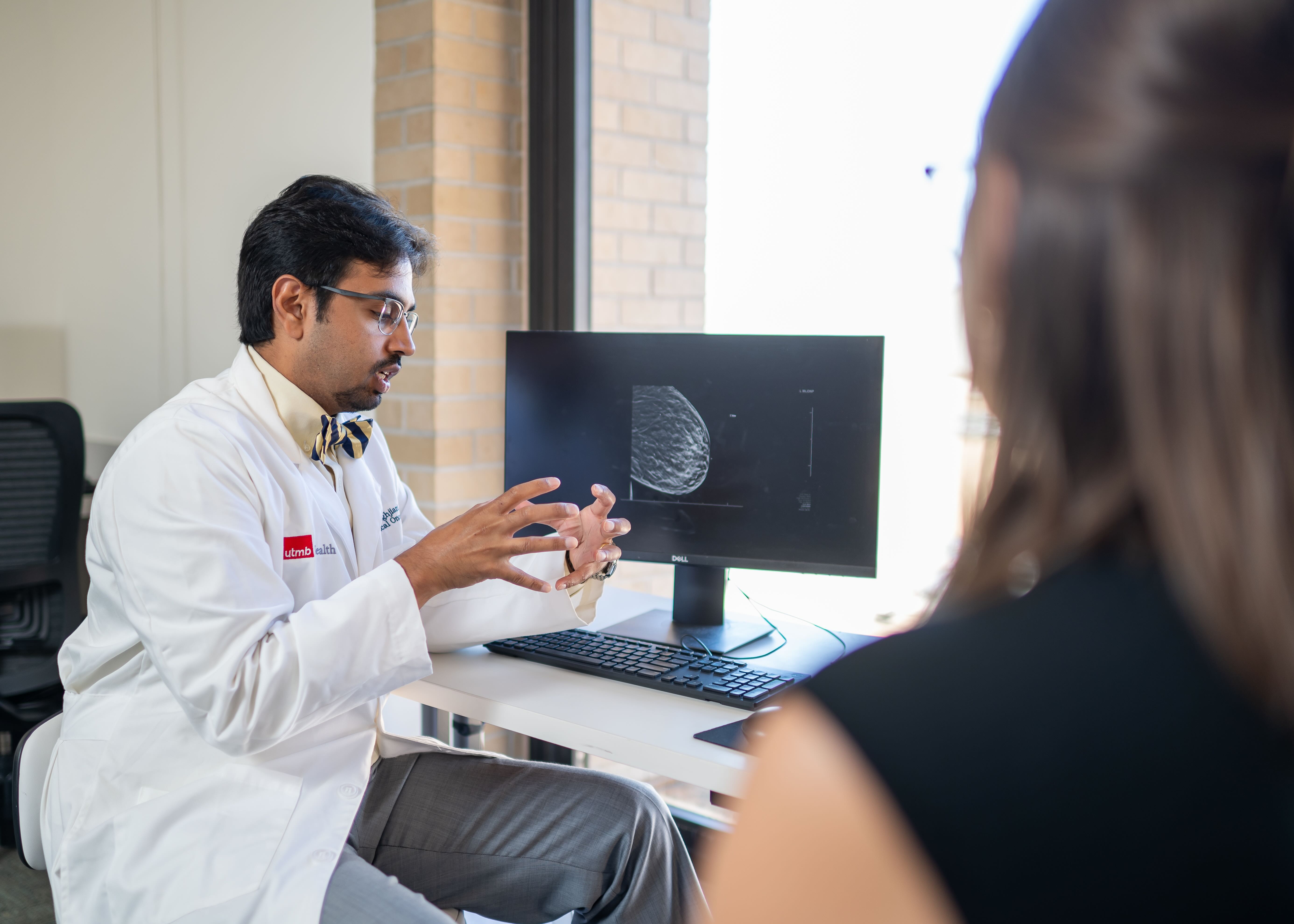
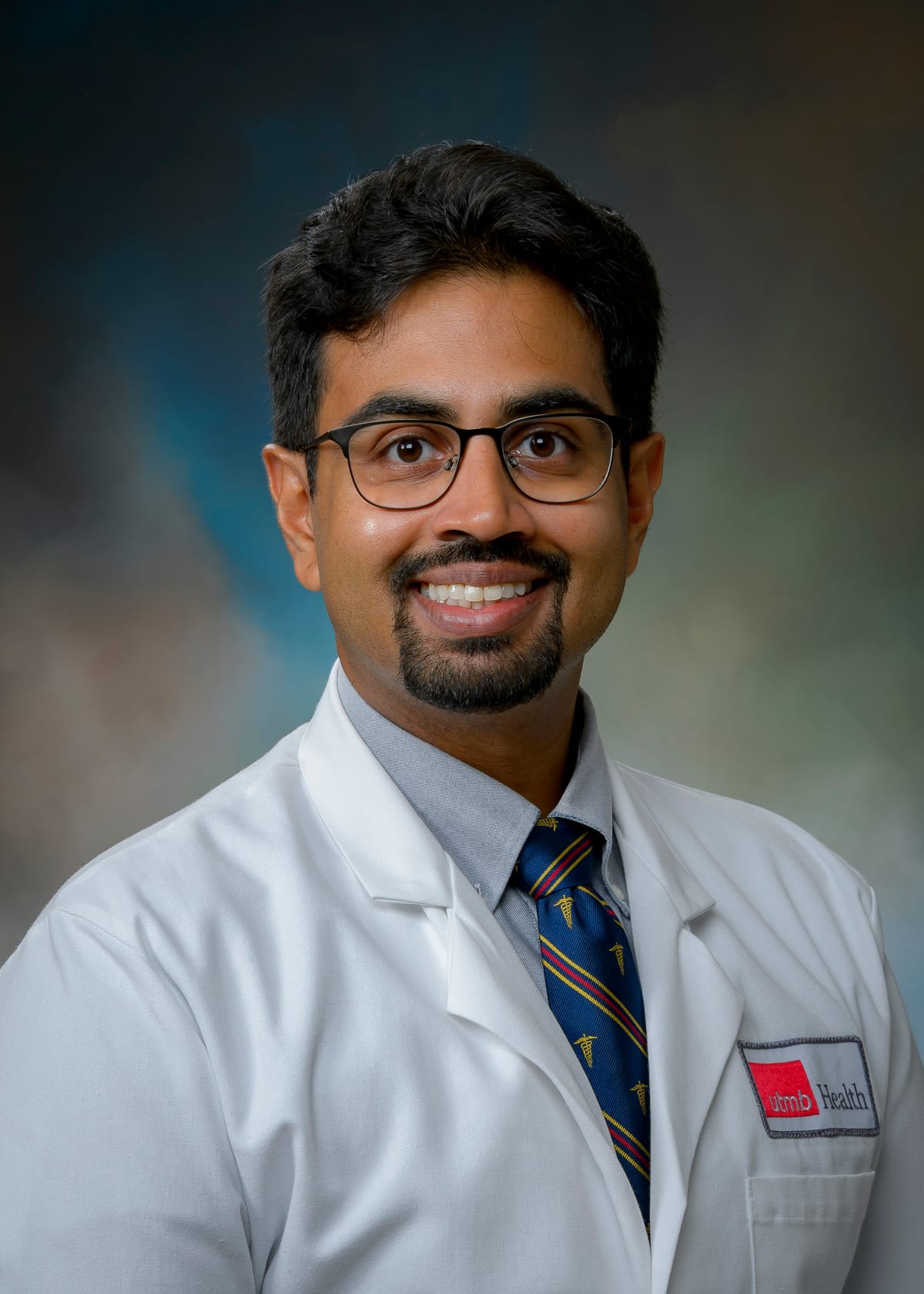
A breast cancer diagnosis is generally the worst news a woman can receive, but although the journey is challenging, there are also many reasons for genuine hope. Each year, more women are not only surviving breast cancer, but thriving afterward, thanks to treatments that are more effective and more compassionate than ever. UTMB’s surgical oncologist Dr. Raj Vaghjiani said that there is a movement toward more tailored and personal care, particularly with breast cancer, with many breakthroughs and therapies that offer gentler paths to healing.
“With breast cancer patients, we are seeing ground-level applications for where personal cancer care has an individual impact,” Dr. Vaghjiani said. “There are new therapies and medications that target certain receptors, as well as certain genetic mutations that drive their cancer. New regimens of chemotherapy are constantly being studied in clinical trials, and we are always applying the latest data. As a part of a patient’s care, they can even be enrolled in a clinical trial and be part of the cutting edge of the newest treatment.”
In decades past, Dr. Vaghjiani said breast cancer patients were treated with the “kitchen sink” approach. “They threw everything at those patients,” he said. “They would get massive doses of chemotherapy and extensive radiation. In some cases, that might be necessary, but in many cases, that’s overkill. Today, we have much less invasive surgical options, and we are much more focused on tumor biology, and the personal aspects of a patient’s cancer, to make their treatment as effective as possible while reducing side effects.”
Each patient is overwhelmed with questions and emotions as they begin their journey.
“I break it down for patients by telling them their cancer is like a fire in the corner of the room,” he explained. “My job is to put it out, and to keep the embers from roaring back later. My three ‘buckets’ of water are surgery, radiation, and medication. I’m captain of the surgery bucket, and there’s a radiation oncologist and a medical oncologist who manage the others.”
Together, their job is to tailor the application of their buckets to the specific fire that is the patient’s cancer.
“If it’s complex, we might need all three of us, but for others, we can distill therapy and create that signature treatment for each person’s particular fire,” he continued. “And that is what I think is the biggest advance in breast cancer care. It leads to more functionality and quicker recoveries. Surgeries are often done in a day rather spending unwanted time in a hospital, even when their surgery includes a breast reconstruction.”
Most importantly, he said that the more he can convey to patients that even though their cancer diagnosis is devastating, there are so many reasons to feel optimistic.
“Breast cancer patients have a lot of treatment options that are less and less invasive, and quality of life is impacted less and less,” he continued. “We are de-escalating surgery because it’s not always necessary, and when their treatment is combined with other modalities, it can lead to identical effective cure rates.”
He added that the ways in which the disease process is investigated have changed, and it’s not necessary to put patients through drastic treatments anymore. “We have found medications and radiation can be highly effective,” he said. “And we have added a new class of medications called immunotherapy which harness the power of the body’s own immune system to target cancer cells.”
Many people have strong, traumatic memories of women in their family going through cancer treatment, but he points out it’s not our grandmothers’ breast cancer treatment anymore.
“There are many effective options and reasons to be positive. Many women have gone through the journey before and are now decades from their treatment and thriving,” he said. “The data indicates treatments are more effective, mortality is consistently dropping, and we are able to offer better treatments not just at the early stages, but at later stages of cancer.”
Learn more about our Medical & Surgical Oncologists at UTMB Health.