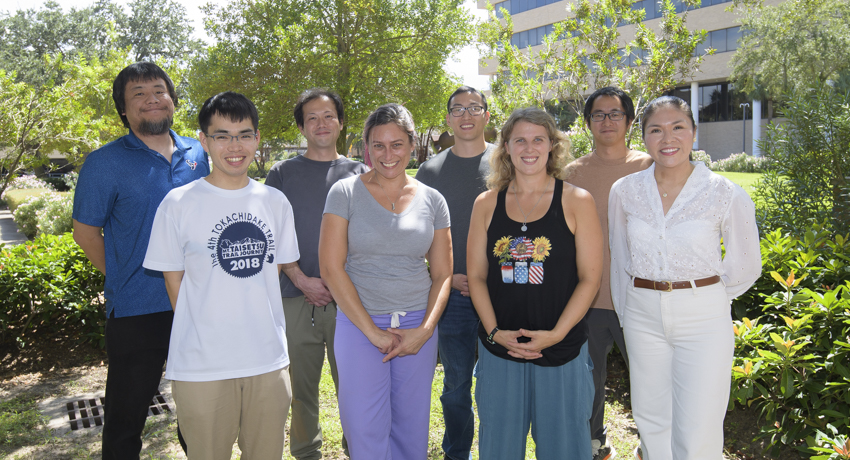
The Global Health Innovative Technology Fund (GHIT Fund) has awarded approximately $600,000 to The University of Texas Medical Branch (UTMB) and the Center for Advanced Modalities and Drug Delivery System Vaccine Development (CAMaD) at The University of Osaka in Japan to advance the development of a next-generation vaccine against Lassa fever, a viral hemorrhagic disease that infects an estimated 900,000 people each year, primarily in West Africa.
Under the two-year research agreement, the funding will support vaccine design, formulation optimization, and preclinical testing of an innovative messenger RNA (mRNA) vaccine candidate. The collaborative project will leverage the complementary expertise of UTMB and CAMaD to address critical challenges in developing effective and accessible vaccines for emerging infectious diseases.
“Lassa fever remains a serious and underserved global health challenge," said Junki Maruyama, PhD, an assistant professor in the Department of Pathology at UTMB. "This investment enables us to accelerate promising vaccine research and build on encouraging early results. By combining advanced mRNA technology with the unique research capabilities available at UTMB, we are working toward a vaccine that could help protect vulnerable populations in regions where the disease remains endemic.”
Confronting a global health threat
Lassa fever is an acute viral disease found primarily in West Africa. The disease can be severe, especially in pregnant women, and is associated with significant mortality. Despite its public health impact, there are currently no approved vaccines or specific antiviral treatments available.
The disease is spread through contact with infected rodents or bodily fluids from infected individuals. Because of its significant health burden and the lack of approved vaccines, Lassa fever is recognized as a priority disease for global public health and pandemic preparedness efforts.
Advancing vaccine innovation
The vaccine candidate under development through this collaborative project uses a novel bicistronic mRNA design, which enables a single vaccine molecule to produce two Lassa virus proteins, known as GPC and NP, simultaneously. Researchers believe this approach could broaden immune protection while improving manufacturing efficiency.
Researchers also will work to make the vaccine easier to use in areas with limited medical infrastructure. By refining the vaccine delivery system and incorporating freeze-drying technology, the team hopes to improve stability at higher temperatures. This could reduce the need for ultra-cold storage and make the vaccine easier to transport and distribute in regions with limited refrigeration.
Researchers will evaluate the vaccine’s immune response and protective efficacy through preclinical studies using several research models. UTMB will provide unique wild-type Lassa virus resources that provide critical capabilities for evaluating vaccine performance against the disease.
In addition to vaccine development, the collaboration aims to establish a scalable manufacturing process suitable for future production. The project focuses on controlled mixing techniques designed to support efficient vaccine manufacturing.
Unlike some vaccine platforms that can become less effective when used repeatedly, mRNA vaccines can be used effectively as booster shots. Because they do not contain viral particles, the immune system does not develop immunity against the vaccine itself, allowing repeated use when additional doses are needed.
The GHIT Fund-supported initiative builds on previous collaborative research between The University of Osaka and UTMB. In an earlier pilot study conducted at UTMB, a related vaccine formulation demonstrated promising protection against Lassa virus infection.
“This partnership underscores the importance of international collaboration in addressing global infectious disease threats,” Maruyama said. “Together with our colleagues at The University of Osaka and with support from the GHIT Fund, we are advancing innovative solutions that have the potential to improve health outcomes for people around the world.”
The researchers expect the project to generate critical data that will support future vaccine development efforts and contribute to global preparedness for Lassa fever and other emerging infectious diseases.