












The commercial shrimpers and fishermen who toil at sea keep the tourism industry alive along the coast and keep food on our tables. We often don’t see them work, but we see and eat the fruits of their work every day.
Because of extreme working conditions and the migratory nature of the job, these invaluable and often unseen members of the Gulf Coast community face considerable health care challenges. Many don’t have health insurance or even access to primary health care.
Dr. Shannon Guillot-Wright, a researcher at The University of Texas Medical Branch, was recently awarded a $660,000 grant from the Centers for Disease Control and Prevention (CDC) to fund a five-year research project to address health disparities for commercial fishermen.
The multisite study throughout Texas and Louisiana will evaluate the impact of mobile health clinics and community health workers to decrease injury and illness among migrant fishermen, a historically marginalized population with a fatality rate nearly 30 times the national average.
The project is built on a pilot program that Guillot-Wright has led for the past two years working with migrant fishermen to discern how to reduce their injury rate. But a greater need soon became clear.
“We were originally looking at slips, trips, and falls because that's one of the major reasons that fishermen will have fatal or nonfatal injuries,” Guillot-Wright said. “But when we went out and talked to the fisherman, we learned that many of them don't have access to primary health care.”
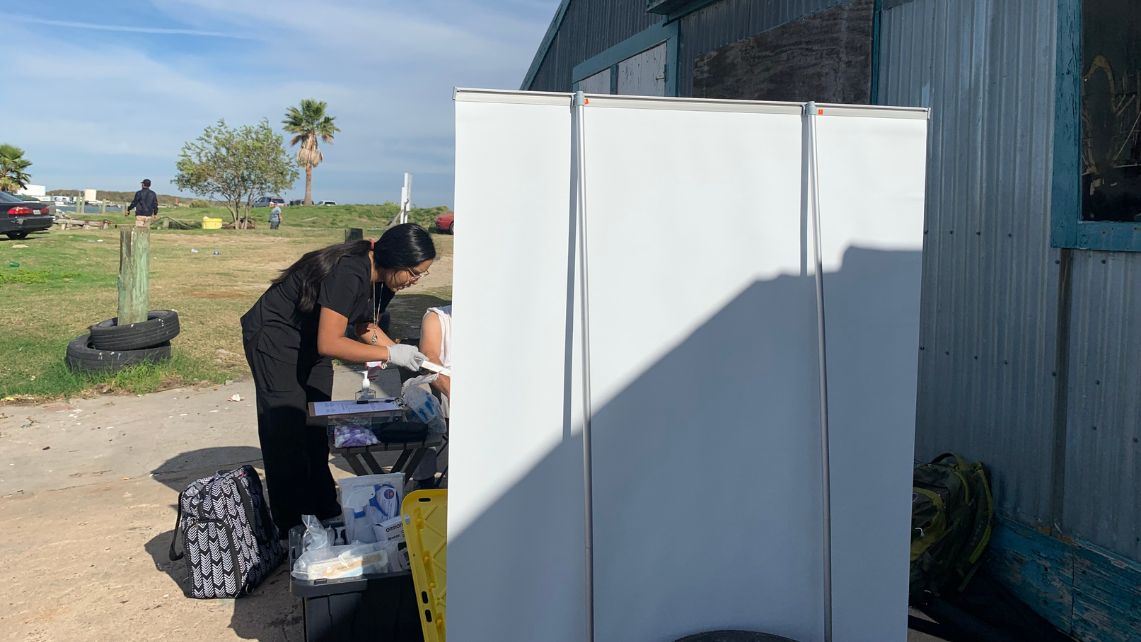
That program resulted in the Docside Clinic, which brings medical professionals to the docks to provide primary health care, such as check-ups, vaccinations, and blood sugar, cholesterol and blood pressure testing.
The clinic initially was intended to be a one-time effort, but the need was so great it now occurs once a month.
The CDC funding will expand the Docside Clinic and increase its immediate impact on the workers it serves, while allowing Guillot-Wright’s team to conduct research on a larger scale.
“In addition to the dangers of slipping or falling overboard, there's a lot of traumatic experiences from physical jobs, and there's the potential for opioid misuse and self-medication when you don’t have consistent access to primary health care,” Guillot-Wright said. “The goal is to look at the ways that we can close those gaps and create greater health equity for an important and underserved population.”
Dr. Shannon Guillot-Wright is Vice Chair of Research and Health Policy, Assistant Professor in the Department of Family Medicine, and Health Policy Research Director at the Center for Violence Prevention.
Because of extreme working conditions and the migratory nature of the job, these invaluable and often unseen members of the Gulf Coast community face considerable health care challenges. Many don’t have health insurance or even access to primary health care.
Dr. Shannon Guillot-Wright, a researcher at The University of Texas Medical Branch, was recently awarded a $660,000 grant from the Centers for Disease Control and Prevention (CDC) to fund a five-year research project to address health disparities for commercial fishermen.
The multisite study throughout Texas and Louisiana will evaluate the impact of mobile health clinics and community health workers to decrease injury and illness among migrant fishermen, a historically marginalized population with a fatality rate nearly 30 times the national average.
The project is built on a pilot program that Guillot-Wright has led for the past two years working with migrant fishermen to discern how to reduce their injury rate. But a greater need soon became clear.
“We were originally looking at slips, trips, and falls because that's one of the major reasons that fishermen will have fatal or nonfatal injuries,” Guillot-Wright said. “But when we went out and talked to the fisherman, we learned that many of them don't have access to primary health care.”
That program resulted in the Docside Clinic, which brings medical professionals to the docks to provide primary health care, such as check-ups, vaccinations, and blood sugar, cholesterol and blood pressure testing.
The clinic initially was intended to be a one-time effort, but the need was so great it now occurs once a month.
The CDC funding will expand the Docside Clinic and increase its immediate impact on the workers it serves, while allowing Guillot-Wright’s team to conduct research on a larger scale.
“In addition to the dangers of slipping or falling overboard, there's a lot of traumatic experiences from physical jobs, and there's the potential for opioid misuse and self-medication when you don’t have consistent access to primary health care,” Guillot-Wright said. “The goal is to look at the ways that we can close those gaps and create greater health equity for an important and underserved population.”
Dr. Shannon Guillot-Wright is Vice Chair of Research and Health Policy, Assistant Professor in the Department of Family Medicine, and Health Policy Research Director at the Center for Violence Prevention.