A day at the pool or the beach can be one of the best parts of summer. But when children are near water, safety needs to begin before anyone jumps in.
Drowning can happen quickly and quietly. A child may not splash, yell, or wave for help in the way many people expect. That is why preparation, active supervision and simple choices, such as choosing a brighter swimsuit, can make a meaningful difference.
Whether your family is heading to the pool, spending the day at the beach, or visiting Galveston for the weekend, these water safety steps can help reduce risk and give parents and caregivers a clearer plan.
Start with supervision
The most important water safety step is making sure someone is actively watching the water.
“At pool parties or beach days, it is easy to assume everyone is watching, but that can mean no one really is,” said Preston Huff, an injury prevention specialist with UTMB Health Trauma Services. “Having a designated water watcher helps make sure someone is focused on the water without distractions such as phones, conversations, or cooking.”
Before children get in the water, families should decide who is watching them. This person should be a responsible adult who can focus on the water without distractions.
A designated water watcher should:
- Stay focused on children in and around the water.
- Avoid scrolling, reading, cooking, or stepping away.
- Keep young children and less experienced swimmers within arm’s reach.
- Rotate with another adult before taking a break.
- Avoid alcohol or other distractions while supervising.
Even when lifeguards are present, parents and caregivers should continue watching their own children. Lifeguards provide an important layer of safety, but they are not a replacement for active supervision.
Use life jackets, not floaties
Floaties, water wings, inflatable rings, and pool toys may help children feel more comfortable in the water, but they should not be treated as safety devices.
“Floaties should not be treated as safety devices,” Huff said. “They can slip off, deflate, or give kids and parents a false sense of security. If a child is not a strong swimmer, especially around open water, a properly fitted, approved life jacket is the safer option.”
A U.S. Coast Guard-approved life jacket provides more protection than water wings or inflatable toys, especially for young children, less experienced swimmers, or children near open water. The Centers for Disease Control and Prevention also notes that air-filled or foam toys should not be used in place of life jackets because they are not designed to prevent drowning.
Families should make sure a life jacket:
- Is U.S. Coast Guard-approved.
- Fits the child’s current size and weight.
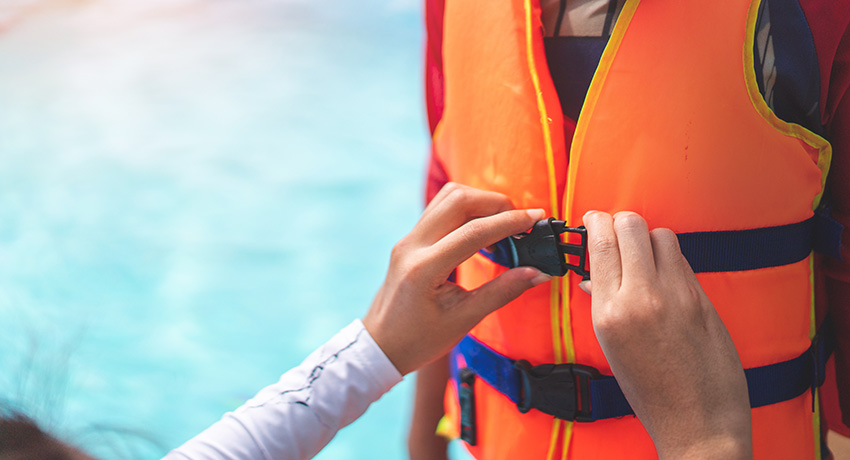
- Is zipped, buckled, and worn correctly.
- Does not ride up over the child’s chin or ears.
- Is worn near open water, including beaches, lakes, and rivers.
- A life jacket adds protection, but it does not replace adult supervision.
Choose a swimsuit that is easy to see
Swimsuit color may seem like a small detail, but visibility matters.
“I think swimsuit visibility is a helpful and simple reminder for parents,” Huff said. “It does not replace supervision, but bright, high-contrast colors can make it easier to spot a child quickly in a pool, crowded water, or moving beach water.”
Bright, high-contrast colors can make children easier to see in pools, lakes, and ocean water. Neon orange, bright pink, lime green, and neon yellow tend to stand out more clearly than colors that blend into the water, pool floor, shadows, or waves.
Colors that may be harder to see include:
- Light blue
- White
- Gray
- Pale green
- Muted or dark colors that blend into shadows or deeper water
A bright swimsuit will not keep a child safe on its own. It is one more layer of awareness that can help parents and caregivers keep a child in sight more easily.
Check beach warning flags before swimming
Beach conditions can change quickly. Before entering the water, families should look for posted beach warning flags and follow lifeguard instructions.
In Galveston, beach warning flag meanings are posted on lifeguard towers and signs at various entrances along the Seawall. According to the Galveston Island Beach Patrol, the flag system is used to communicate current water conditions and environmental warnings.
Families should take those warnings seriously.
“In Galveston, red flags can mean rough conditions, strong currents, or strong surf,” Huff said. “On red-flag days, adults should stay in water no deeper than waist deep, and children and nonswimmers should stay closer to the shoreline.”
When possible, families should swim near a lifeguard and ask about current conditions before getting in the water.
Know what to do in a rip current
Rip currents can pull swimmers away from shore. They do not pull people under, but they can cause panic and exhaustion if someone tries to fight against them.
The most important message is simple: Do not fight the current.
If caught in a rip current:
- Stay calm.
- Float or tread water to conserve energy.
- Call or wave for help.
- Do not swim directly against the current.
- Swim parallel to shore until you are out of the current.
- Then swim back toward land at an angle.
Parents should also teach children not to swim near jetties, piers, or other structures where rip currents can be stronger.
Before a beach day, talk with older children and teens about rip currents so they know what to do if they get caught in one.
Avoid common habits that create a false sense of security
Some habits can feel safe while still creating risk.
Common examples include:
- Assuming that several adults nearby means that someone is watching the water
- Relying on floaties, water wings, or inflatable toys instead of a life jacket
- Thinking shallow water is always safe
- Assuming that drowning will be loud or obvious
- Depending only on lifeguards instead of supervising your own child
- Letting children swim farther out because they “know how to swim”
- Ignoring warning flags because the water looks calm
- Thinking a bright swimsuit makes a child safe
A bright swimsuit, a lifeguard, a shallow pool, or a child who knows how to swim can all be helpful. None of them replaces active adult supervision.
Watch for signs of trouble
A child in distress may not look dramatic. They may be quiet, vertical in the water, or unable to move toward safety.
Parents and caregivers should watch for:
- A child who is motionless in the water
- A child bobbing up and down
- Hair covering a child’s eyes or face
- A child trying to roll onto their back
- A child unable to move forward
- A child with their mouth at or near the water’s surface
- A child who appears tired, panicked, or unable to call for help
If something looks wrong, act immediately.
If a child is missing, check the water first.
What to do if a child is struggling in the water
If a child is drowning or struggling in the water, get them out as quickly and safely as possible. If a lifeguard is nearby, alert them immediately.
Call 911.
If the child is not breathing normally or is unresponsive, start CPR if you are trained and ask someone to get an AED if one is available. The American Red Cross recommends beginning rescue breathing and CPR and using an AED, if available, when responding to a drowning emergency.
Even if the child seems OK afterward, they should still be evaluated by a medical professional, especially if they had trouble breathing, lost consciousness, experienced repeated coughing or vomiting, unusual sleepiness, confusion, or anything else that feels concerning.
The bottom line
Water safety requires a combination of preparation, supervision, and awareness.
Before your next pool or beach day:
- Assign a designated water watcher.
- Use approved life jackets instead of floaties when needed.
- Choose bright, high-contrast swimwear.
- Check beach warning flags.
- Talk with children about rip currents.
- Watch closely for signs of distress.
- Call 911 if someone may be drowning or has experienced a water emergency.
A little planning before anyone gets in the water can help families enjoy summer with more confidence and fewer preventable risks.
Sources
- CDC drowning prevention
- CDC summer swim safety
- American Red Cross water safety
- NOAA rip current survival guide
- Galveston Island beach patrol flag warning system
- Alive Solutions swimsuit visibility testing