Sleep apnea is often thought of as a man’s disorder, but women can also experience it, particularly during midlife. The condition is more than snoring. Sleep apnea occurs when the soft tissues in the back of the throat relax during sleep and partially or completely block the airway, causing repeated interruptions in breathing. These interruptions can lead to repeated awakenings, drops in oxygen levels, and added strain on the cardiovascular system. For women, however, the signs can be harder to recognize because they are often mistaken for sleep disruptions commonly associated with perimenopause and menopause.
Some studies suggest that as many as 90% of women with sleep apnea may go undiagnosed because standard screening tools focus heavily on classic male symptoms, such as loud snoring. The signs can be harder to recognize in women because symptoms vary across the lifespan, and hormonal changes during life stages, such as puberty, pregnancy, or menopause, can contribute to missed diagnoses.
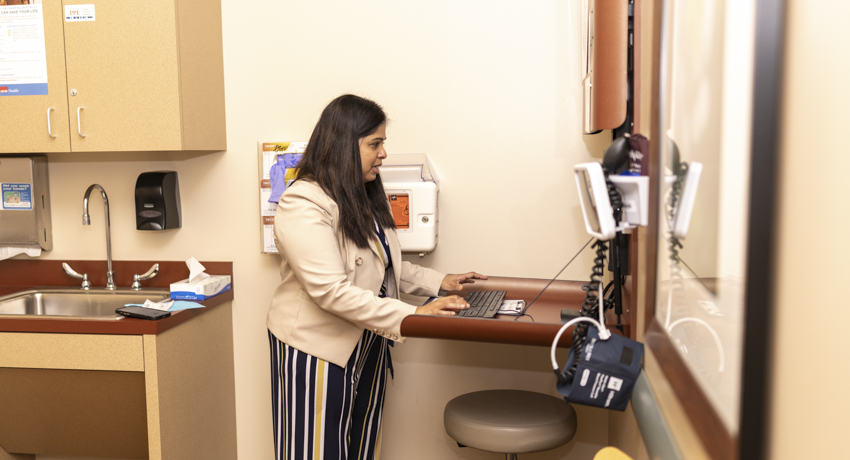
Sleep apnea can present differently in women. Symptoms may go unnoticed partly because of a lack of awareness among women and healthcare providers, or they may be misdiagnosed as anxiety or depression, which often occur alongside sleep disorders, said Lisha Thomas, an advanced practice registered nurse (APRN) and certified nurse practitioner (C-NP) in Pulmonary and Sleep Medicine at The University of Texas Medical Branch (UTMB Health).
“Sleep resets our system. The general rule is that for every two hours you are awake, you need two hours of sleep. That’s where the idea that eight hours of sleep is necessary comes from,” Thomas said.
“If you aren’t getting the sleep you need because of sleep apnea, your body is struggling,” she said. “With apnea, the classic picture is an overweight man who snores, but that is not always the case, and snoring does not always indicate sleep apnea.”
Sleep apnea can look different for women
For women, particularly in midlife, symptoms are not necessarily centered on snoring. Instead, women may experience muscle pain, fatigue, lack of energy, mood disturbances, and headaches.
Symptoms such as breathing pauses during sleep, difficulty falling or staying asleep, night sweats, palpitations, and a sense of choking at night may be attributed to perimenopause or menopause, potentially leaving an underlying sleep disorder undiagnosed.
Men tend to have sleep apnea more often than women, but Thomas said that gap narrows in midlife.
“Difficulty falling asleep or staying asleep long enough to get seven to nine hours of sleep, along with a sense of feeling choked at night, puts a strain on the cardiovascular system,” Thomas explained. “You try to be physically active and push yourself to do your work. Then you try to sleep, and your body is strained again.”
The effects extend beyond sleep
We should spend about a third of our day sleeping, Thomas said, noting that few things in life are as consistent or essential as the need for sleep.
Symptoms may extend well beyond nighttime. High blood pressure, anxiety, depression, headaches, brain fog, frequent nighttime urination, and difficulty losing weight can accompany sleep apnea and may be signs of an undiagnosed sleep disorder.
“Sleep apnea could be part of the reason a woman is having trouble with weight loss,” Thomas said. “Left untreated, of course you’re tired. But it also places real strain on the cardiovascular system. The lack of oxygen can produce oxidative stress, heart attacks, and strokes.”
Thomas said her female patients in midlife are often surprised to learn that symptoms affecting their daily lives could be connected to sleep apnea.
“Fortunately, treatment is available, and it’s effective,” she said.
Evaluating sleep problems
There are two primary ways to evaluate a patient for sleep apnea. The first is a home sleep apnea test, which Thomas said is often appropriate for younger women who do not have other significant medical conditions. Patients take a small monitoring device home and follow instructions for using it while they sleep.
The device can monitor factors such as heart rate, oxygen levels, breathing patterns, airflow, and body position during sleep. The information is then analyzed to determine whether the patient is experiencing sleep apnea.
“For many of our patients, a home sleep apnea test is the first step in diagnosing sleep apnea,” Thomas said.
Patients may instead be evaluated in a sleep lab if they have more complex sleep issues, certain cardiovascular risk factors, or need additional evaluation.
Treatment can make a difference
For patients diagnosed with obstructive sleep apnea, one of the most effective treatments is continuous positive airway pressure, or CPAP. The machine delivers a steady flow of room-temperature air through a mask, helping keep the airway open during sleep.
“No surgery, little to no complications, and works almost all the time,” Thomas said. “This is the most effective, noninvasive treatment.”
For women struggling with sleep in midlife, recognizing that symptoms may be caused by more than menopause can be an important first step. Sleep problems do not have to be accepted as simply part of getting older or going through hormonal changes.
An evaluation can help determine whether menopause is the explanation, whether a sleep disorder is contributing to the problem, or whether both are at play. Most importantly, women have options for finding answers and getting the help they need to sleep better and protect their health.