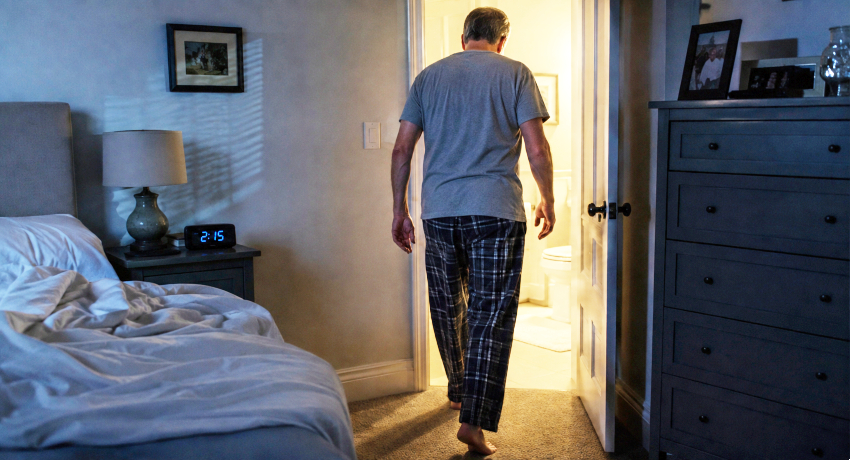
For many men, the first signs of an enlarged prostate arrive gradually: more frequent trips to the bathroom, interrupted sleep, or a feeling that the bladder never quite empties. While the symptoms can be frustrating and sometimes embarrassing, benign prostatic hyperplasia, or BPH, is one of the most common health conditions affecting aging men. It is also treatable, according to Nicholas Sreshta, MD, a urologist at The University of Texas Medical Branch (UTMB Health).
“The prostate is a gland located in front of the bladder, and its purpose is to make seminal fluid that helps sperm travel. Beyond that, it has no functional purpose, but it can still grow as men get older or develop cancer,” Sreshta said. “Because of the prostate’s position, the bladder must work harder as the prostate enlarges. It’s common for men in their mid-50s to begin experiencing symptoms.”
Those symptoms can include a sudden or frequent need to use the bathroom, particularly at night, difficulty getting started, a weak or slow stream, and stopping and starting several times while trying to empty the bladder.
When symptoms begin to interfere with daily life
Over time, the symptoms can affect quality of life, sometimes causing men to plan their daily activities around the location of the nearest restroom. Some may worry about not reaching a restroom in time, while others may find themselves frequently interrupting car trips, social activities, or work to use the bathroom. Repeated nighttime trips can also leave men tired and frustrated, with an added concern about falling in the dark on the way to the bathroom.
“There was a time when surgery was the only way to treat BPH, but now medications are often the first treatment we recommend,” Sreshta said. “With the success of medications, the need for surgery has decreased, but there are times when the situation progresses beyond what medication can effectively manage."
Sreshta said the bladder can become damaged as a result of working against the enlarged prostate over a long period of time, and the kidneys can occasionally become stressed as well.
"That’s when BPH can become an even more serious medical issue. Although it doesn’t always reach that level, the long-term consequences can be life-changing," he explained.
If the bladder does not completely empty, urine left in the bladder can increase the risk of infection. Sreshta said men experiencing recurrent bladder infections or other concerning symptoms should be evaluated by a urologist.
“The medicines we have available are effective, but they do have limits, based on the size of the prostate,” he said. “Some medications have sexual side effects that might be difficult for some men, but we have many options, and we counsel patients based on evidence and guidelines and come up with the best plan for each patient.”
More options for treatment
Treatment options also continue to evolve, including minimally invasive procedures designed to treat an enlarged prostate while helping patients return to work and normal activities without a prolonged hospital stay.
“If you’re having to plan your day around the location of the nearest restroom, then it’s time to see a doctor,” Sreshta said.
With prostate MRI and ultrasound imaging, along with bloodwork and other diagnostic tools, physicians can get a clearer picture of what may be causing a man's symptoms and determine the most appropriate treatment.
“There is no reason to limit your life or get up multiple times a night to use the bathroom,” he said. “If you’re constantly thinking about your bladder symptoms, we are here to help.”
BPH may be common, but living with its symptoms does not have to be a normal part of getting older. Seeking help can be the first step toward regaining comfort, confidence, and quality of life.