Believe it or not, Galveston and the eternal city of Rome have plenty in common. Both are coastal getaways with well-known architecture, and both cities are brimming with history (though Rome might have a slight advantage in that department). What’s more, both cities are beloved by Dr. Giulio Taglialatela, or “Dr. T,” as his students call him.
Taglialatela is a neuroscientist, a professor, the inaugural Director of the Moody Brain Health Institute, and the Vice President of Brain Health at The University of Texas Medical Branch (UTMB), where he specializes in Alzheimer’s disease research. Raised less than a mile from the Vatican in Rome, Taglialatela first came to Galveston more than three decades ago to study in a UTMB lab that was asking intriguing questions about brain aging. Taglialatela and his then-girlfriend, Dr. Maria-Adelaide Micci (these days a full-tenured professor in the Department of Anesthesiology at UTMB), planned to stay for the young neuroscientist’s two-year post-doc fellowship before moving back home for good, but they found an unexpected sense of belonging in a place that once seemed so foreign from their home country. So much so, the two married while there, bucking the Italian tradition of big family weddings with a small ceremony at the Galveston Country Club attended by just their parents, plus all their Texas friends.
“A piece of us stayed behind here in Galveston,” he says. “We enjoyed a lot of the environment, and our friends were here.”
After returning to Italy, he accepted a job with a pharmaceutical company that was developing therapies to support neurons. Yet something was missing.
“I realized pretty quickly that I was missing academia,” he says. He missed Galveston, too.
When UTMB invited him back as a faculty member, he accepted “right away, without thinking twice.”
Today, Taglialatela is part of a UTMB team that combines stellar teaching with world-class research and a deep commitment to thinking differently about our brains and how we care for them. Through the recently announced Project Metis, UTMB is working with Rice University and Memorial Hermann Health System to entrench Houston and Galveston as a global leader in brain health. The effort is part of their growing mission to treat brain health as both a medical concern and a matter that shapes education, workforce development, and the wellbeing of an entire community. This new project includes rigorous cross-disciplinary research, community education, and deep dives into diseases like Alzheimer’s, all with an eye for tracking a community’s progress through tools like the university’s Brain Health Index.
For Taglialatela, the initiative represents something even larger.
“The brain is coming out of the lab,” he says. Rather than viewing brain health as an individual challenge, he believes more people are gradually beginning to recognize it as “a collective value that really drives our society.”
Dr. Jochen Reiser, President of UTMB and CEO of the UTMB Health System, shares Taglialatela’s passion for brain health. Understanding the brain is part of Reiser’s mission to understand the whole human, and he also sees brain health as “the defining frontier of this century”—a frontier in which UTMB will be a leader.
For centuries, scientists have tried to understand the organ that shapes every thought, memory, and decision we make. Despite remarkable advances, Taglialatela believes one of the biggest misconceptions remains surprisingly simple.
Many people still think of the brain as just another organ.
“Brain health is not just liver health; it’s not just heart health,” he says. “Brain health means health of the entire organism.”
What we eat, how we sleep, the health of our immune systems, and our daily habits influence how the brain functions over time. Few people know this as well as Taglialatela, whose impressive body of research encompasses both brain-fueling foods—he co-authored the first research paper about the positive influence of blueberry consumption on the brain aging—and complex topics like memory.
“Our brain cannot store all the information that is continuously delivered to it through our sensory organ,” he points out, referencing one of his hundreds of research papers on the science of the brain. Instead, the brain filters and prioritizes information, preserving what it considers essential while quietly discarding the rest. That remarkable ability helps people navigate everyday life, but it also reveals just how much scientists still have to learn.
A desire for greater understanding is at the core of so much of what Taglialatela, Reiser, and their teams are doing in the realm of Alzheimer’s research.
For decades, scientists focused on the abnormal proteins associated with Alzheimer’s, assuming the pathology itself held the answers. But while studying donated brain tissue, Taglialatela and his colleagues encountered that some people had brains filled with Alzheimer’s pathology yet had never developed dementia.
“The human brain is perfectly capable on its own to resist the cognitive decline that normally accompanies Alzheimer’s disease,” he says. Now, rather than focusing exclusively on eliminating disease, he’s investigating why some brains remain resilient despite it—and whether those same protective mechanisms could someday help others.
“The big question is, can we understand the mechanism of resistance?” Taglialatela says. “And most importantly, can we induce a similar mechanism in anyone who’s faced with Alzheimer’s disease?”
Those life-changing research projects are just part of how UTMB is positioning itself at the forefront of cognitive science. The institution is also doing things the old-fashioned way: They have great teachers.
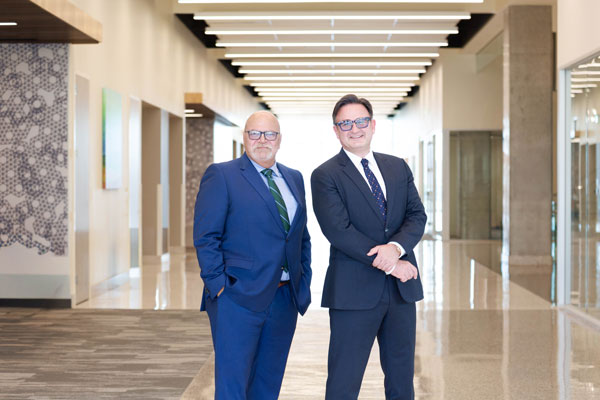
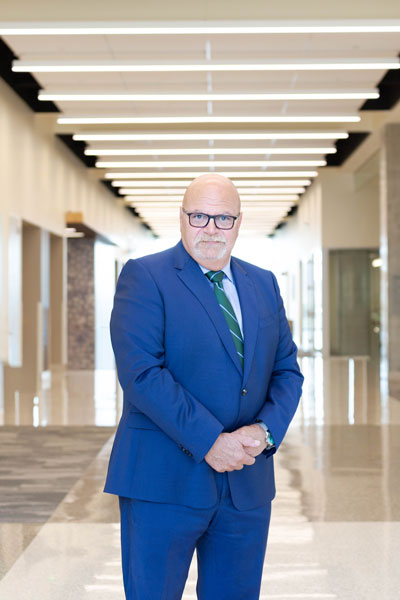
“Dr. T.” is the perfect example. Taglialatela is known around the world for his Alzheimer’s work, and his prestige has yielded tens of millions of dollars in research funding for UTMB. But he’s also making a crucial difference on an individual level. His jovial, endlessly curious spirit makes him an ideal teacher and mentor, and he is one of just two UTMB faculty members who have won two Distinguished Teaching Awards from the Graduate Student Organization. Taglialatela’s first win came in 2013; his second was ten years later.
Either he stopped being interesting for about a decade, he jokes, or “it proves to me—and I’m very proud of it—that I’ve been interesting to students continuously for at least the last ten years.”
He shares a similar pride about the fact that he lives in the Galveston area, and he wants to do everything he can—in and out of the classroom—to help his neighbors and all Texans live healthy lives. In fact, when he was interviewed for this story, Dr. T was prepping for a community event that illustrated the impact of alcohol on the brain. It’s just one way he’s giving back to the city he never expected to love this much, roughly 5,600 miles from Rome.
Don’t get him wrong—the professor still loves to visit Italy. But after a few weeks there, he says, “We’re ready to come back home.”
For more information about UTMB, visit utmb.edu.
The above story was produced by Tyler Hicks with Texas Monthly as part of a sponsored content series about The University of Texas Medical Branch (UTMB).
Photography by Jenn Duncan