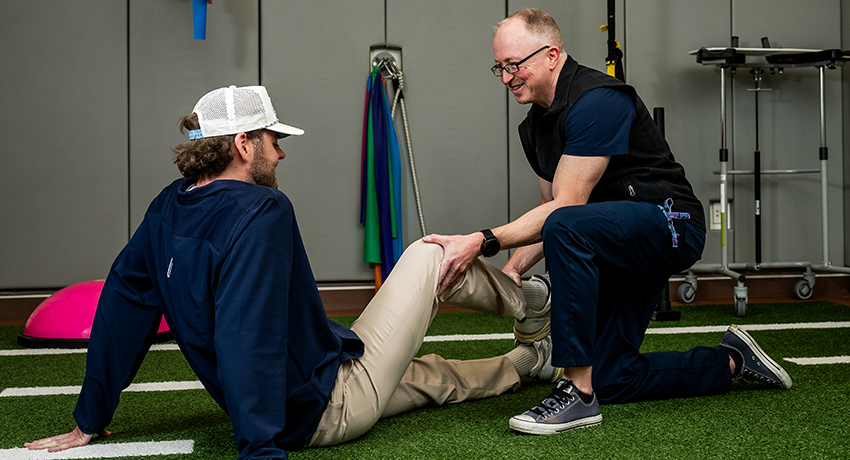
Cooler fall weather can make it easier to spend more time outside, whether that means running, hiking, cycling, playing pickleball or golf, joining a recreational sports league, or tackling more yard work.
But jumping back into a demanding routine too quickly can increase the risk of injury.
“Strains, sprains, and overuse injuries are some of the most common problems I see in adults returning to seasonal activities,” said William M. Weiss, MD, an orthopedic sports medicine specialist at The University of Texas Medical Branch (UTMB Health).
These injuries often involve the shoulder and rotator cuff or the lower body, including the quadriceps, hamstrings, knees, and ankles. While some injuries happen suddenly, many develop when people return to activities they have not done in several months and do more than their bodies are prepared to handle.
Don’t go from zero to weekend warrior
One of the biggest mistakes people make when returning to sports or exercise is jumping back in without enough preparation or conditioning.
Activities such as flag football, running, cycling, or other recreational sports can place significant demands on the body. If you are not regularly performing those movements or exercising at a similar intensity, suddenly doing so on the weekend can increase your risk of injury.
Warming up immediately before an activity can help prepare the body, but it cannot replace consistent conditioning.
If you want to participate in higher-intensity activities on the weekend, build regular physical activity into the rest of your week as well.
Start slowly and build from there
It can be easy to remember what you used to be able to do and expect your body to perform at the same level right away.
Instead, recognize that your fitness may have changed during time away and gradually increase your activity.
If you are returning to distance running, for example, begin with shorter distances and progressively build up. If your goal is to return to strength training, gradually increase the amount of weight you’re using and the intensity of your workouts. And if you plan to play a sport such as flag football, your preparation should eventually include the kinds of movements the activity requires, such as sprinting, pivoting, cutting, throwing or catching.
This reflects an exercise principle known as specificity of training: Training should prepare your body for the activity or outcome you want to achieve.
Cross-training can support general conditioning and may help reduce injury risk, but it does not fully replace practicing the movements required for a specific activity.
Make dynamic movement part of your warmup
Stretching and mobility can play an important role in overall fitness, but static stretching immediately before beginning physical activity has not been shown to significantly reduce injury risk on its own.
Instead, before strenuous activity, focus on a dynamic warmup that gets the body moving through comfortable ranges of motion and prepares the muscles, joints, and nervous system for the activity ahead. Examples include brisk walking, arm circles, leg swings, bodyweight squats, lunges, and light jogging. Athletes returning to sports may also benefit from sport-specific movements such as short sprints, lateral shuffles, or throwing drills.
Pay attention to persistent or worsening pain
Some soreness after returning to an activity is normal. Persistent or worsening pain, however, should not be ignored.
Continuing an activity despite significant pain can increase the risk of further injury.
Minor aches and pains that improve within a few days can often be monitored at home. Consider making an appointment with a physician or other qualified health care professional if pain:
● Persists for more than a few days continues beyond a week
● Worsens rather than improves
● Interferes with normal daily activities
● Is accompanied by significant swelling
● Causes a joint to feel unstable
● Occurs along with locking, catching, or significant clicking in a joint
Many aches and pains associated with a return to activity are to the result of overuse or minor injuries. However, persistent symptoms or a joint that feels unstable, locks, or catches should be evaluated to rule out a more significant injury and help prevent further problems.
Remember fall has its own safety risks
Cooler temperatures do not eliminate environmental risks.
Less daylight can reduce visibility during evening runs, bike rides or hikes. Changing weather can make trails, sidewalks, and other surfaces slippery or unstable. Paying attention to lighting, terrain, and weather conditions can help reduce the risk of unexpected falls or injuries.
Cool or damp conditions may also leave muscles and joints feeling stiff, making it important to prepare your body appropriately before activity.
And although Texas temperatures may be more comfortable in the fall, heat-related illness can still occur. Hydration and paying attention to signs of heat stress remain important during strenuous or prolonged outdoor activity.
Consistency may help reduce injury risk
Staying active throughout the year may make it easier and safer to return to seasonal sports and activities.
Maintaining strength, fitness, mobility, balance, and coordination can help prepare the body for both recreational activities and the physical demands of daily life.
When starting a new activity or returning after time away, increase your activity level gradually, prepare for the specific movements you plan to perform, and include a dynamic warmup before strenuous activity.
And if pain persists, worsens, or is accompanied by symptoms such as swelling, instability, or joint locking, have it evaluated rather than continuing to push through it.
If an injury or persistent pain is keeping you from the activities you enjoy, UTMB Health Orthopedic Sports Medicine specialists will evaluate your symptoms and develop a treatment plan tailored to your needs.