If you’re considering breast reconstruction after a breast cancer diagnosis, you may be faced with a number of decisions in a short amount of time. It can feel like a lot to absorb while also processing a cancer diagnosis.But you don’t have to navigate those decisions alone. At The University of Texas Medical Branch (UTMB Health), the breast reconstruction team helps patients understand their options, answers questions, and guides you through the process one step at a time.
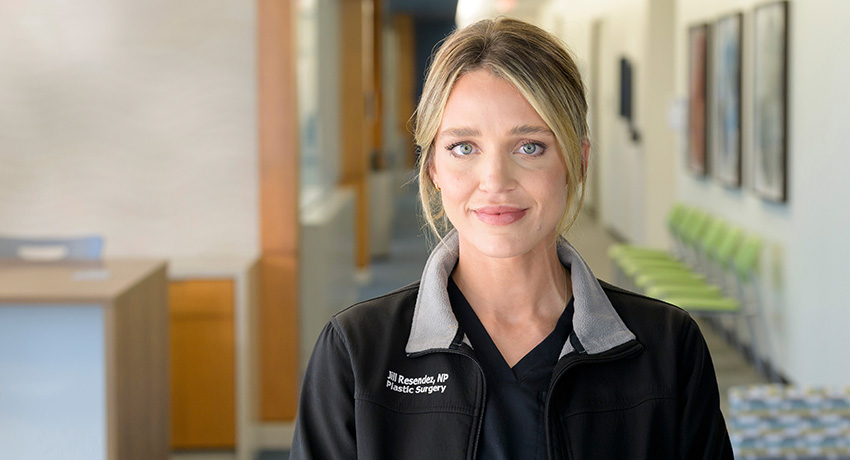
Jill Resendez, a nurse practitioner in the Division of Plastic Surgery at UTMB Health, encourages patients not to feel pressured to have part of the process figured out from the beginning.
Breast reconstruction is a process with multiple stages, decisions, and opportunities to ask questions along the way.
Breast reconstruction takes time
One common misconception about breast reconstruction is that it is a single surgery that produces a final result right away.
In reality, reconstruction can involve multiple procedures or revisions over time. Each patient’s experience is different depending on cancer treatment, the type of reconstruction choosen, overall health, and personal goals.
Resendez supports patients throughout much of the recovery process. This may include monitoring healing, managing complications, performing tissue expander fills, and helping patients understand what to expect next.
She also spends significant time helping patients set realistic expectations.
Reconstructed breasts may not look or feel exactly like natural breasts did before surgery, and reaching the final result can take time.
“There are many options available throughout the reconstruction process,” Resendez said. Working closely with patients at each stage helps the care team work toward a result that helps patients feel comfortable and confident in their bodies again”.
You don’t have to understand all of your options on day one
Early conversations about reconstruction often focus on a few key patient questions:
- What will the surgery involve?
- How long will recovery take?
- How many procedures might I need?
- What will my breasts look and feel like afterward?
But some patients don’t yet know which questions to ask.
That is normal, particularly when reconstruction decisions are happening alongside conversations about cancer treatment.
Resendez said one of the most important parts of her role is helping patients manage the amount of information coming their way and understand the choices available to them.
If something doesn’t make sense the first time it is explained, ask again.
Patients and their supporters should feel comfortable asking the same question as many times as needed and taking time to process the information they receive.
Not every decision has to be made at once.
Coordinating reconstruction with breast cancer care
For patients who choose breast reconstruction, planning should be considered as part of the larger cancer care process.
Breast surgeons and plastic surgeons may need to work together to determine how cancer surgery and reconstruction fit into a patient's overall treatment plan. At UTMB Health, that coordination allows patients to discuss both cancer treatment and reconstruction with specialists who communicate directly with one another.
When appropriate, breast surgery and plastic surgery appointments can be coordinated so patients can meet with both specialists as they consider their options.
That collaboration continues throughout treatment. For patients with newly diagnosed breast cancer, specialists from multiple disciplines review cases together through UTMB Health’s breast tumor board.
The goal is to give patients a coordinated plan rather than leaving them to navigate separate aspects of care on their own.
What happens after reconstruction surgery?
The operation itself is only one part of the reconstruction process.
During follow-up visits, the plastic surgery team monitors healing and helps manage any problems or complications that arise.
For patients whose reconstruction involves tissue expanders, follow-up care may also include a series of tissue expander fills. A tissue expander is used to gradually create space for a future breast implant as part of a staged reconstruction process.
Throughout those visits, the care team will help patients understand where they are in the process and what to expect next.
That ongoing education can be especially valuable because the reconstruction timeline may feel difficult to picture at the beginning.
Nipple and areola reconstruction may come later
Some decisions come much later in the reconstruction process.
Nipple and areola reconstruction or tattooing is typically one of the final stages.
Depending on a patient's reconstruction and personal preferences, options may include surgical nipple reconstruction or 3D nipple-areola tattooing.
With tattooing, characteristics such as size, shape, and color can be customized to create a natural appearance and, when applicable, more closely match the opposite breast.
It may seem like a relatively small detail compared with the surgeries and cancer treatment that came before it, but Resendez has seen how meaningful this stage can be for patients.
For some women, nipple-areola tattooing provides a sense of completion after a long reconstruction process and helps the reconstructed breast feel more like a natural part of their body.
The emotional side of reconstruction matters, too
Recovery is not only physical.
Resendez said fear is one of the concerns she hears most often from patients, and it can take many forms.
Patients may fear the unknown or worry about what the future holds. They may be worried about finances, their families, or the effect their diagnosis is having on their children or spouse.
Not every concern has a simple answer.
“Sometimes patients don’t need me to have an answer; they just need someone to listen,” Resendez said.
That perspective shapes how she approaches care after surgery. A clinic appointment may include checking an incision or discussing the next procedure, but it can also be an opportunity to ask how the patient is doing more broadly.
Resendez's connection to this part of her work is personal. She lost her mother to breast cancer when she was 18.
Years later, while training in nipple and areola tattooing and working with women who had undergone breast cancer treatment, she began to see parts of her mother's experience reflected in the patients she met.
Watching her mother go through breast cancer, including the impact it had on how she felt about herself, continues to shape the way Resendez cares for patients today.
Finding support from people who understand
Support can also come from meeting other patients and families who have been through similar experiences.
UTMB hosts an annual Breast Reconstruction Awareness Day, or BRA Day, event that helps bring patients, families, and caregivers together to learn, connect, and share experiences.
The event gives patients an opportunity to learn about reconstruction options and available resources while meeting other women who have traveled a similar path. Patients can also bring family members, friends, and other members of their support system.
Resendez hopes they leave with more than information. She wants them to leave feeling “a little more hopeful, supported, and less alone.”
Take reconstruction one step at a time
If you are beginning to think about breast reconstruction, you may be looking at a long list of options and wondering how you’re supposed to make all of those decisions.
You don’t have to make them all today.
Learn about your options. Ask questions. Bring someone you trust to appointments if that would help. Ask your care team to explain something again if you need them to.
And remember that some decisions can wait until later in the reconstruction process.
Breast reconstruction is highly individual. A team that can help you understand each stage, coordinate your care, and walk through your options can make it easier to focus on the decision in front of you rather than trying to navigate the entire process at once.