Learning that you are at high risk for breast cancer can bring up new questions about your health and future.
For example, what does “high risk” actually mean? Does it mean you are likely to develop breast cancer? Should you be doing anything differently to help lower your risk?
One key point to understand is that being considered high risk is not the same as having breast cancer. It means your care team has more information to work with and can build a screening and prevention plan around your individual risk.
How breast cancer risk is determined
Breast cancer risk isn’t based on a single factor.
A breast specialist uses a formal risk assessment to estimate your likelihood of developing breast cancer over your lifetime. That assessment considers many aspects of your personal and family history.
Factors may include:
- A family history of breast cancer
- Whether you’ve had genetic testing for inherited breast cancer risk
- Your age when your menstrual periods began
- Your age at menopause
- Your age at your first pregnancy
- Whether you’ve ever been pregnant
- Other factors that affect your lifetime exposure to hormones
Some inherited genetic mutations and a strong family history can significantly increase breast cancer risk. But many women who develop breast cancer don’t have a known genetic mutation or a family history of the disease.
That’s why looking at the full picture is important.
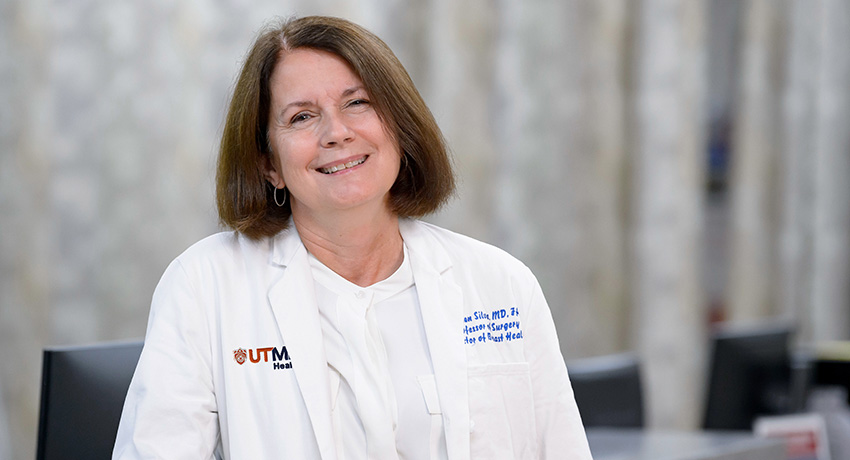
“You don’t want to assume you’re at average risk when you may actually be at higher risk,” said Dr. Colleen Silva, a breast surgeon at The University of Texas Medical Center (UTMB Health).
A formal risk assessment can help you and your care team better understand your breast cancer riskl and whether additional screening or prevention options should be considered.
What ‘high risk’ means
A woman whose calculated lifetime risk of breast cancer is greater than 20% may be considered high risk.
That does not mean she has a 20% chance of developing breast cancer in the next year, and it does not mean cancer is inevitable. Instead, it is an estimate of lifetime risk that can help determine whether additional screening or prevention strategies may be appropriate.
For some women, knowing they are at higher risk changes how closely their breast health is monitored.
Enhanced screening for women at high risk
If you are at higher risk for breast cancer, your care team may recommend both mammograms and breast MRIs.
For some patients, those screenings are staggered throughout the year. For example, you may have a mammogram and then undergo a breast MRI about six months later rather than waiting a full year for your next breast imaging study.
The goal, Silva said, is to “catch it early, catch it earlier.”
Having different types of imaging at different points during the year gives your care team more opportunities to look for changes and, if cancer does develop, potentially find it at an earlier stage.
Ultrasound may also be used as supplemental breast imaging in some circumstances. Whether it is needed depends on your breast imaging findings, overall risk level, and other clinical factors.
Your screening schedule should be personalized based on your age, breast history, and overall level of risk.
Can you lower your breast cancer risk?
For some women, yes.
Enhanced screening is designed to detect breast cancer earlier. Risk-reduction strategies are different: Their goal is to lower the likelihood that breast cancer develops in the first place.
Depending on your individual risk, options may include medication to help lower your risk or, for some patients with very high inherited risk, preventive surgery.
Risk-reducing medications
Certain medications that are also used to treat breast cancer can be prescribed to some women who don’t have breast cancer but are at increased risk of developing it.
These medications are typically taken daily for a period of several years and may significantly lower breast cancer risk for eligible patients.
The right medication, potential benefits, and possible side effects vary from person to person, so this decision should be made with a physician who understands your personal risk factors and health history.
Risk-reducing surgery
Preventive, or risk-reducing, mastectomy (surgical removal of the breasts) may be an option if you carry an inherited genetic mutation associated with a substantially higher lifetime risk of breast cancer.
It is not a standard recommendation for everyone with above-average risk.
Instead, the decision depends on factors such as the specific genetic mutation, estimated level of risk, personal and family history, and your goals and preferences.
For women with certain inherited mutations, Silva said the likelihood of developing breast cancer can be significantly greater, which may make risk-reducing surgery part of the conversation.
If you’re considering surgery, having access to specialists who regularly care for high-risk patients can be especially important.
A coordinated approach to high-risk breast care
Breast cancer risk can involve several areas of care, from imaging and genetics to breast surgery and reconstructive surgery.
At UTMB Health, breast specialists work together to help patients understand their options and develop a coordinated plan.
“We work together,” Silva said.
When patients consider surgery, they may meet with both a breast surgeon and a plastic surgeon as part of the same planning process. UTMB Health coordinates breast surgery and plastic surgery appointments so that, when appropriate, patients can see both specialists on the same day.
That collaboration continues throughout treatment. For patients diagnosed with breast cancer, specialists from multiple disciplines review cases together through the UTMB breast tumor board, where treatment options and care plans can be discussed across specialties.
The goal is to provide patients with a coordinated plan rather than leaving them to navigate different aspects of care on their own.
Getting a clearer picture of your risk
Start by talking with your doctor about your personal and family history.
If you have a strong family history of breast or related cancers, have been told you may be at increased risk, or have questions about whether genetic testing is appropriate, ask whether a formal breast cancer risk assessment or consultation with a breast specialist may be right for you.
Silva recommends seeking out a team with experience in evaluating and managing patients at increased risk of breast cancer.
Meeting with a breast specialist can provide a clearer understanding of your individual risk and help you determine which screening or prevention options, if any, may be appropriate.
Being at high risk is not a diagnosis. It is information that can help you and your care team create a more personalized plan for your breast health.