You can never be too young to learn about the signs, symptoms, and risks of breast cancer. Everyone’s risk is different, and there is no one-size-fits-all approach to breast health.
There are steps you can take to manage your breast health starting in your teens or 20s, whether you’re seeing a gynecologist for routine care or have concerns such as a new lump or nipple discharge. Three important steps include:
Know your risk
- Talk with family members to learn about your family’s health history.
- Talk with your doctor about your personal risk factors for breast cancer.
Know your breasts
- Know what your breasts normally look and feel like.
- Use a mirror to see all areas of the breasts.
- Talk with your doctor if you notice any changes.
Get screened
- Work with your doctor to determine when to begin routine mammograms and clinical breast exams , and how often you should have them.
- Consider your person and family history when making a screening plan.
- Talk with your doctor about changes that could affect your screening schedule, such as new cancer diagnosis in your family or changes in your breast health.
About risk and screening recommendations
Annual screening mammograms typically begin at age 40 for women at average risk of breast cancer. Screening may begin earlier for those at high risk based on factors such as family history, genetic mutations, or other risk factors.
Know what’s normal for your breasts
While monthly self-exams are no not always recommended the way they were in the past, it is still important to know what your breasts normally look and feel like. Be sure to look in the mirror so you can see all areas of the breasts.
See your healthcare provider if you notice any of these breast changes:
- A lump, hard knot, or thickening in the breast or underarm area
- Swelling, warmth, redness or darkening of the skin of the breast
- A change in the size or shape of the breast
- Dimpling or puckering of the skin
- An itchy, scaly, sore, or rash on the nipple
- Pulling in of your nipple or other parts of the breast
- New nipple discharge, especially if it is bloody
- New pain in one area of the breast that does not go away
Know your risk factors for breast cancer
- Increasing age
- Family history of breast, ovarian, and other cancers
- Personal history of breast, ovarian, and other cancers
- Dense breast tissue on mammography
- Having a genetic mutation linked to breast cancer
- Prior breast biopsy with finding of:
- Atypical ductal hyperplasia
- Atypical lobular hyperplasia
- Radial scar/complex sclerosing lesion
- Focal epithelial hyperplasia
- Lobular carcinoma in situ
- Intraductal papilloma (certain cases)
- Early menarche (first menstrual period before age 12)
- Late menopause (after age 55)
- Never having a child or having a first pregnancy late in life
- Menopausal hormone therapy with combination estrogen and progestin. Estrogen only pills do not increase risk.
- Certain ethnic backgrounds
- Obesity
- Alcohol consumption
- History of lymphoma with radiation to the chest
Know about mammography guidelines
While mammography guidelines are important, they can change over time. Discuss your screening plan with your clinician at each annual exam.
Please note, these guidelines apply to women at average risk for breast cancer. For screening purposes, a woman is considered to be at average risk if she doesn’t have a personal history of breast cancer, a strong family history of breast cancer, or a genetic mutation known to increase risk of breast cancer (such as in a BRCA1 or BRCA2 mutation), or a history of chest radiation therapy before age 30.
Supplemental screening
If you have one or more risk factors, or if your physician has determined that you are at high risk for breast cancer, you may benefit from additional screening tests such as breast MRI or ultrasound.
If your mammogram shows you have dense breast tissure, you may benefit from supplemental screening with breast ultrasound.
Mammograms
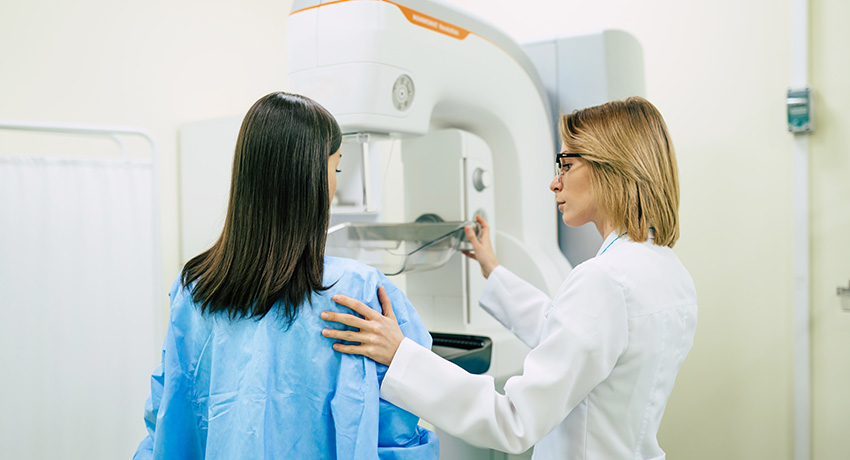
Everyone should know what to expect from a mammogram for breast cancer screening, including what the exam can and cannot do. Mammograms are low-dose X-rays of the breast. Regular mammograms can help detect breast cancer at an early stage when treatment is most likely to be successful. A mammogram can identify changes associated with early breast cancer years before a lump can be felt or other symptoms develop.
Mammograms are not perfect. They can miss some breast cancers. There’s also a small chance of being diagnosed with a cancer that never would have caused health problems if it had not been found during screening. (This is called overdiagnosis.) It's important for women getting mammograms to understand both the benefits and limitations of screening.
Make breast health a priority. Stay up to date on recommended screenings and speak with a UTMB Health Women's Health specialist about any changes or concerns.
Medical expertise and review provided by Ashley Stanley, MD, radiologist at The University of Texas Medical Branch (UTMB Health), who contributed to the development of this article and verified its clinical content.