For children, holiday travel can mean airplanes, road trips, crowded family gatherings, and a break from the routines that help keep them healthy. While families can’t avoid every cough, cold, or stomach bug while traveling, Suzanne LaForte, MD, a pediatrician at The University of Texas Medical Branch (UTMB Health), says a few simple preparations can help reduce the risk of illness and keep the holidays happier.
The approaching holiday season is a good time to check children’s vaccination schedules. LaForte said October is the ideal time to get a flu shot.
“The first thing to do before traveling is make sure everyone in the family is up to date on their vaccines. The flu vaccine is available to children as young as 6 months old,” she said. “If you’re planning a holiday trip or gathering with family and friends, I strongly advise everyone to get a flu shot and to talk with their healthcare provider about recommended COVID-19 and respiratory syncytial virus (RSV) vaccines for infants.”
Remember who else might be at the gathering
School-aged children can easily bring home what seems like a minor cold and unknowingly pass it on to an older adult or child with a weakened immune system who may become much sicker.
“A baby born preterm or a family member with lung or heart problems might need to be hospitalized after catching a virus that causes only mild symptoms in a school-aged child,” LaForte said. “Germs can be spread anywhere people gather closely, including airports, bus stations, and shopping centers."
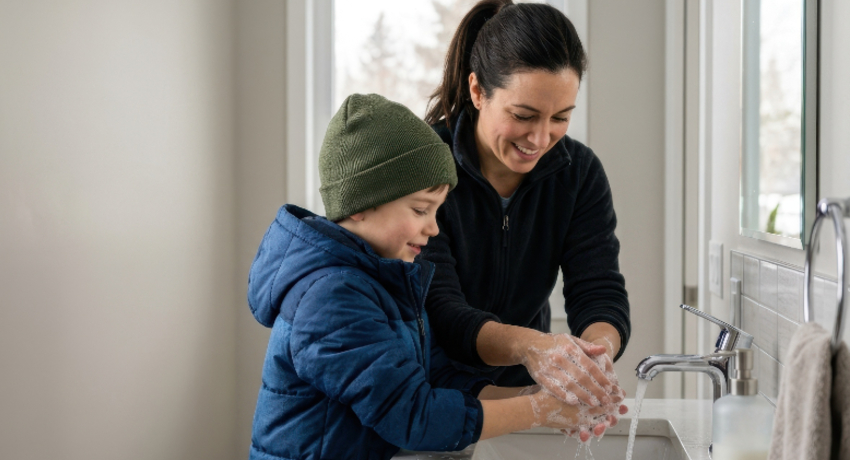
Frequent handwashing before meals can help reduce the spread of infections. It also helps when everyone has their own plate, cup, and utensils. Avoid sharing food, drinks, or eating utensils whenever possible.
That can be especially difficult on a long car ride, but LaForte said sharing food or beverages around the family could spread viruses among family members.
“And I hate to put a limit on hugs and kisses, but remember, they’re another way germs are spread,” she said.
Some holiday health worries are just myths
There are many ways germs can spread during the holidays, but some common beliefs about getting sick simply aren’t true.
“If your child isn’t wearing a hat, gloves, or is barefoot in cold weather, this will not be the cause of an illness or an ear infection,” LaForte said. “Dress appropriately for the weather, but cold outdoor temperatures are not how viruses are transmitted, so there’s no reason to worry about that.”
Pack a little insurance for the road
Being prepared for a cold, fever, or a stomach bug while traveling can be as simple as putting together a travel health kit.
“This can contain acetaminophen or ibuprofen for fevers, packages of an electrolyte-replacement drink that can be mixed with water for upset stomachs, and some sugar-free gum or lollipops to help relieve ear pressure during airplane takeoffs and landings,” LaForte said. “For children 2 and older who experience motion sickness, over-the-counter medications may help, as well as dry cereal or saltine crackers.”
Water, juice, and milk can help young children stay hydrated. Although getting kids to eat fruits and vegetables while traveling can be challenging, LaForte said getting them in whenever possible is helpful.
“The travel health kit should contain hand sanitizer, too,” she said. “Soap and water are always best, but they aren’t available, hand sanitizer is a good alternative.”
Keep the focus on enjoying the trip
Traveling with children rarely goes exactly according to plan. Someone will forget a water bottle, refuse a healthy snack, touch something questionable in an airport, or come down with a runny nose at the worst possible time.
The goal, LaForte said, isn’t to keep children in a bubble. A little preparation can help families manage the inevitable bumps along the way, spending less time worrying about illness and more time enjoying the people and places that make holiday travel worthwhile.