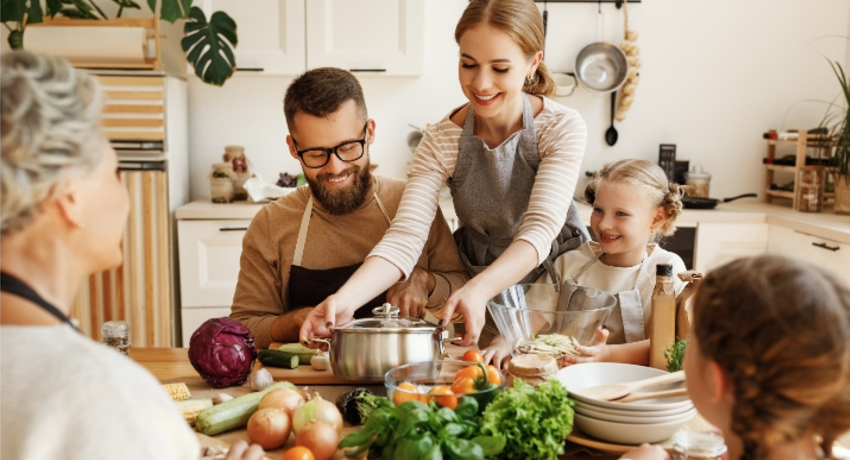
The holidays are a time for gathering around the table, sharing favorite foods, and enjoying traditions that come around only once a year. But maintaining healthy habits during the season doesn't have to mean giving up those indulgences. By borrowing a few principles from the world's Blue Zones, regions where people tend to live longer, healthier lives, families can make holiday celebrations more nourishing while keeping the focus on what matters most: good food, good company, and enjoying every bite.
Slow down and savor the food
“One of the main dietary principles in Blue Zones is the 80% rule,” said Lindsay Hughes, MS, RD, LD, a registered dietitian with The University of Texas Medical Branch (UTMB Health). “First, take a moment to notice your food, what it looks like and smells like, and remember to feel gratitude for it. The 80% rule is about eating until you’re satisfied, but not stuffed. That’s not easy when you’re facing a holiday spread with so many dishes and you want to try them all.”
Hughes recommends slowing down before filling a plate, taking a moment to look over the offerings and consider which foods are most appealing.
“Decide what’s worth it. There are some things you can eat anytime,” she said. “Choose the dishes that you only get at holiday time. Also, if someone brings something that’s store-bought instead of homemade, you might skip that. That’s the 80% rule in action.”
The idea isn’t to deprive yourself of favorite holiday foods, but to be more intentional about what you choose and how much you eat.
Give plants a place at the table
Traditional holiday meals often feature plenty of meat, creamy sauces, cheese, and starchy side dishes. Hughes suggests balancing those favorites with more plant-based options, particularly dishes featuring beans, legumes, vegetables, and whole grains.
“Making sure there’s a vegetable alternative, or a salad, can really help,” she said. “And there are some simple swaps that can make recipes healthier. If a recipe calls for sautéing vegetables in butter, then olive oil is an easy switch. Try substituting Greek yogurt or cottage cheese for sour cream.”
For recipes that call for pasta, she recommends trying spaghetti squash or high-protein, bean-based pasta in place of traditional noodles.
“It tastes similar enough,” she said. “It won’t taste the same as traditional pasta, but it doesn’t have to. It just needs to taste good!”
The goal is to make plant-based foods a more prominent part of the meal rather than eliminating meat or other traditional favorites.
“The most important thing is the overall dietary pattern,” Hughes said. “You can’t choose the healthiest food all the time, and that’s just part of life. But just try to choose the healthier foods most of the time, and include them with a variety of other foods.”
A Blue Zones-inspired holiday meal doesn’t mean giving up traditional favorites or going vegetarian. Instead, the idea is to give plant-based foods a more prominent place on the table. Hughes suggests starting with an appetizer such as roasted garlic, white bean, and rosemary dip, followed by salmon as an alternative to turkey.
Side dishes can feature squash and quinoa, beans, black-eyed peas, leafy greens, and other colorful vegetables, including sweet potatoes, green beans, broccoli, and Brussels sprouts. A hearty salad combining arugula, chickpeas, white beans, and roasted sweet potatoes is another option.
Even dessert can get a healthier makeover by putting fruit in the spotlight, perhaps sautéed with wine or cherry or grape juice. Fruit cobblers and crisps can be adapted to satisfy a sweet tooth, and Hughes encourages applying the 80% rule here, too: Eat slowly, savor each bite, and stop when comfortably satisfied rather than uncomfortably full.
Make movement and connection part of the celebration
One of the most interesting aspects of the Blue Zones philosophy is that longevity isn’t just about what people eat. It's also about how they live, how they connect with others, and how much they move throughout the day. Natural movement and social connection are important Blue Zones principles, even though they have little to do with food choices.
“Eating together is one of the hallmarks of the Blue Zones philosophy,” Hughes said. “It's not only about the food. It’s about the people, and eating together. We do associate the holiday season with food, but communal meals and movement are a big part of it.”
Rather than spending time snacking while the meal is being prepared, Hughes encourages families to get outside for a walk or play yard games such as cornhole. These activities add movement to holiday traditions while giving family members a chance to connect and enjoy one another’s company beyond the dinner table.
Social connection is also associated with better health outcomes and a lower risk of premature death. Sharing a meal offers an opportunity to slow down, enjoy conversation, strengthen relationships, and feel connected to others.
“It’s a good time to consider how often you share meals with family apart from the holidays,” Hughes said. “If you’re not eating together at all, try to make it once a week. Become more mindful about the social benefits, and the movement, and set a goal to make that happen as often as possible. Across all of the Blue Zones, people tend to move and walk much more than we generally do.”
A healthier approach without the guilt
One or two indulgent meals do not define a person's overall eating habits. Hughes said enjoying a little more food during the holiday season is simply part of life, and people shouldn't let an occasional celebration derail their healthy habits.
“Give yourself some grace,” she said. “Take the opportunity to socialize and recognize that one day, perhaps you ate a little more, but later or tomorrow you can return to your normal pattern. Overeating once or twice doesn’t undo an overall pattern of healthy eating, and it’s important to move away from ‘all or nothing’ thinking.”
Ultimately, the Blue Zones approach offers a reminder that healthy living is about more than what’s on the plate. It’s about making plant-forward meals part of everyday life, staying active, and making time for the people who matter. Those habits don’t have to be put on hold during the holidays. In fact, the season’s gatherings offer an opportunity to strengthen them. By making room for more plant-based dishes, slowing down to enjoy a meal, getting outside together, and prioritizing time with family and friends, people can create holiday traditions that promote health, connection, and enjoyment.