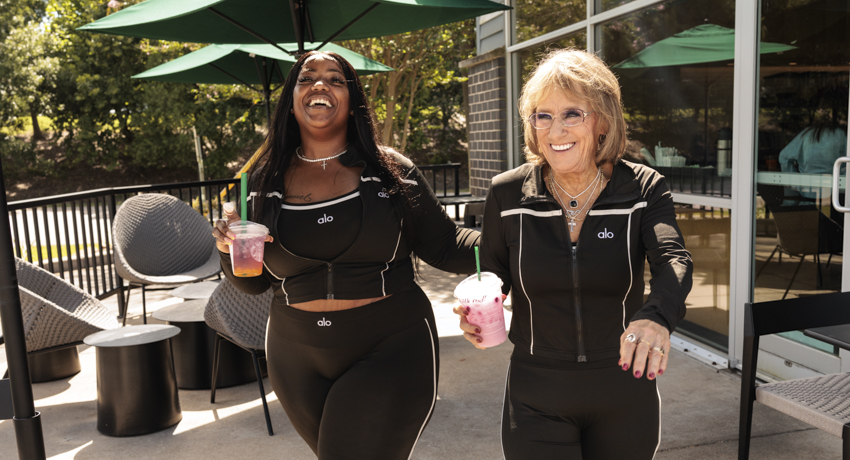
Lynda Patrick was tired of worrying about her weight. Obesity had already contributed to the death of her sister and she knew her own health was at risk.
“I've lost over a hundred pounds several times in my lifetime, and I was just tired of going on a diet, working hard at it for several years, and then slowly, slowly, slowly gaining it all back. Then struggling to get back into that mindset to do it again,” Lynda said.
At her primary care appointment, she shared her frustration about feeling stuck, and her doctor referred her to the weight management team at The University of Texas Medical Branch (UTMB Health).
Over the next five months, Lynda worked with the weight management team to develop a treatment plan that was right for her.
“Ms. Patrick was a very motivated patient who came to us with several medical conditions, including sleep apnea, high cholesterol, prediabetes, fatty liver disease, and reflux,” said Dr. Sarah Samreen, director of Metabolic and Bariatric Surgery at UTMB Health. “And based on her weight and medical conditions, we used a shared decision-making approach and determined that gastric bypass surgery offered the best opportunity to improve her health and relieve her reflux.”
A life reshaped
In March 2024, Samreen performed the procedure, and Lynda went home the next day to heal. A little more than two years later, Lynda has lost more than 130 pounds, weighs 118 pounds, and goes to the gym five days a week.
“If I had known 40 years ago how good I would feel if I went to the gym all the time, I would have probably done it 40 years ago,” Lynda said. “But I didn't know that.”
Weight loss and strength training have dramatically improved most of Lynda’s health conditions, and for Samreen, that is the main focus.
“Bariatric surgery, and especially gastric bypass, is as close to a cure as we can get for Type 2 diabetes because it truly works at a hormonal and biochemical level in the body,” Samreen said. “And right away, the very next day, even though the patient hasn't lost any weight yet, their requirement for diabetes medication goes down and their blood glucose levels improve right away.”
The anatomical changes made during surgery cause the body to produce more GLP-1 naturally, Samreen said.
“It breaks my heart that there's not enough awareness among the general public, and sometimes among healthcare professionals, that gastric bypass is as close to a cure for Type 2 diabetes as we can get,” Samreen said. “Patients get stuck with a disease like Type 2 diabetes, which is a slow killer, for their entire lives.”
Several major medical organizations, including the American Diabetes Association (ADA) and the National Institutes of Health (NIH), recommend considering bariatric surgery for patients with body mass index (BMI) of 30 or higher and poorly controlled Type 2 diabetes.
“It's not just about the weight. It's about the medical problems,” Samreen said.
While the surgical recovery and new eating plan were challenging, Lynda has never regretted the decision to have the surgery.
“I was expecting more pain than there was — not to say that the surgery wasn't painful, don't misunderstand — but it was tolerable,” Lynda said.
She still thinks about food but has not had sugar in more than two years.
“I eat very small meals. Sometimes three meals a day, sometimes five meals a day, just depending. A meal might be some crackers and cheese,” Lynda said.
New routines lead to new friendship
Her life no longer revolves around food. She’s strong, active, and committed to her health. She also found support and friendship at the gym, where she met Samantha Owens. Samantha, who is also Dr. Samreen’s patient, was exercising as part of her own weight management program after having the gastric sleeve procedure.
Lynda and Samantha work out together five days a week, talk, and support each other.
“We have talked about things like how your taste buds change your taste for the foods you liked before,” Lynda said.
Their experiences reflect the highly individualized approach of the UTMB Health weight management program.
“Because each patient is unique, one size doesn't fit all,” Samreen said. “We need to evaluate the patient's needs.”
The program also emphasizes long-term follow-up.
“We meet patients at a minimum of two weeks, six weeks, three months, six months, 12 months, and at least yearly afterward,” Samreen said.
At a recent appointment, Lynda was eager to show Samreen her progress.
“She physically demonstrated to me how now she could do a pushup against a steady object and then lift her hands to touch her shoulders while maintaining stability — something she never could have done before,” Samreen said.
Physical fitness affects more than just a patient’s daily life. It can have a huge impact on life span.
“A large study published in the The Lancet showed that in patients with diabetes, when we do bariatric surgery, there's on average a 9.3-year increase in their life expectancy,” Samreen said. “And in patients without diabetes, there's a 5.1-year increase in life expectancy. This is huge!”