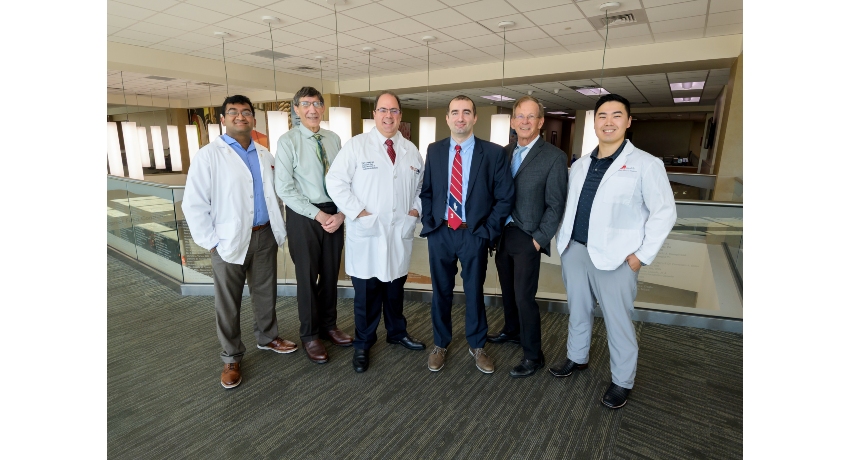
For many academic physicians, success is measured by publications and presentations. For Ibrahim Mortada, MD, a postdoctoral fellow in the Sealy Department of Cardiovascular Medicine at The University of Texas Medical Branch (UTMB), it is also measured by the growth and achievements of the medical students he mentors.
That commitment to mentorship recently led to a publication in the Journal of the American Heart Association (JAHA). Three UTMB medical students joined Mortada as co-authors on research examining outcomes of transcatheter versus surgical aortic valve replacement in patients with heart failure and chronic kidney disease.
Research with real-world impact
The article, “Comparative Outcomes of Transcatheter Versus Surgical Aortic Valve Replacement in Patients with Heart Failure and Chronic Kidney Disease,” addresses a complex clinical question involving some of the most medically vulnerable cardiovascular patients. The study reflects not only a significant scholarly achievement but also a mentorship model designed to prepare the next generation of physician-scientists, medical professionals who combine patient care and scientific research.
“For me, the success of research is measured not only by the number of manuscripts published, but also by the students we mentor and the impact we have on their professional development,” Mortada said. “While I am proud of these scholarly contributions, I am equally proud of the opportunity to support the academic growth of future physicians.”
Mentorship in action
Over the past year, Mortada has collaborated with UTMB medical students on more than 15 manuscripts and 15 abstracts. Through these projects, students not only learn research methodology but also how to critically evaluate evidence, ask meaningful clinical questions, and contribute to work that can influence patient care.
That approach resonated with fourth-year medical student Aaron Lee, who first connected with Mortada after sending what he describes as a cold email expressing interest in research.
“I was told I would learn a lot from him, and that turned out to be true,” Lee said. “When I became interested in research, he gave me opportunities to get involved immediately. At first, there was a lot of guidance on how to structure papers and think through research questions. Over time, I was writing entire manuscripts and helping mentor other students who joined the team.”
For Lee, one of the most important lessons extended well beyond writing manuscripts.
“My biggest takeaway wasn’t just learning how to conduct research,” he said. “It was learning how to think critically about evidence and then pass that knowledge on to younger students. That’s something I’ll carry with me throughout my career.”
That cycle of mentorship has become a defining characteristic of the group’s work. As students gain experience, they support newer team members, creating a collaborative environment where knowledge and experience are shared across all levels of training.
Second-year medical student Jay Dileep joined the group with previous laboratory research experience but little exposure to clinical cardiovascular research.
“I reached out to the cardiology department because I wanted to learn more about the field and the questions clinicians are trying to answer,” Dileep said. “One thing that stood out about Dr. Mortada was his willingness to work with students who are eager to learn. He mentors, guides, and helps you pursue the goals you’re working toward.”
Through the research process, Dileep gained a deeper understanding of how clinical observations evolve into research questions that can ultimately influence patient care.
“Research helps you understand the ‘why’ behind medicine,” he said. “The treatments and guidelines we use today exist because someone asked an important question and tested it. Being part of that process gives you a completely different perspective as a future physician.”
Third-year medical student Avinav Sanjel echoed those sentiments, describing a mentorship experience that extended far beyond academic projects.
“There is the academic mentorship that comes through research, but there’s also personal mentorship,” Sanjel said. “Dr. Mortada is always willing to answer questions, whether they’re about a project or about becoming a better physician. The faculty here do an excellent job not only teaching research, but also helping students think about the kind of doctors they want to become.”