Researchers at The University of Texas Medical Branch (UTMB) have been awarded a five-year, $1.8 million grant from the National Institutes of Health (NIH) to support a collaborative effort to develop a broadly protective monoclonal antibody treatment capable of neutralizing multiple South American arenaviruses.
The project, funded by the NIH National Institute of Allergy and Infectious Diseases, brings together scientists working to address one of the biggest challenges in arenavirus research: the remarkable diversity of the viruses. While treatments that target a single virus can be effective, developing a therapy that works across multiple arenaviruses has proven far more difficult.
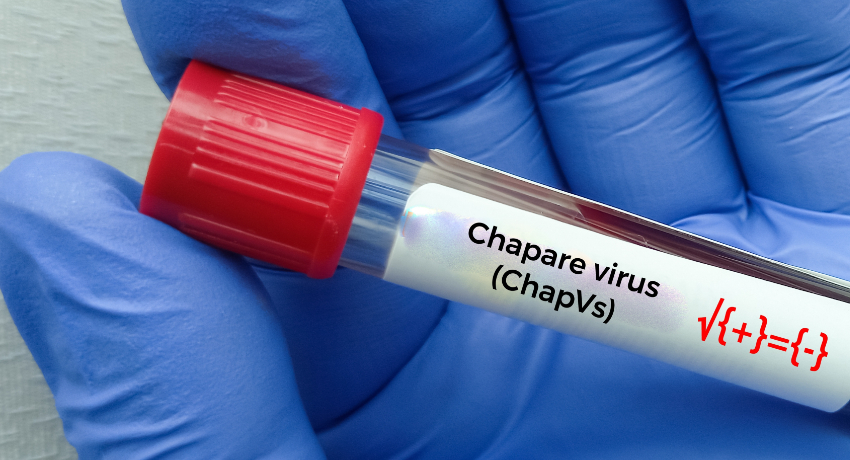
The arenaviruses, which include Junin, Machupo, Sabia, Guanarito, and Chapare viruses, can cause severe hemorrhagic fever and neurologic disease in humans.
 “This is a collaboration with the La Jolla Institute for Immunology in San Diego and Dr. Kate Hastie,” said Robert Cross, PhD, the UTMB principal investigator and associate professor in the Department of Microbiology and Immunology.
These viruses are maintained in nature by rodents and are responsible for significant disease burdens in parts of South and Central America. Although infections are rare in the United States, international travel and close economic and family ties between the regions mean the viruses remain a concern for public health officials in the U.S.
“Understanding rodent ecology and obtaining samples is absolutely essential to the research, but our primary focus is preventing and treating human infections,” Cross said.
Researchers have developed a novel approach that is generating monoclonal antibodies with strong cross-reactivity and cross-neutralization against multiple pathogenic arenaviruses from South America. The goal is to create a single treatment that can provide broad protection rather than developing numerous separate drugs specific to each virus.
Most of the targeted viruses for this work can cause hemorrhagic fever, leading to blood-clotting disorders and, in some cases, serious neurological complications such as seizures, balance problems, and other neurological deficits. Survivors may experience long recoveries and lasting health effects. Fatality rates can range from about 10% to 50%.
While person-to-person transmission is possible, it generally occurs through close contact, such as caregiving or healthcare exposure, rather than casual airborne spread. Treatment options remain limited.
UTMB will evaluate the antibodies using its specialized high-containment research infrastructure. Antibodies developed by the La Jolla Institute will be sent to UTMB, where researchers will test their ability to neutralize authentic arenaviruses in Biosafety Level 4 laboratories.
The work represents an important step toward future clinical trials in humans. Antibodies that demonstrate broad protection in laboratory testing and animal studies could advance as candidates for evaluation in people.
"The goal of the project is to further develop these antibodies and get them to a point where we can hopefully protect animals, a critical steppingstone before clinical trials in humans," Cross said.