Discover new biological mechanisms and therapeutic targets.
Engineer innovative nucleic acid platforms and therapeutic molecules.
Deliver nucleic acids effectively to the cells and tissues where they are needed.
Translate discoveries toward clinically meaningful therapies.
Nucleic acid therapeutics are inherently multidisciplinary. Successful therapies require advances in biology, molecular design, chemistry, delivery, disease-specific knowledge, and clinical translation. CNAT, therefore, organizes its research around the following six interconnected programs rather than isolated technologies. Investigators across these programs share scientific expertise, technology platforms, computational resources, and translational capabilities.
Infectious Diseases
Genetic Diseases and Gene Therapy
Cancer and Autoimmune Cell Therapies
Personalized Cancer Therapeutic Vaccines
RNA Biology
Targeted Nucleic Acid Delivery
CNAT develops and integrates nucleic acid technologies that can be applied across multiple diseases and therapeutic areas.
CNAT builds upon existing nucleic acid technology programs at UTMB with demonstrated proof-of-concept in RNA vaccine development. The Center's foundational work includes RNA vaccine programs involving Andes virus, Rift Valley fever virus, Hantaan virus, and Crimean-Congo hemorrhagic fever virus. mRNA vaccine platforms developed at UTMB have demonstrated strong protection against challenge, providing an example of how fundamental nucleic acid technology development can progress toward disease-specific applications.
The Center also builds upon the development of UTMB-ribo™, an original circular RNA vaccine platform established at UTMB and currently being patented. These programs provide a foundation from which CNAT can expand nucleic acid technology development into genetic disease, cancer, autoimmune disease, and other therapeutic areas.
Leadership
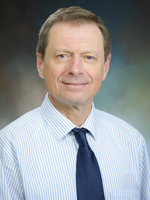
Alexander Bukreyev, M.S., Ph.D. Inaugural Director, Center for Nucleic Acid Technologies
Dr. Bukreyev is a virologist and vaccinologist whose research includes the development of RNA vaccine technologies, circular RNA platforms, and novel therapeutic approaches to infectious diseases. His work has contributed to the development and evaluation of experimental RNA vaccines against multiple high-consequence viral pathogens.
As Inaugural Director of CNAT, Dr. Bukreyev leads the development of a multidisciplinary Center designed to connect nucleic acid biology, therapeutic engineering, delivery technologies, disease expertise, and clinical translation across UTMB.
CNAT Faculty
CNAT faculty maintain appointments within UTMB academic departments while participating in an integrated Center structure that promotes multidisciplinary research, shared technologies, and collaborative therapeutic development. Your organizational model specifically establishes departmental administrative homes while strategic direction and accountability operate through the Center.
One of CNAT's core goals is to train scientists and clinician-investigators who can work across the traditional boundaries separating fundamental biology, engineering, therapeutic development, and clinical translation. Education is one of the five strategic goals in the Center proposal. CNAT will provide opportunities for graduate students, postdoctoral fellows, research scientists, and clinician-investigators to participate in multidisciplinary nucleic acid research.
Training activities are expected to include research mentorship, interdisciplinary seminars, visiting scientists, Center retreats, collaborative projects, and development of a GSBS Nucleic Acid Therapeutics Program, which is included in the Center's organizational plan. The goal is to prepare trainees not only to understand nucleic acid biology, but also to translate that knowledge into technologies and medicines.