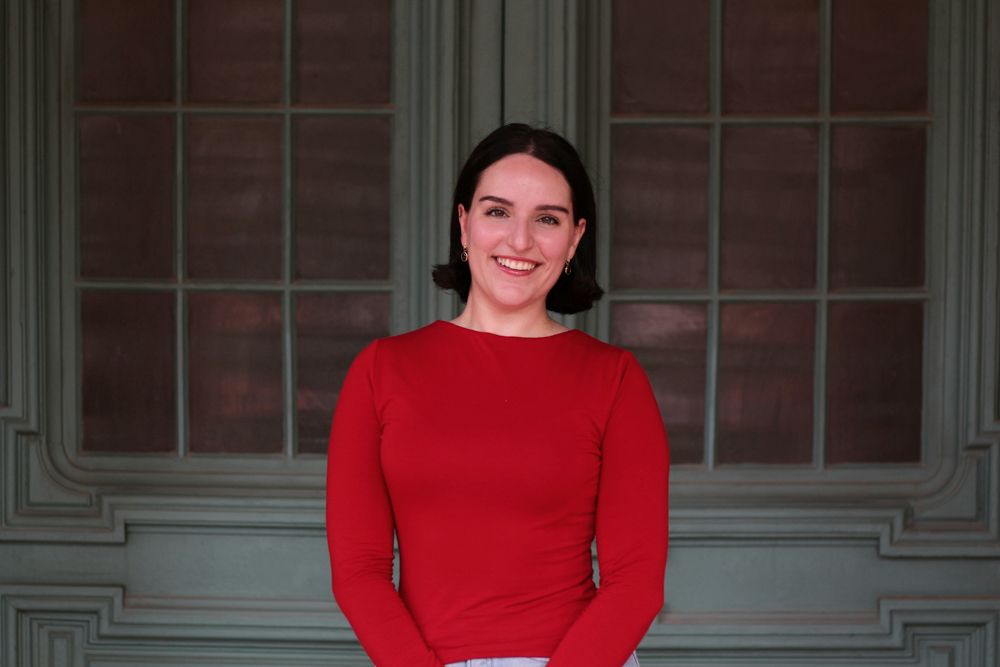
Georgia Loutrianakis found clinical ethics at the intersection of science and advocacy. As an undergraduate neuroscience major at Case Western Reserve University, an elective ethics course and a mentor opened a path that matched her interest in helping patients with a systems-minded lens. She stayed for a master’s in Bioethics and Medical Humanities to deepen that work before pursuing doctoral training.
A widely covered Texas case—Marlise Muñoz, a pregnant patient kept on life support despite her family’s wishes—sharpened her focus on autonomy and law.
These experiences seeded the questions that would guide her PhD and her career.
A Dissertation About Autonomy
Her dissertation, “Controlling Bodies: The Role of Mistrust, Gender Norms, and Advance Directive Legislation in Women’s Reproductive Autonomy,” examines how three concepts converge to constrain decision-making in reproductive care:
- Longstanding mistrust of women’s judgment in clinical settings
- Gender norms—including those visible in elite sports—that shape expectations of women’s bodies
- Pregnancy-related exclusions in state advance-directive laws that can nullify a patient’s stated wishes if she becomes incapacitated while pregnant
Together, these threads describe a landscape where policy and culture can override personal autonomy at critical moments.
Real-World Stakes in Care
Loutrianakis points to present-day fallout for patients and families. Cases like Muñoz brought the issue into view for her as a student, and similar situations continue to arise when pregnancy changes the rules of engagement for clinicians and surrogates trying to honor a patient’s preferences.
She stresses that the implications extend beyond any single political position. They touch miscarriage management, emergency care, and end-of-life decisions in ways many people do not anticipate until a crisis.
Training that Translates to Practice
Loutrianakis chose UTMB in part because clinical ethics is woven into the PhD experience, not delayed until a post-doctoral fellowship. She shadowed faculty in the hospital, practiced low-stakes components of consultation, and encountered complex settings that few programs can offer, such as Hospital Galveston and observations in correctional health environments. That immersion made the move from classroom to bedside feel seamless.
Now at Wellstar Health System, she says UTMB’s approach prepared her well for the realties of clinical ethics practice. The curriculum emphasized multiple perspectives, patient-centered reasoning, and clear communication with clinicians and families who may hold outdated impressions of “what ethics is.” She reports that the transition into fellowship-level work felt well supported by her experiences at UTMB.
“I feel extremely prepared with my UTMB training,” she says, noting that the program’s clinical ethics education was precise and in-depth. This alignment is part of why she selected her current fellowship site.
Advice for Future Students
Loutrianakis encourages students to seek out the breadth of UTMB’s Bioethics and Health Humanities community. Ask for opportunities, explore projects beyond a primary interest area, and use the program’s interdisciplinary reach to shape a customized path.
In her case, a research ethics project outside her core focus became a frequent topic in fellowship interviews, showing how range can strengthen professional readiness.
She remains committed to bridging scholarship and practice. Near-term goals include reworking portions of her dissertation for publication and contributing to public conversations about trust, autonomy, and the policy environment in reproductive care.
The throughline from college to fellowship is clear: rigorous training, attention to real-world contexts, and a steady commitment to helping patients and families navigate some of medicine’s hardest decisions.
Dissertation Committee Chair: Lisa Campo-Engelstein, PhD; Emma Tumilty, PhD; Jeffrey S. Farroni, PhD, JD; Kathleen L. Vincent, MD.