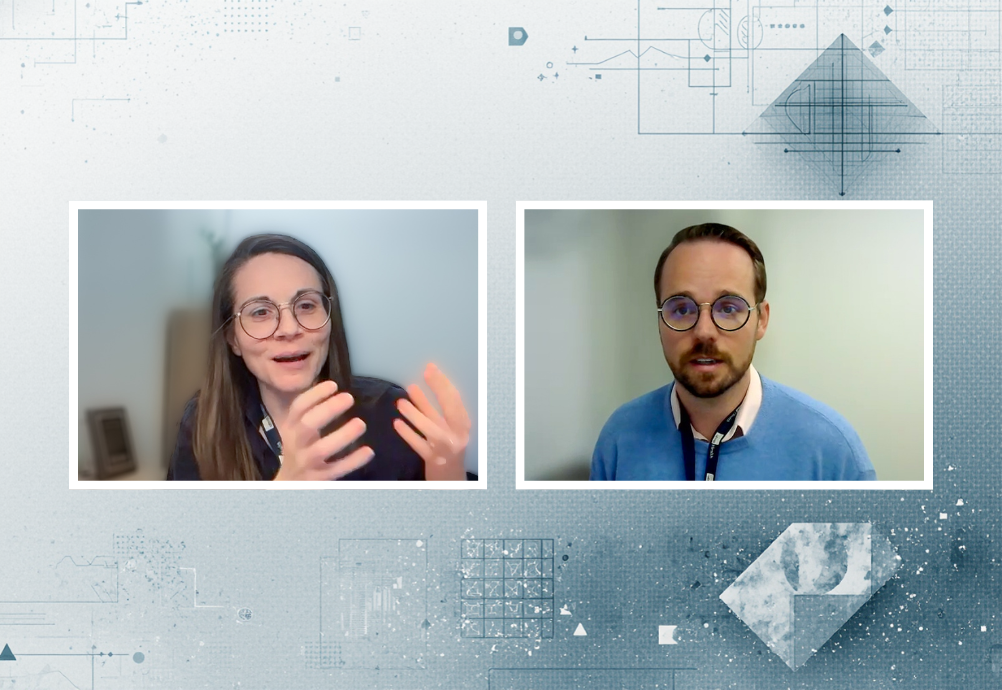
Two faculty members from the School of Public and Population Health's Department of Bioethics and Health Humanities joined a panel discussion to share how ethicists can strengthen research when they're brought in early rather than called in after problems arise.
Dr. Elise Smith, associate professor, and Dr. Stephen Molldrem, assistant professor, presented alongside Dr. Kathleen Vincent, professor in the Department of Obstetrics and Gynecology and ITS Clinical Trials Studio Director, during the Feb. 24 panel titled "Integrating Ethicists in Research: Thinking Beyond the IRB."
The session was part of a Research Ethics Awareness series hosted by the Greater Gulf Coast Translational Science Alliance (GGCTSA), a regional partnership led by UTMB and funded through a $29 million NIH Clinical and Translational Science Award.
Ethicists Can Engage Early
Dr. Smith's central argument was that institutional review boards, by design, evaluate research after a protocol and budget have already been set. That leaves little room to rethink recruitment strategies, address community-specific barriers, or reconsider which questions a study is asking in the first place.
The Research Ethics Consultation Service (RECS), which Dr. Smith directs through the Institute for Translational Sciences, offers an alternative entry point. RECS provides free consultations to any UTMB researcher at any stage of a project. Because the service is embedded across UTMB's research support infrastructure, including the translational science studios, conversations about ethics can happen before a grant is even submitted.
Dr. Smith described three ways RECS works upstream of the IRB. Direct consultations help individual researchers identify overlooked ethical dimensions in study design. Community engagement efforts connect researchers with the populations their work aims to serve, surfacing recruitment barriers and aligning study goals with community priorities. And system-level work includes developing institutional guidance on emerging topics like AI ethics and social media research, as well as targeted training for departments navigating authorship disputes or quality improvement studies that fall outside IRB review.
The through line, Dr. Smith said, is that ethicists function best as collaborators in the design process rather than reviewers at the end of it.
Five Levels of Collaboration with Bioethics Faculty
Dr. Molldrem broadened the conversation by outlining how researchers can partner with the Department of Bioethics and Health Humanities at varying levels of commitment and funding.
The options range from a standalone RECS consultation to co-authoring an exploratory paper, to bringing a bioethics co-investigator onto a grant at a consultative level, to structuring a grant with a dedicated bioethics research aim led by a department faculty member. At the most integrated level, a bioethics faculty member leads the grant entirely, with health sciences researchers serving as subject matter experts.
Dr. Molldrem noted that the department's eight faculty members bring expertise across applied ethics, translational humanities, science and technology studies, and health justice, with methods rooted in qualitative and interpretive social science. The department also supports a PhD program, an MPH concentration in bioethics, a certificate program, and four postdoctoral fellows.
He pointed to a recent NIH announcement designating bioethics as a highlighted topic area across nearly all funding mechanisms, a signal that the agency is looking for grants that integrate ethics aims alongside traditional health sciences research. Historically, NIH bioethics funding has concentrated on genomics, but the new announcement extends to artificial intelligence, informed consent, research engagement, and other cross-cutting issues.
Dr. Molldrem encouraged researchers interested in exploring any form of collaboration to contact him directly as the department's research program director.
A Researcher's Perspective
Dr. Vincent offered examples from her own experience partnering with bioethics faculty. One long-running project with Dr. Lisa Campo-Engelstein, professor and inaugural chair of the Department of Bioethics and Health Humanities, examined the health of elite female athletes. The collaboration combined ethics-driven advocacy with clinical research, sustained two students across five years, and produced numerous conference presentations and publications.
Dr. Vincent also described how Dr. Smith helped shape the expansion of the GGCTSA's Clinical Trial Studio into the Multi-Institutional Collaborative Translational Science (MICTS) Studio, which now serves all four alliance partners. Dr. Smith led focus groups across the institutions to assess each partner's needs and priorities before the studio's structure was finalized. The two now co-lead the studio together.
Learn more
UTMB investigators and research teams interested in ethics support can connect with the Research Ethics Consultation Service (RECS) through ITS.