Biostatistics and Data Science Program (MS)

Biostatisticians work in a variety of settings, including academia, pharmaceutical companies, research facilities, government organizations, hospitals, public health organizations, and other companies in the medical industry. Biostatisticians aid in the testing of new drugs using data to determine risks and effectiveness, study various risk factors leading to disease, use data to look at links that could highlight causes or cures of disease, design and evaluate results of clinical trials, and work with researchers to develop new procedures for improved health. The field of biostatistics is among the fastest growing in terms of job opportunities. In fact, there is a shortage of people with data analysis skills to work in academic and non-academic institutions. Fortune magazine and monster.com have both repeatedly ranked statistics as one of the top ten graduate degrees based on salary, growth, and job satisfaction over the past ten years. The Bureau of Labor Statistics reports that overall employment of mathematicians and statisticians is projected to grow 30 percent from 2018 to 2028, much faster than the average for all occupations.

The mission of the Biostatistics and Data Science Program within the Department of Biostatistics and Data Science within the School of Public and Population Health at the University of Texas Medical Branch at Galveston is to prepare students to develop and apply data analysis tools that drive biomedical research. Students will demonstrate competency or strong proficiency in theory, application, critical thinking, communication (verbal and written) and computing. These are learned skills that must be practiced and reinforced in classrooms, labs, consulting experiences, and research rotations.

MS Biostatistics and Data Science Competencies

Our graduate program prepares students to:

  • Demonstrate a broad understanding of current statistical theory, methods, and practices in the health sciences
  • Effectively collaborate on a research team
  • Develop statistical designs for health science investigators
  • Write computer programs for the management and analysis of data sets
  • Prepare reports and publications resulting from health science studies
  • Effectively communicate key statistical principles to a non-statistical audience

Graduates of the MS in Biostatistics and Data Science program will have a skill set attractive to local, state, and federal government organizations as well as academic research and the pharmaceutical industry. An MS in Biostatistics and Data Science can also provide the foundation for students who wish to pursue a PhD in biostatistics.

  • Biostatistics and Data Science Program (MS) Information

    The MS curriculum consists of 36 credits of coursework, including 10 required classes:

    • Biostatistics
    • Introduction to Linear Models
    • Categorical Data Analysis
    • Statistical Consulting
    • Data Mining
    • Capstone
    • Program Foundations for Data Science
    • Introduction to Visual Analytics in Healthcare
    • Data Management
    • Research/Practicum
  • Biostatistics and Data Science Program (MS) Coursework

    Biostatistics Concentration

    Fall 1

    • Biostatistics
    • Intro to Prob Theory (Elective)
    • Programming Foundations for Data Science

    Spring 1

    • Intro to Linear Models
    • Introduction to Visual Analytics in Healthcare
    • Data Minig
    • Data Management

    Summer 1

    • Categorical Data Analysis
    • Intro to Machine Learning
    • Statistical Consulting
    • Topics in Biostats (Elective)

    Fall 2

    • Survival Analysis
    • Capstone
    • Consulting Practicum
    • Clinical Trials (Elective)


    Data Science Concentration

    Fall 1

    • Biostatistics
    • Public Health Informatics (Elective)
    • Programming Foundations for Data Science

    Spring 1

    • Intro to Linear Models
    • Introduction to Visual Analytics in Healthcare
    • Data Mining
    • Data Management

    Summer 1

    • Categorical Data Analysis
    • Intro to Machine Learning
    • Statistical Consulting
    • Topics in Biostats (Electives)

    Fall 2

    • Intro to Modern AI Techniques (Elective)
    • Capstone
    • Consulting Practicum
    • Deep Learning (Elective)

SPPH Graduate Programs | University of Texas Medical Branch
301 University Boulevard, Galveston, Texas 77555-1110 | (409) 772-6635


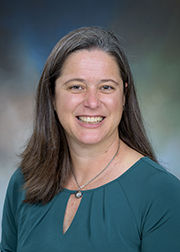
Heidi Spratt, PhD
Professor, Biostatistics & Data Science
Program Director, MS Biostatistics and Data Science Program
hespratt@utmb.edu

Tawny Stromberg
Tawny Stromberg
Coordinator II, Admissions & Dual Programs
(409) 266-8457
spphadmissions@utmb.edu