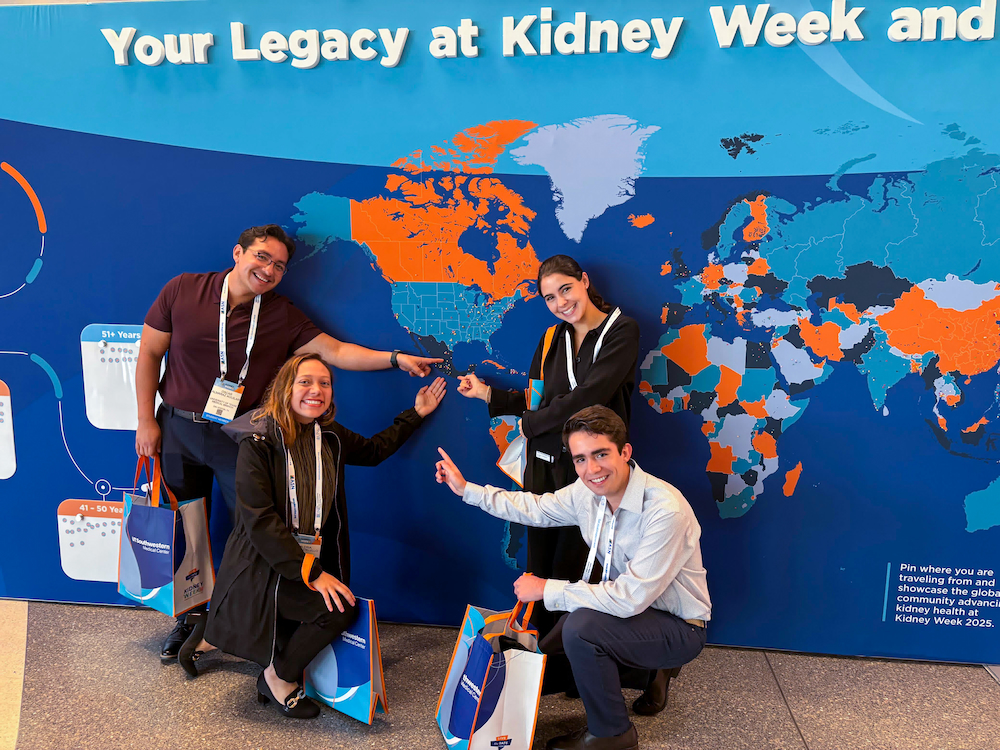
How AI, social factors, and new prevention models are shaping the future of public kidney health
The American Society of Nephrology's recent Kidney Week conference revealed promising strategies for preventing kidney disease and improving care for vulnerable populations. From artificial intelligence applications to community-based interventions, researchers presented approaches that could transform how we address this growing health challenge.
AI Tools Support Clinical Decision-Making
Artificial intelligence emerged as a key theme at the conference. Researchers demonstrated systems that analyze complex kidney disease cases and suggest treatments based on established medical guidelines.
In testing with hypertension cases, these AI tools showed strong accuracy in treatment recommendations. GPT-4, in particular, demonstrated notable agreement with expert clinical decisions in managing this condition.
The technology aims to support rather than replace physicians. Current large language models remain inferior to expert judgment and occasionally produce inaccurate or unsafe recommendations. Human supervision remains essential for all clinical decision-making.
Successful implementation requires meeting strict standards for accuracy and safety, protecting patient privacy, ensuring transparency in AI decision-making processes, and providing equitable access to the technology across all patient populations.
Early Detection Programs Show Measurable Impact
Prevention begins with catching disease early. The "Riñones Dulces" (Sweet Kidneys) program demonstrated that targeted training for primary care doctors can significantly improve outcomes.
The program trained physicians to systematically screen patients with diabetes, with particular attention to Hispanic/Latino and Non-Hispanic Black patients. Following implementation, 71% of clinicians found the screening recommendations helpful for detecting kidney disease early through UACR screening. An even higher percentage, 88%, found the medication recommendations valuable for managing patients' conditions.
This approach improved both detection rates and medical management among Hispanic/Latino and Non-Hispanic Black individuals with Type 2 Diabetes who faced elevated risk for chronic kidney disease development or progression.
Social Factors Drive Health Outcomes
Kidney disease exists within a broader context of patients' lives. Food insecurity, transportation barriers, unstable housing, and violence exposure all function as social determinants of health that significantly increase acute kidney injury risk, particularly during hospitalizations.
Medical care now requires an integrated public health framework. Treatment must extend beyond clinic walls to address patients' living conditions and social challenges. These factors prove essential for preventing disease and improving kidney outcomes at both community and population levels.
Global Disparities Demand Urgent Action
The conference highlighted sobering global realities. In low and middle-income countries, kidney disease strikes more frequently, progresses more severely, and appears decades earlier than in wealthier nations.
Millions die without knowing they have kidney disease. Many doctors lack laboratory equipment for detection, and patients cannot afford testing. In India, fewer than 10% of end-stage kidney disease patients receive dialysis. More than 70% die within three months of diagnosis.
Solutions are emerging through affordable dialysis programs in India, Brazil, and Uganda, along with expanded training for community health workers who can provide basic screening and education.
Smoking's Hidden Kidney Damage
Research presented at the conference revealed that smoking damages kidneys through cadmium exposure. This damage occurs even when kidney function initially appears normal. The earlier someone starts smoking and the longer they continue, the greater their risk of developing kidney problems later in life. These findings reinforce the importance of smoking cessation programs as kidney disease prevention strategies.
Cardiovascular-Kidney-Metabolic Connections Shape Treatment
The newly defined Cardiovascular-Kidney-Metabolic syndrome helps clinicians understand connections between these systems and how dysfunction in one area affects the others.
Data shows that people maintaining healthy behaviors (measured by an index called "Life's Essential 8") experience significantly lower rates of both heart disease and kidney disease progression. Hispanic and other underserved communities require special attention, as they often face additional social barriers to maintaining healthy lifestyles.
Moving Forward with Purpose and Optimism
These findings represent a clear call to action that aligns with UTMB's mission. The central message offers hope: kidney disease can be prevented through early detection, addressing root social causes, and ensuring advances reach all communities. Public health leaders have the tools and knowledge to improve outcomes. The challenge now lies in implementation.
About the Authors
Drs. Oscar David Almaraz Aguilar (Universidad Autónoma de San Luis Potosí), Andrea Villalobos Montoya (Universidad Autónoma de San Luis Potosí), Valeria B. Galán Trujillo (Universidad Panamericana), and Paulina Alcocer González Camarena (Universidad Panamericana) are ConTex Research in Public Health Fellows at the UTMB School of Public and Population Health. As medical students and MPH candidates, they are completing a two-year program that pairs graduate coursework with a research residency to meet Mexico’s Servicio Social requirement.