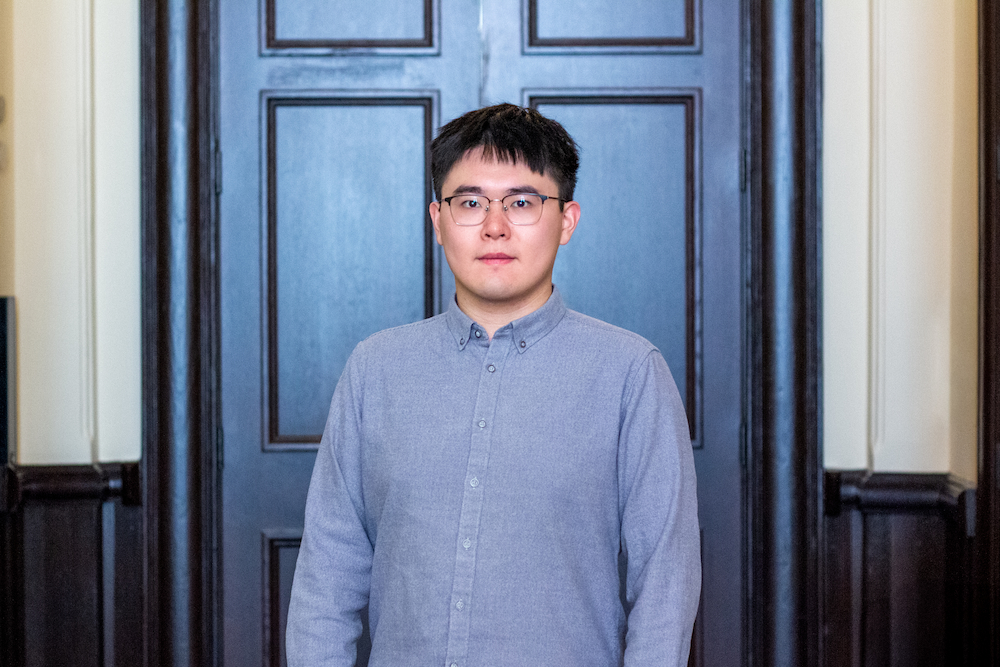
Zhiwei Hu’s interest in palliative care grew through direct service at Sichuan University. During his undergraduate years in Chengdu, he volunteered alongside clinicians and families and saw how practical decisions shape comfort and dignity. In his fourth year, he completed a six-month graduation internship as a medical social worker at West China Medical Center. The work included pain assessment, medical documentation, caregiver support, and monitoring of opioid distribution. These responsibilities were concrete and patient facing, and they strengthened his commitment to research that can help teams deliver better end-of-life care.
Graduate Training
Graduate study at the London School of Economics refined Zhiwei’s writing and methods. It also clarified his priority to connect quantitative analysis with clinical realities. He sought environments where clinicians and researchers frame questions together and test them with careful data work. “Physicians see patients daily. They spot relationships in the data and help us test them,” he said. That approach guides his doctoral training at UTMB, where he engages with aging, hospice, and palliative care groups and completes research rotations that link methods with bedside experience.
Focus on Hospice Disparities
Last week, Zhiwei traveled to Boston to present at the Gerontological Society of America Annual Scientific Meeting. He received a James McKenney Student Travel Award that supports attendance and professional development. His poster examined racial disparities in hospice use during the final six months of life. The analysis drew on 2015–2020 Medicare Current Beneficiaries Survey data and tests potential mediators such as income and housing access. The goal was to understand how social factors help explain gaps in who receives hospice services and when those services begin. The work advances a practical question that clinicians and families face every day. Who gets timely hospice care, and how can policy and practice close the gap.
Quantitative Lens With Human Stakes
Zhiwei explains his focus plainly. “My focus is palliative care and aging health with a quantitative lens.” The same interest shapes ongoing work at UTMB that studies how routine clinical services relate to advance care planning among older adults with cognitive impairment. The goal is careful evidence that reflects real decisions made by patients, families, and care teams. He contributes where his skills add the most value.
Next Steps at UTMB
The travel award arrives at a useful moment in his training. It connects him with gerontology scholars and mentors, and it turns a conference week into a year of learning through membership and community. He returns to Galveston with a broader network, new feedback on his poster, and a sharper sense of where the evidence points next.
Zhiwei’s trajectory reflects steady choices. He seeks environments where data informs care, and he favors questions that arise from daily practice. Three ideas organize his work. Build on direct experience with patients and caregivers. Test hypotheses with transparent methods and high-quality data. Share results in ways that help teams deliver care that aligns with patient values. That orientation turns research into usable insight. It also keeps the human stakes visible while the models run in the background.
Awards and presentations encourage progress, and they also signal trust in the work. For Zhiwei, the clearest measure of success will be practical. He wants to help teams answer when to start conversations, how to match services to needs, and where policy can remove barriers. The research continues in that direction as he refines analyses, collaborates with mentors, and builds evidence that supports equity and dignity in care at life’s end.