At a Glance
Modality
In person, in Galveston, Texas;
Biostatistics concentration also offered 100% online.
Credits
42 credit hours
Completion time
5 semesters (~20 months)
Estimated cost
~$16.5K in-state;
~$35K out-of-state.
Cohort size
~10-15 students per cohort;
~29 MPH students across cohorts & concentrations.
Alumni
83 since 2020;
~12 per year.
Who this degree is for
If you want to improve health for whole communities — through data, programs, policy, or ethics — the MPH gives you the foundation, and your concentration gives you the specialty.

Compare the Concentrations
Every UTMB MPH student earns the same degree, built on the same foundation: a shared public health core, 22 foundational competencies, an Applied Practice Experience in the field, and an Integrative Learning Experience that ties it all together. Your concentration is what makes the degree yours. Compare the concentrations below.

-
Bioethics
FOCUS AREA
Ethical analysis of policy, research & health care decisionsSKILLS YOU LEARN
Ethical analysis & bioethics methods, applying ethics to public health cases, forming practical recommendationsFORMAT
In person; 2-year -
Biostatistics
FOCUS AREA
Data & statistical reasoning for public health questionsSKILLS YOU LEARN
Statistical analysis, coding, data management & cleaning, study design support, communicating resultsFORMAT
In person or 100% online -
Epidemiology
FOCUS AREA
Patterns, causes & prevention of disease in populationsSKILLS YOU LEARN
Study design, epidemiologic measures, surveillance & screening, bias/confounding, interpreting evidenceFORMAT
In person; 2-year path or accelerated 1-year track for qualified students -
Public Health Practice
FOCUS AREA
Community-facing programs, policy & cross-sector leadershipSKILLS YOU LEARN
Program planning & evaluation, community engagement, policy & advocacy, communication, resource managementFORMAT
In person; 2-year
Dual-Degree Pathways
UTMB also offers two combined-degree pathways that pair the MPH with another doctoral program. These are not additional concentrations, and they are not open to general applicants.
MD/MPH
For students already accepted to the UTMB MD program who add an MPH with public health leadership training alongside their medical education. If you're pre-med, this pathway isn't available yet — apply once you've been admitted to medical school.
PhD/MPH
For UTMB doctoral students who integrate an MPH into their PhD curriculum, completing one of the existing concentrations (typically Epidemiology or Biostatistics).
Note: If you are directly applying for the MPH, your only options are the four concentrations—bioethics, biostatistics, epidemiology, and public health practice.
What you could do with this degree
Government & public agencies
City, county, and state health departments (like DSHS), federal agencies, and public-sector health programs.
Hospitals & health systems
Population health, quality improvement, infection prevention, and community health teams.
Nonprofits & NGOs
Program management, community health initiatives, advocacy, and grant-funded public health work.
Research programs
Research coordination, data analysis, and study support in academic and clinical settings.
Policy & advocacy
Policy analysis, health communication, and coalition work at local, state, and national levels.
Further study
Doctoral programs (PhD, DrPH), medical school, and other professional degrees.
After you earn this degree, you'll be able to...
22 MPH Foundational Competencies
22 MPH Foundational Competencies
You Belong Here
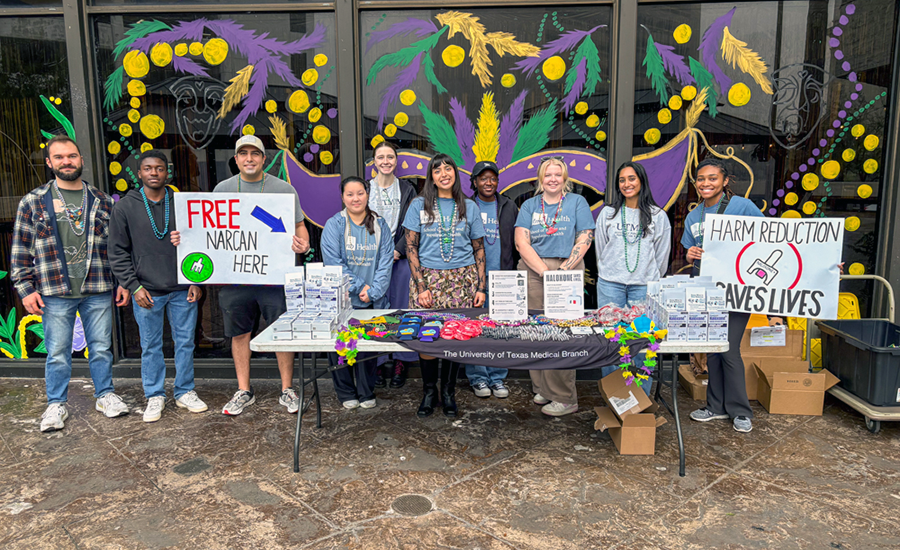
A cohort where everybody knows your name.
The MPH is intentionally personal — cohorts of 10 to 15 mean your professors know you, notice when you need support, and invest in where you're headed. You'll learn alongside classmates from every background and every stage of life, connected by the same motivation: making health better for whole communities.
- 10–0
per cohort - ~0
faculty mentors - 0+
SPPH students