


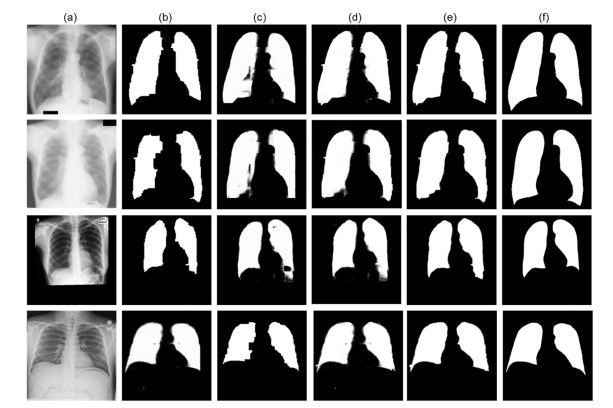
The University of Texas Medical Branch in partnership with UT El Paso developed a unique framework to improve accuracy of lung regions in chest x-rays. This framework outperformed existing models and can lead to better predictions of diseases.
The study was recently published in the Journal of Visual Communication and Image Representation.
“This intricate, yet adaptable deep learning model is one of the first products created in our partnership with UT El Paso. Using our medical expertise, de-identified medical data, and UTEP’s deep understanding of machine learning and AI, I think we will be able to alleviate some pain points in healthcare,” said co-author Dr. Scott Moen, director of Health Innovations at UTMB.
X-rays are among the most popular and affordable medical imaging techniques used for pneumonia, lung nodules, pulmonary edema, or even COVID-19 diagnosis. In medical practice, computer-aided diagnosis (CAD) systems are widely adopted in chest x-ray analysis and segmentation of the lung region. The task of lung segmentation is challenging due to the presence of opacities or consolidation in chest x-rays, which are typically produced by overlaps between the lung region and intense abnormalities caused by pulmonary diseases, fluid, or bacterial infection. Healthy patients can get reliable segmentation results as the contrast between the lung region and the outer area tends to be strong. However, in patients affected by pulmonary diseases, the contrast between the affected lung area and the outer region of the film is typically poor, making segmentation less accurate in situations where effective segmentation would be especially important.
The deep learning approach addresses the issue with a patching technique which makes it possible to train the model on a relatively small image dataset and improves overall segmentation accuracy using an ensemble of two deep learning models.
“This model performs well in situations where the lung region has less or no bacterial infection, but shows major advantages when working with chest x-ray images with ‘blurry’ lung region due to intensive bacterial infection such as COVID-19 and non-COVID-19 pneumonia,” said Dr. Tzu-Liang (Bill) Tseng, chair of the department of Industrial, Manufacturing and Systems Engineering at UT El Paso. “The method we developed using two deep learning models complement each other to improve the overall accuracy of lung segmentation that many of the existing methodologies fail to achieve.”
The collaboration between UTMB and UT El Paso started at the beginning of the COVID-19 pandemic bringing together clinical and computational experts to examine nuances associated with lung imaging of COVID patients.
“We set out to bridge clinical expertise at UTMB with computational expertise at UT-El Paso to develop machine learning and artificial intelligence capabilities to better advance predictive diagnostics and clinical care,” said Alexander Vo, coauthor of the journal and Vice President and Chief of Commercialization & Strategic Ventures at the department of Health Innovations at UTMB. “This collaboration resulted in a deep learning model that can improve the overall accuracy of chest x-rays and can outperform many state-of-the-art techniques currently in the industry.”
The study highlights that the method can be further improved and adapted to better capture some other practical aspects, including the potential to develop an automatic diagnostics system for abnormalities, lung size, and other phenomena.
“This model serves as a powerful example of cross-institutional collaboration where clinical and computational expertise can come together to meet the complex needs of healthcare,” said Dr. Peter McCaffery, co-author, and director of Pathology Informatics at Department of Pathology at UTMB. “With this tool and others like it, we will be able to leverage our imaging data more effectively and to improve how we diagnose and manage disease. Importantly, we will continue to build upon this use case as we deepen the partnerships and collegial mission of the UT system.”