Many people are surprised to learn they have fat in their liver. Often, they feel perfectly healthy and have no symptoms. The condition, once commonly called fatty liver disease, is now known as metabolic dysfunction-associated steatotic liver disease, or MASLD. It is linked to obesity, Type 2 diabetes, high cholesterol, and other metabolic health conditions.
As understanding of the disease has evolved, so has the approach to treatment. Physicians now recognize MASLD as more than a liver problem. It can be an early warning sign of broader health issues that may lead to liver scarring, cirrhosis, or even liver cancer if left untreated.
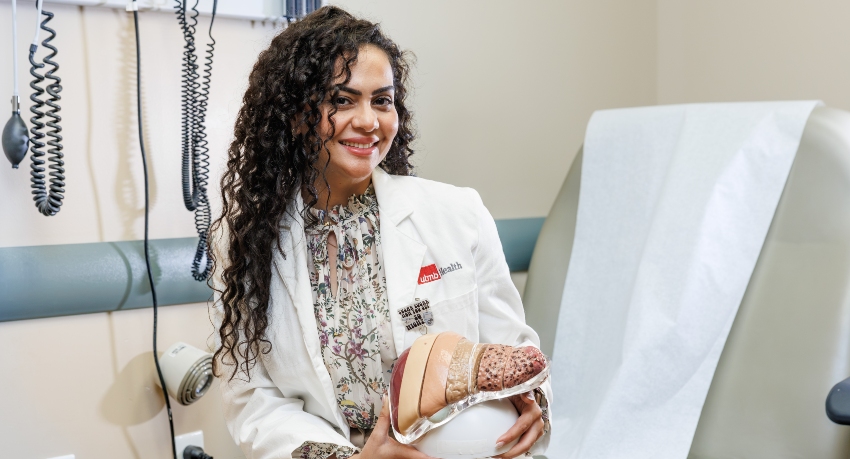
Randa Abdelmasih, MD, DipABOM, an endocrinologist at The University of Texas Medical Branch (UTMB Health), said the name change reflects a broader shift in how physicians think about the disease.
“A steatotic liver means there is fat in the liver, but the new term MASLD focuses on what is driving the disease,” Abdelmasih said. “We’re concerned about much more than the fat itself. This is a metabolic and cardiovascular health issue that affects the whole person.”
In the past, fatty liver disease was often viewed primarily as a consequence of excess weight or alcohol use. Today, physicians understand that metabolic factors play a central role in its development.
“Fat in the liver is not always benign,” Abdelmasih said. “It can progress to inflammation, scarring, cirrhosis, and even liver cancer. MASLD is now the second-leading cause of liver transplantation in the United States after alcohol-related liver disease.”
Hidden in plain sight
One reason MASLD often goes undetected is that it typically causes few, if any, symptoms. A 2025 Kaiser Permanente study found that although roughly one-third of U.S. adults are estimated to have MASLD, many cases go undiagnosed.
“Patients often feel completely well,” Abdelmasih said. “Even liver enzyme tests can look relatively normal. That’s why we focus on identifying people at higher risk.”
Those at increased risk include people with Type 2 diabetes, obesity, high blood pressure, elevated cholesterol, or high triglycerides.
Rather than relying on invasive procedures, physicians now use tools such as FIB-4, a commonly used calculation that uses age and routine blood test results to estimate the risk of advanced liver scarring. Additional testing may include imaging studies such as ultrasound or MRI, with liver biopsy reserved for select cases.
“We have much better tools than we did in the past,” Abdelmasih said. “In many cases, we can evaluate the liver without immediately resorting to invasive testing.”
Looking beyond the liver
While healthy lifestyle changes remain the foundation of treatment, the approach to MASLD has become more personalized.
“The goal is to identify patients early, before significant scarring develops,” Abdelmasih said. “The focus is still on improving lifestyle habits, but now we’re looking at the entire picture of metabolic health. The fat in the liver is just one piece of the puzzle.”
Addressing factors such as obesity, diabetes, cholesterol, and blood pressure can help reduce inflammation and, particularly in earlier stages of the disease, may improve liver health and even help reduce fibrosis in some patients. Once advanced cirrhosis develops, however, the disease becomes much more difficult to reverse.
“Always go back to your risk factors,” Abdelmasih said. “Many people have no idea they have this condition. If you have risk factors, talk with your primary care provider and ask whether screening is appropriate for you.”
More options, earlier intervention
Recent advances have expanded treatment options. In addition to lifestyle changes, physicians now have medications that can help address the metabolic dysfunction and liver injury that contribute to disease progression in some patients.
For selected patients with metabolic dysfunction-associated steatohepatitis, or MASH, and moderate-to-advanced fibrosis, FDA-approved medications are now available to help treat the disease. The development marks an important shift, giving physicians additional options for patients at higher risk of progression.
“These therapies reinforce what we’ve known for years,” Abdelmasih said. “When we improve a person’s overall metabolic health, we often improve liver health as well.”
She emphasized that there is no single diet or quick fix for MASLD.
“There isn’t a ‘fatty liver diet’ that works for everyone,” she said. “The goal is to find a sustainable way of eating and living that includes more fruits and vegetables, lean proteins, and regular physical activity.”
A chance to change the course
For Abdelmasih, the most important message is that MASLD is not simply a liver disease, and it is not a condition people should ignore because they feel well.
“Early intervention gives us the greatest opportunity to make a difference,” she said. “When we identify it early and treat the whole person, we can often prevent the disease from progressing and help patients live healthier lives.”
The encouraging news, Abdelmasih said, is that many people have the power to change the trajectory of the disease. By understanding their risk factors, getting screened when appropriate, and working with their healthcare team on sustainable lifestyle changes, patients can often prevent serious liver damage before it starts.
“It’s never just about the liver,” she said. “When we improve overall metabolic health, we’re improving a person’s long-term health and quality of life.”