News

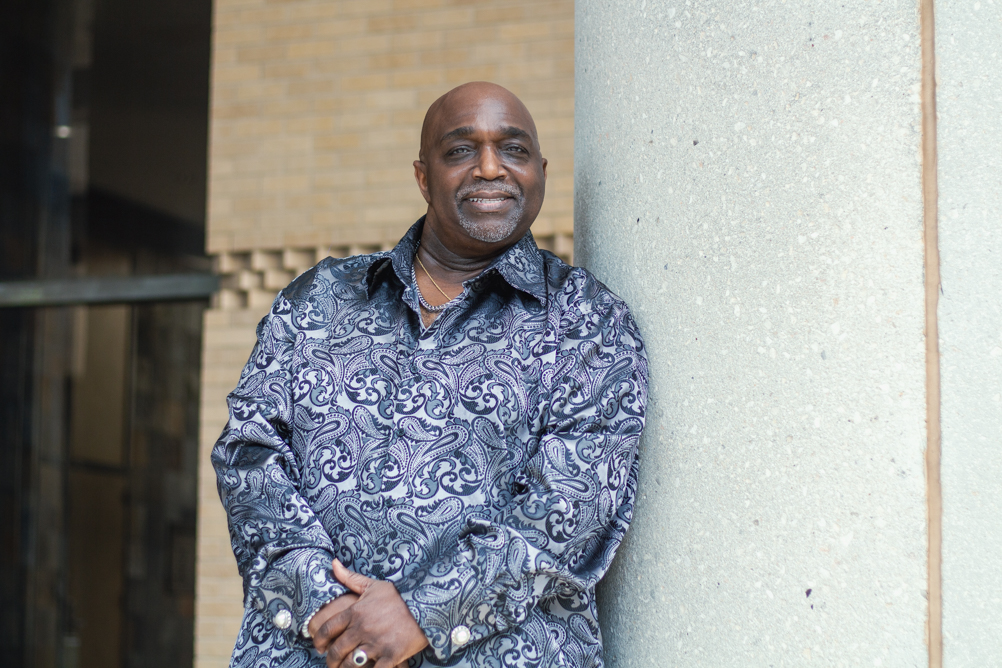
Headshot of John Cooks smiling beside a concrete column outside a campus building.

John Cooks Envisions Community-Led Public Health Research

John M. Cooks, an MPH student at the UTMB School of Public and Population Health and the subject of the From the Dean Student Excellence Series, has spent two decades working with communities locally and nationally. At 63, he pairs that experience with formal public health training to help Galveston County residents define priorities, develop evidence-based responses and eventually lead research projects of their own.

Cooks describes his studies as the point where practical experience and academic credentials meet. His relationship with UTMB spans over 30 years and includes connections as an employee, patient, community research collaborator, and student. The Master of Public Health program gives him a structured way to add research methods, grant development and administration to the knowledge he has built through community work.

“I am living in the moment where the credentialing and lived experience are meshing.”

Cooks

A degree directed toward community priorities

Cooks is committed to empowering residents to identify the public health issues important to them and build responses grounded in evidence. He sees himself guiding that work as communities develop projects, pursue grants and establish partnerships with UTMB.

His five-year vision places community organizations at every stage of research, including the formation of the initial idea, proposal and study development, implementation, dissemination of the findings, co-authorship of journal articles, and most importantly, administration. Under that model, a community organization could serve as principal investigator for a grant and invite UTMB to participate as a subcontractor.

Learning from Galveston’s sidewalk PhDs

Built into the foundation of that model is the recognition of expertise outside formal academic credentials. Cooks calls Galveston County residents “Sidewalk PhDs,” people who “walk” the talk every day because they live with the conditions and systems that public health work seeks to address.

For researchers and public health practitioners, that means arriving prepared to listen. Cooks views cultural humility as a responsibility shared by professionals and residents. Each group brings lived experience, their ways of knowing, and must be open to the idea that learning moves in both directions. Community members help researchers understand local priorities and context, while public health professionals contribute technical knowledge that can support evidence-based action.

A musician listens for the whole composition

Music offers Cooks another way to explain that kind of listening. A church music directorship brought him from Houston to Galveston in 1989, and he has spent 49 years playing piano and organ. He compares community research settings to a composition with its own dynamics, silences, repetition, and form.
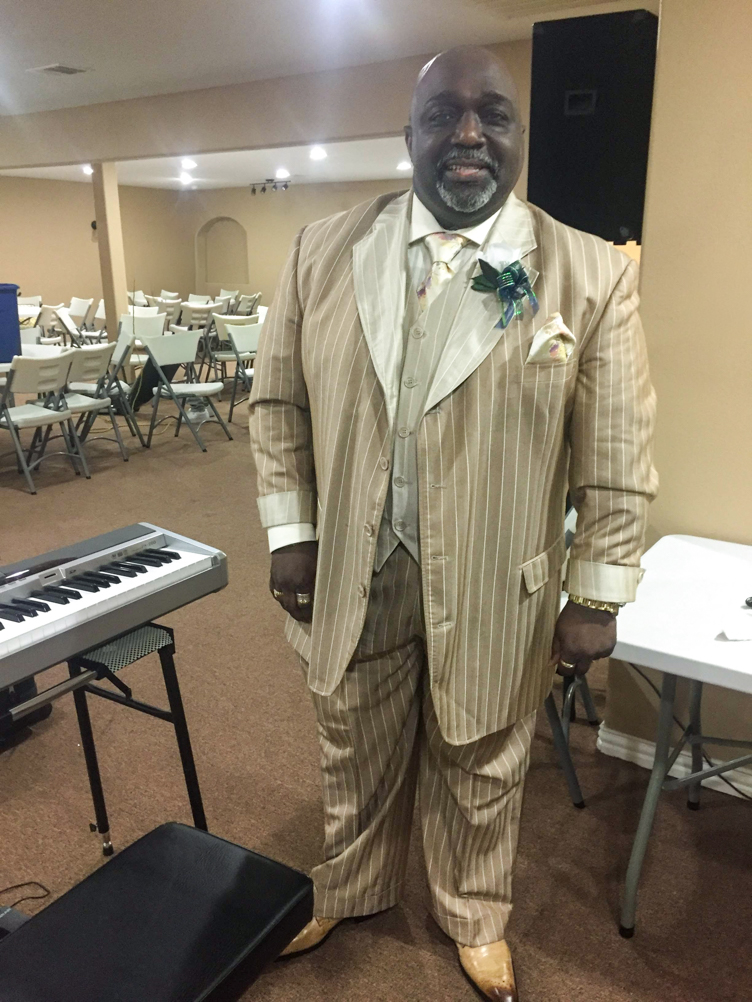
John Cooks stands beside an electronic keyboard in a tan pinstripe suit.

“It is important to remember, two pieces may be similar, but they’re never the same.”

Cooks

The classroom fosters new ways for Cooks to listen. As the oldest student in his cohort, he returned after over 10 years away from school. He describes the experience as a meeting of “experiences old” and “experiences new.” In his words, “Studying with my peers has reaffirmed our connectedness regardless of the stage of life.”

Persistence without a fixed timetable

Cooks’ route to the MPH included an initial rejection from UT Health - Houston, career changes and a cancer diagnosis and treatment. While life circumstances may have shaped the path and altered the timetable, his determination to complete the degree never changed. His advice to others reflects the grounding principle relevant to his own education.

“Timing is key to all things in life. A rejection does not always equate to finality. Properly framed, rejection can be equated to a ‘delay’, not a denial”.

Cooks


Learn more about applied public health training, research and community partnership through the UTMB Master of Public Health program.


By the Numbers

Strength in numbers—driven by dedicated faculty, ambitious students, and impactful research funding shaping the future of public health.

* Approximations subject to change

From the Seas to the Skies, We Are Public Health

Exploring health from every angle—land, sea, and sky—our diverse expertise shapes the future of public health.

SPPH Research

Advancing health through innovative, data-driven research that informs policy, improves care, and impacts communities globally.

 Discover Our Research

Student Spotlights

Celebrating our students’ achievements, impact, and excellence—inside the classroom and beyond.

Headshot of John Cooks smiling beside a concrete column outside a campus building.

John Cooks Envisions Community-Led Public Health Research

John M. Cooks, an MPH student at the UTMB School of Public and Population Health and the subject of the From the Dean Student Excellence Series, has spent two decades working with communities locally and nationally. At 63, he pairs that experience with formal public health training to help Galveston County residents define priorities, develop evidence-based responses and eventually lead research projects of their own.

Cooks describes his studies as the point where practical experience and academic credentials meet. His relationship with UTMB spans over 30 years and includes connections as an employee, patient, community research collaborator, and student. The Master of Public Health program gives him a structured way to add research methods, grant development and administration to the knowledge he has built through community work.

“I am living in the moment where the credentialing and lived experience are meshing.”

Cooks

A degree directed toward community priorities

Cooks is committed to empowering residents to identify the public health issues important to them and build responses grounded in evidence. He sees himself guiding that work as communities develop projects, pursue grants and establish partnerships with UTMB.

His five-year vision places community organizations at every stage of research, including the formation of the initial idea, proposal and study development, implementation, dissemination of the findings, co-authorship of journal articles, and most importantly, administration. Under that model, a community organization could serve as principal investigator for a grant and invite UTMB to participate as a subcontractor.

Learning from Galveston’s sidewalk PhDs

Built into the foundation of that model is the recognition of expertise outside formal academic credentials. Cooks calls Galveston County residents “Sidewalk PhDs,” people who “walk” the talk every day because they live with the conditions and systems that public health work seeks to address.

For researchers and public health practitioners, that means arriving prepared to listen. Cooks views cultural humility as a responsibility shared by professionals and residents. Each group brings lived experience, their ways of knowing, and must be open to the idea that learning moves in both directions. Community members help researchers understand local priorities and context, while public health professionals contribute technical knowledge that can support evidence-based action.

A musician listens for the whole composition

Music offers Cooks another way to explain that kind of listening. A church music directorship brought him from Houston to Galveston in 1989, and he has spent 49 years playing piano and organ. He compares community research settings to a composition with its own dynamics, silences, repetition, and form.

John Cooks stands beside an electronic keyboard in a tan pinstripe suit.

“It is important to remember, two pieces may be similar, but they’re never the same.”

Cooks

The classroom fosters new ways for Cooks to listen. As the oldest student in his cohort, he returned after over 10 years away from school. He describes the experience as a meeting of “experiences old” and “experiences new.” In his words, “Studying with my peers has reaffirmed our connectedness regardless of the stage of life.”

Persistence without a fixed timetable

Cooks’ route to the MPH included an initial rejection from UT Health - Houston, career changes and a cancer diagnosis and treatment. While life circumstances may have shaped the path and altered the timetable, his determination to complete the degree never changed. His advice to others reflects the grounding principle relevant to his own education.

“Timing is key to all things in life. A rejection does not always equate to finality. Properly framed, rejection can be equated to a ‘delay’, not a denial”.

Cooks


Learn more about applied public health training, research and community partnership through the UTMB Master of Public Health program.