Breast cancer treatment can leave women to face the devastating emotional toll of the diagnosis, as well as overwhelming decisions about their bodies, their appearance, and what recovery will look like. Many women choose breast reconstruction to restore confidence, and to feel healed and whole again.
“There are women who do not wish to have breast reconstruction, but in general, reconstructive surgery is an option for almost anyone,” said UTMB’s Chief of the Division of Plastic Surgery Dr. Linda Phillips. “For a lumpectomy, we can rearrange tissue in a larger breast or use a tissue expander for a smaller one to stretch the skin envelope to put an implant in place. It’s also possible to go directly to implant from surgery. It depends on the needs of the woman and the size and shape of her breast.”
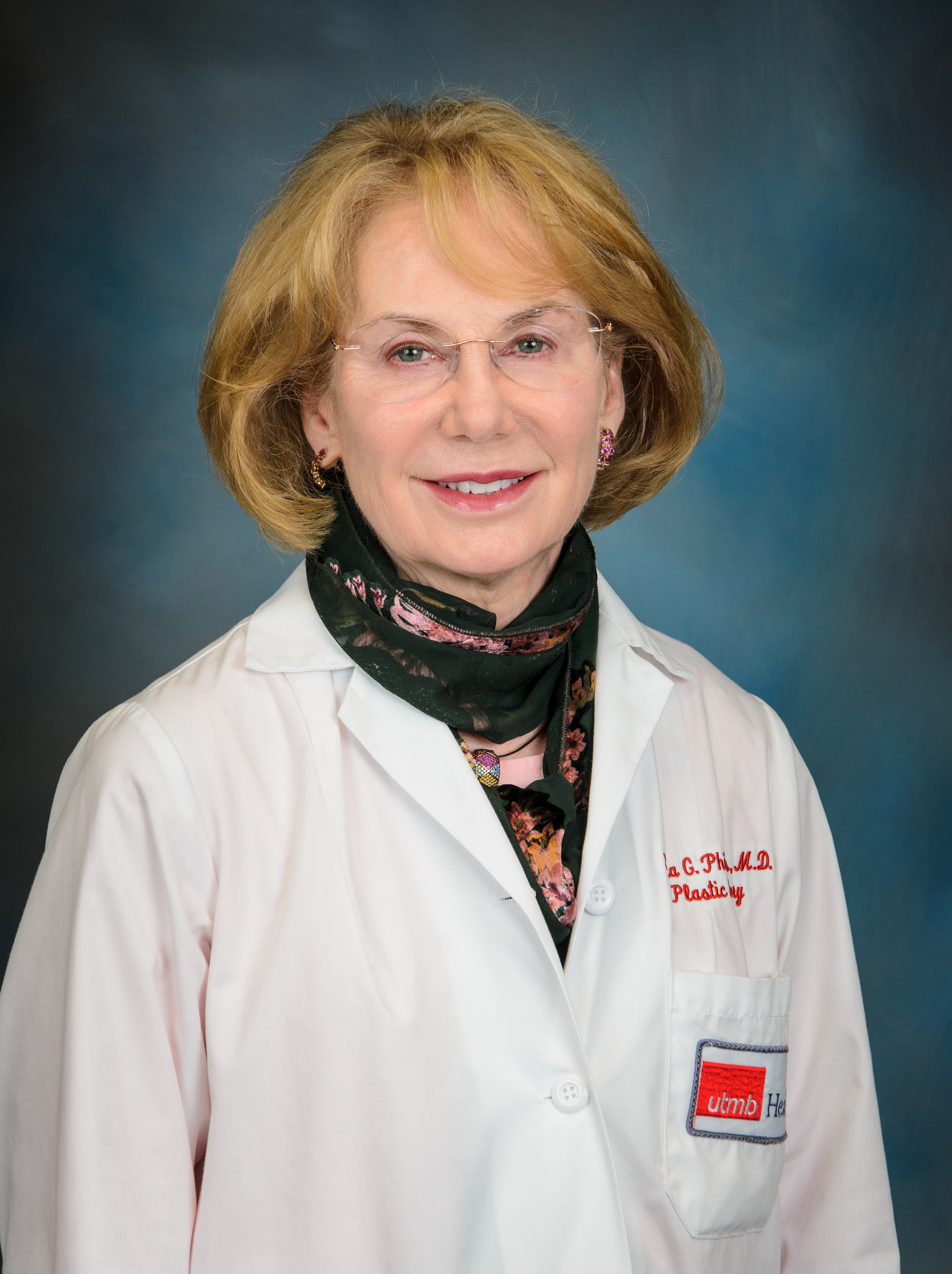
All the options are discussed at length, Dr. Phillips said, in the first meeting she has with her patient. “Usually, this meeting lasts about an hour, and we take the time to explain all the various options that are available in her case, and which might be the best for her,” she said. “Often, women would like to know if it’s possible to restore the breast to what it looked and felt like before. It’s not possible to guarantee anything, but we review all the best options for her and reassure her that we will do as much as we can.”
Each patient has a team of doctors working with her, including a plastic and reconstructive surgeon, a surgical oncologist, a radiation oncologist, psychologists, and other support staff. Each doctor plays a special role in supporting the patient through her journey toward health.
Women are encouraged to hear that often, with a lumpectomy, the patient can go home the same day and avoid a stay in the hospital. “Many times, they don’t even need a drain in place,” Dr. Phillips said. “If a lymph node dissection is needed, or if the woman wishes to get a breast reduction at the same time on her other breast, it’s also possible to go home the same day.”
Along with the best possible, collaborative medical care, Dr. Phillips said she offers patients reassurance.
“We let patients know what we think we can realistically accomplish in a breast reconstruction, and that they will look different, but often, in clothing, they might not look different at all,” she said. “In many cases, it’s possible to position the scars so that they are not visible, including through the revealing summer clothing that is often worn in south Texas. That’s the most important thing we talk about in that first long meeting—what we can and can’t do, and what to expect.
Dr. Phillips offers plenty of advice, particularly to younger women, women about advocating for their health, keeping up to date with their screenings and examinations, and being educated about their own family history.
She said that she encourages all patients to get regular mammograms, which go a long way to helping find cancer sooner. “Now we know more about the genes that predispose women to breast cancer, so getting a good history and getting screened earlier. There are times when family history has been strong enough to suggest that a patient meet with a geneticist, get counseled about their risks, and if the geneticist recommends, do additional breast imaging,” she said. “This is one of the best things we have done—talk to women in their 20s and 30s about elective surgery to prevent breast cancer.”