The thought of eating beets, let’s say, might make you gag, and calling it a food allergy might get you out of eating Grandma’s great-grandmother’s family-tradition, old-world borscht at Sunday dinner. But is it really an allergy?
Probably not. It might be an intolerance. But if you just think it’s yucky, then again, probably not.
Many people use the terms food allergy and food intolerance interchangeably — but they are very different conditions. Understanding the difference can help you know when symptoms are uncomfortable versus potentially dangerous and when it’s time to see an allergy specialist.
What is a food allergy?

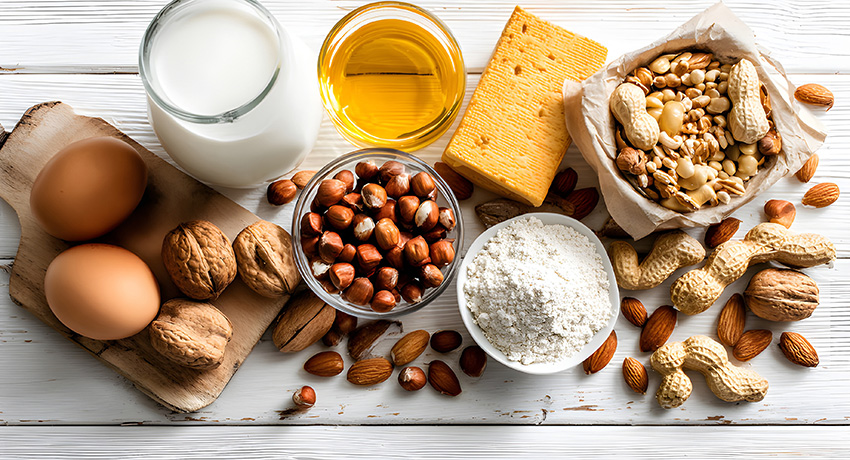
“A food allergy happens when the immune system mistakenly identifies a food as harmful and triggers an allergic reaction, said Dr. Jennifer McCracken, associate professor in the Department of Internal Medicine specializing in Allergy and Immunology. “Even a tiny amount of the food can cause symptoms. Common food allergens include peanuts, tree nuts, milk (dairy), eggs, shellfish, fish, wheat and soy.
“In allergic reactions, your allergy cells release chemicals like histamine,” she said. “This can cause symptoms that range from mild to life-threatening.”
Common food allergy symptoms include:
- Hives or rash
- Swelling of lips, tongue, or throat
- Vomiting
- Wheezing or trouble breathing
- Drop in blood pressure
- Anaphylaxis (a severe, life-threatening reaction)
Food allergies can develop in children or adults and may appear suddenly — even if you’ve eaten the food before without problems.
“It’s important to understand that food allergies can be life-threatening,” Dr. McCracken said, “Immediate medical care is required for severe reactions.”
What is a food intolerance?
“A food intolerance does not involve the immune system,” she said. “Instead, it occurs when the digestive system has trouble breaking down or processing certain foods. Common examples include lactose intolerance, non-celiac gluten sensitivity, and sensitivity to food additives like artificial colors or preservatives.
“Food intolerances can be uncomfortable, but they are not life-threatening,” she said.
Common food intolerance symptoms include:
- Bloating
- Gas
- Stomach cramps
- Diarrhea
- Nausea
“Symptoms are usually dose dependent, meaning small amounts may be tolerated while larger amounts cause discomfort,” Dr. McCracken said.
When should you see an allergy specialist?
Dr. McCracken advises to consider scheduling an evaluation if symptoms occur rapidly after eating; there is swelling, hives, or breathing difficulty; there is repeated vomiting after specific foods; you’ve been told to avoid multiple foods without clear testing; or you’re unsure whether symptoms are allergy related.
“There are many online tests marketed for ‘food sensitivities,’ but most are not scientifically validated,” Dr. McCracken said, “Accurate diagnosis requires evidence-based evaluation by a trained specialist.”
At UTMB Health, allergy specialists use validated skin testing, blood testing, careful clinical history and potentially oral food challenges to determine whether a true allergy is present.
Management strategies
So, what to do if you do, indeed, have a food allergy? Here are some ways to manage it.
- Strictly avoid the allergen
- Carry prescribed epinephrine if recommended
- Read food labels carefully
- Develop an emergency action plan
And for an intolerance?
- Identify trigger foods through guided elimination
- Adjust portion sizes
- Consider digestive support (when appropriate)
- Work with a provider to rule out other conditions
As for the beets and the borscht, you’re on your own. We don’t have any suggestions for getting you out of it without hurting granny’s feelings.
The bottom line
The specialists at UTMB Health provide evidence-based testing, accurate diagnosis, and personalized management plans to help you eat with confidence.
If you’re concerned about a possible food allergy, schedule an appointment with an allergy specialist at UTMB Health today.