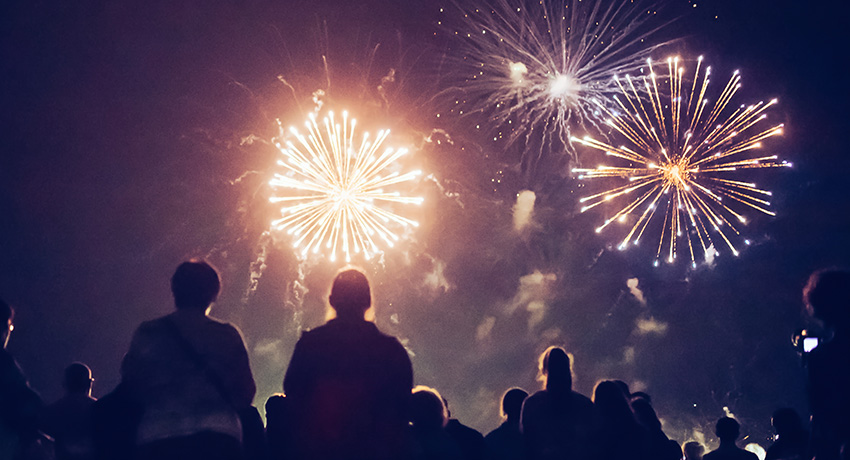
Fireworks are a fun Fourth of July tradition, but it only takes a few seconds for an injury to change the course of the evening.
A child reaches for the wrong end of a sparkler. Someone leans over a firework that has not gone off. A firework tips over after being placed inside a bottle or container. These moments happen fast, and can lead to serious burns, eye injuries, or trauma to the hands or face.
According to the U.S. Consumer Product Safety Commission, approximately 13,000 people were treated for fireworks-related injuries in 2025. The most frequently injured areas were the hands and fingers, followed by the head, face, and ears.
UTMB Health trauma teams see a similar pattern locally.
“The injuries our teams see most often involve the hands and face,” said Preston Huff, Injury Prevention Specialist with UTMB Health Trauma Services. “Fireworks injuries can happen fast, and many are preventable.”
The safest way to celebrate is to leave fireworks to trained professionals. For families who choose to use consumer fireworks where they are legal, preparation and close adult supervision are essential.
Sparklers are not safe for young children
Sparklers are often handed to children because they seem smaller and safer than other fireworks. However, sparklers can burn at temperatures of approximately 2,000 degrees Fahrenheit — hot enough to melt some metals.
Children may wave sparklers near their faces, clothing, or others nearby. Younger children may not understand how far away to hold them, and they may drop a sparkler or accidentally grab the hot end.
Safer alternatives include:
- Glow sticks
- Light-up toys
- Bubbles
- Confetti poppers
- Colored streamers
Parents and caregivers should keep children away from all fireworks, including sparklers.
Some common ‘safety habits’ can increase the isk
Several practices may feel safer in the moment but can actually make an injury more likely.
Avoid:
- Holding a firework in your hand while lighting it
- Leaning over a firework to see if it is lit
- Moving closer to inspect a firework that did not go off
- Trying to relight a malfunctioning firework
- Placing fireworks inside bottles, cans, or other containers
- Lighting fireworks near homes, cars, dry grass, or groups of people
- Assuming several adults are watching the children
If children are present, assign one sober adult to actively supervise them. A designated adult is more reliable than assuming everyone is paying attention.
If you choose to use fireworks
Consumer fireworks should only be used where they are legal and in accordance with all local rules.
Adults using fireworks should:
- Read and follow the manufacturer’s instructions
- Light one firework at a time
- Move back immediately after lighting it
- Keep children and pets away from the area
- Never point or throw fireworks toward another person
- Avoid using fireworks while impaired by alcohol or drugs
- Keep a bucket of water or a garden hose nearby
- Use fireworks away from homes, vehicles, dry grass, and other flammable materials
- Wear protective eyewear
- Soak used fireworks with water before throwing them away
Never hold a lit firework unless the manufacturer’s instructions specifically state it is designed to be held.
What to do if a firework does not go off
A firework that fails to ignite may still go off unexpectedly, so stay back.
Do not approach it immediately, pick it up, or attempt to relight it. Wait at least 20 minutes before approaching. Then soak it thoroughly with water before disposal.
Keep children, pets, and other spectators away from the area during that time.
What to do after a burn
Move the injured person away from the firework and stop the burning process.
For a minor burn:
- Cool the area under cool running water
- Do not apply ice
- Do not use butter, toothpaste, oils, or other home remedies
- Remove rings, watches, or jewelry near the injury if it can be done safely
- Cover the burn loosely with a clean, dry dressing
Seek prompt medical care for burns that are large, deep, or involve the face, hands, feet, eyes, joints, or other sensitive areas. Burns larger than the injured person’s hand also require medical evaluation.
What to do after an eye injury
Fireworks can cause severe eye damage, even when someone is standing nearby rather than lighting the device.
After an eye injury:
- Seek medical care immediately
- Do not rub the eye
- Do not rinse it
- Do not apply pressure
- Do not try to remove anything that may be stuck in the eye
Covering the eye loosely — without pressure — may help prevent the injured person from touching it while awaiting care.
Call 911 if the injury is serious or life-threatening.
Celebrate safely
Fireworks are prohibited in many communities, including Galveston city limits, so the safest and simplest option is to attend professional celebrations.
The Galveston Fourth of July Parade begins at 6 p.m. on 23rd Street and Seawall Boulevard. It will travel west along the seawall before turning north at 53rd Street.
A 25-minute professional fireworks display begins at 9:15 p.m. from the jetty at 37th Street and Seawall Boulevard.
Families should arrive early, follow posted parking and street closure instructions, and watch from a designated public viewing area.
The bottom line
Fireworks injuries can happen quickly, but many are preventable.
“The safest choice is to leave fireworks to the professionals,” Huff said. “If families use fireworks where they are legal, adults should supervise closely, keep children away from fireworks, have water nearby, and never relight or handle a firework that does not go off.”
A few extra precautions can help make sure the holiday ends with good memories instead of an emergency room visit.
If you believe someone has experienced a serious fireworks injury, call 911 or go to the nearest emergency room.