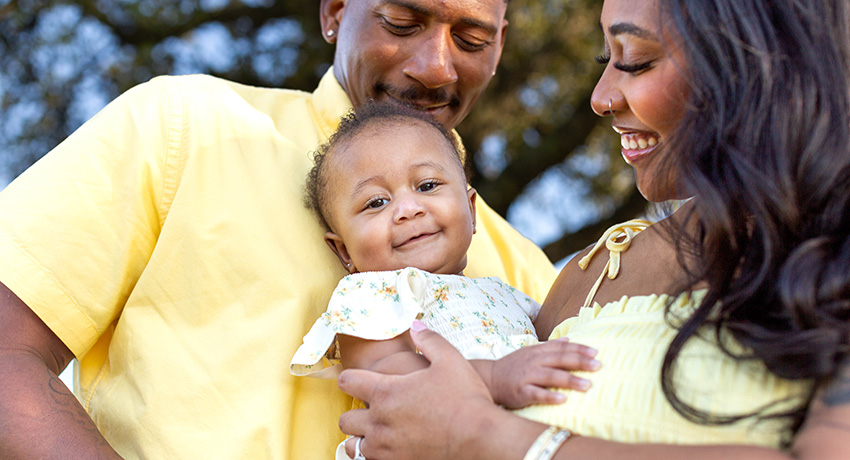
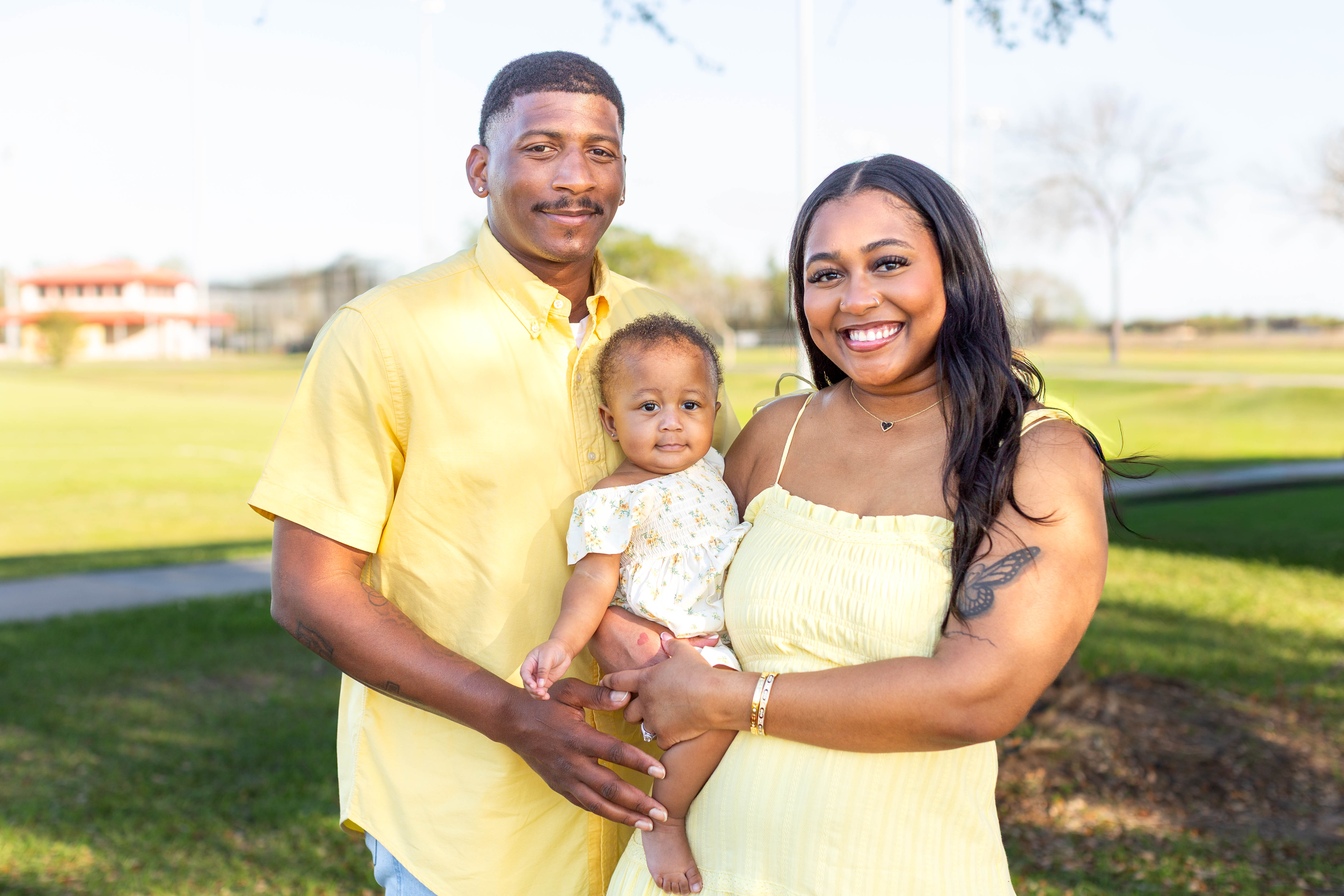
Six days after bringing her newborn daughter home, Sydney Norman got a phone call that changed everything about what the months ahead would look like. The news wasn’t shocking, but it still terrified her.
Shortly after her birth, Norman’s daughter, Knova, underwent a newborn screening at a hospital belonging to The University of Texas Medical Branch (UTMB). Over the phone, a doctor told Norman the results: Knova had spinal muscular atrophy, also known as SMA.
“Dr. Cooney wanted us to come in as soon as possible to talk about everything that was on the test,” Norman recalls. “So we went literally the next day after she gave us that call.”
SMA is a rare genetic disease that prevents the body from producing a critical protein needed for motor nerve development. Without it, the nerves that control muscles don’t properly function. In its most severe forms and without life-saving treatment, babies lose the ability to breathe.
But the doctors didn’t have to explain much of this to Norman or her family; they already knew.
“My mom was the one who really understood it, because the first baby she had—my older sister—she had SMA,” Norman says. “She never sat up, never held her head up. She kept getting pneumonia.”
By the time they finally learned it was SMA, about six months after she was born, “there was nothing they could do.”
While pregnant, Norman underwent a test at UTMB that confirmed she was a carrier for SMA. Her partner underwent the same test—and received the same results. That meant baby Knova had a significant chance of being born with the disease. Yet because of these tests—especially the newborn screening—the team at UTMB was prepared.
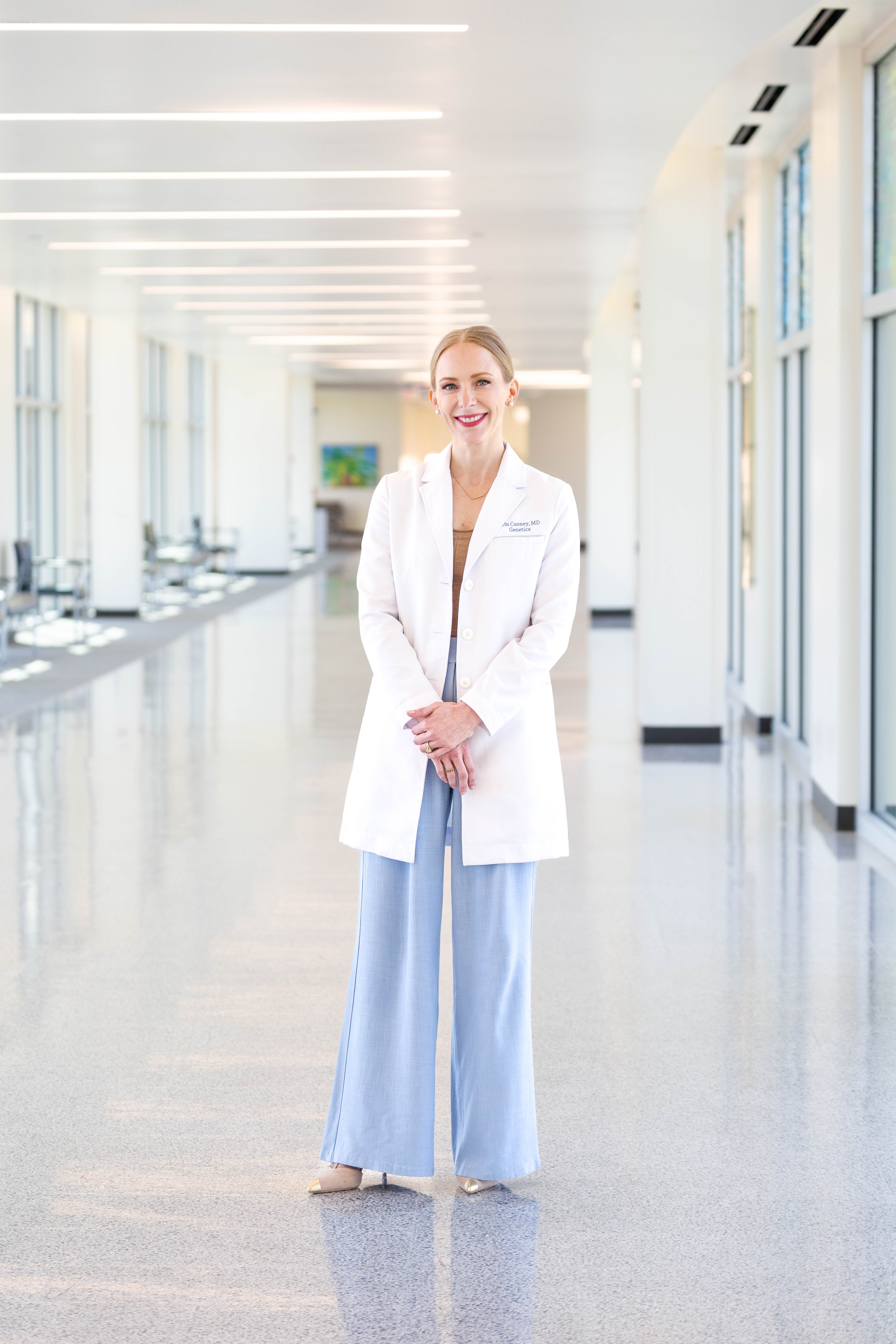
At the clinic the day after that phone call, Dr. Erin Cooney, a clinical geneticist at UTMB, explained how far science had come since Norman’s sister was born. UTMB had made the diagnosis within the first two weeks of her daughter’s life, and before disease onset. What’s more, there were cutting-edge treatments in place that could save Knova’s life.
“It’s a scary, devastating time,” Cooney says. “But I wanted to quickly let them know, ‘Hey, there is a treatment. This is why we screen for this. It’s not a death sentence anymore.’”
Specifically, there’s a one-time gene therapy, she said—an infusion through an IV—that can help Knova’s body perform the functions that SMA was taking from her.
“Once she explained the different options,” Norman says, “I knew immediately I wanted her to get the gene therapy.”
She was feeling the kind of hope her family hadn’t had the last time they confronted SMA.
But getting to the day of the infusion wouldn’t be simple.
Nowhere Else in the Nation
To Dr. Joseph Ray, one of Cooney’s colleagues, the story of Knova’s quick diagnosis and treatment plan is proof that something special is happening at their hospital. Approximately 35 babies are born with SMA in Texas each year, and because of the treatments provided at UTMB, each one of them has a chance at a life that would’ve seemed impossible only a few decades ago.
“We are building something here that’s not being done really anywhere else in the nation,” he says.
In addition to SMA, UTMB is currently treating Duchenne muscular dystrophy and recessive dystrophic epidermolysis bullosa. It also offers enzyme replacement therapy for numerous conditions including Fabry, Hunter, and Gaucher syndrome, to name a few. And as more medications become available to treat more rare genetic diseases in the coming years, UTMB plans to add those treatments to its offerings.
For others out there who get these diagnoses, Ray wants them to know that “if there’s a definitive treatment available, our team is ready to get them access to that treatment.”
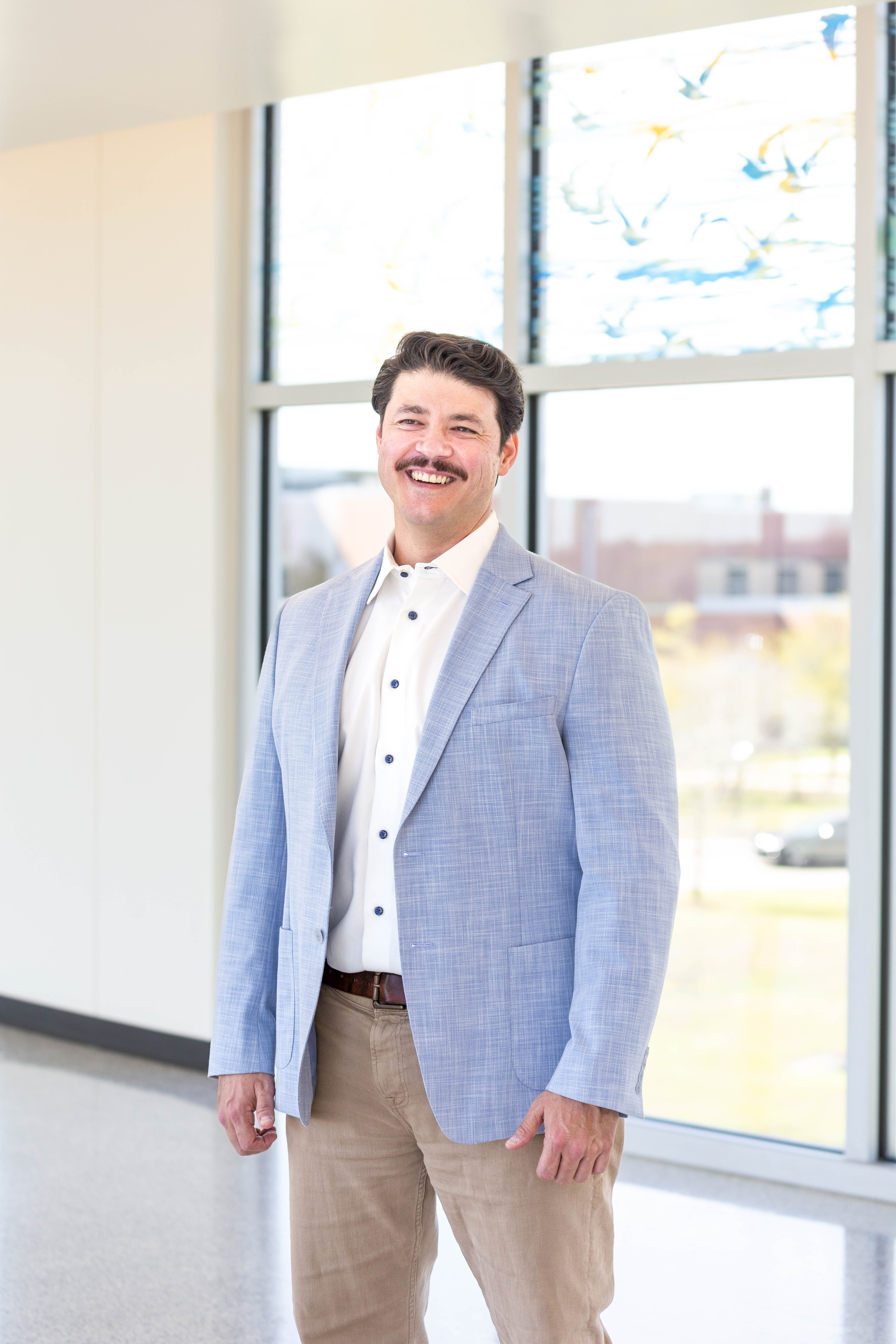
Yet there was a time when Ray, the Division Director of Medical Genetics and Metabolism at UTMB, didn’t think that a career in genetic medicine was right for him. Throughout medical school, his fellow students had him pegged for a career as an ER doctor—everyone called him “ER Joe.”
After medical school, he ended up in a pediatric residency program. One day, his attending physician pulled Ray aside and told him she thought he’d make an excellent clinical geneticist. The physician had an open spot in her genetics program, and she asked Ray if he would consider joining her. (“If you hate it,” she said, “I’ll write you a letter of recommendation for your ER fellowship.”)
It seemed like a win-win for the young doctor, so he joined the program. That’s how Ray fell in love with genetics and never looked back.
By 2014, he’d become division chief and began expanding the genetics program at UTMB. He was soon “up to my neck in patients,” he says, and looking to hire more physicians. Enter Dr. Cooney: an ambitious physician and longtime professional acquaintance since their training years. Ray always admired the care and compassion Cooney displayed in every aspect of her work, and it was clear she’d make the perfect addition to the burgeoning genetics program he was building at UTMB.
“Dr. Cooney is really, really excellent at operations,” Ray says. “She’s excellent at the nitty-gritty details and figuring out efficient pathways for how those things can be integrated into a clinic, who’s going to be responsible for what, and parsing out how to incorporate some of our technology into making that efficient.”
They’ve been successful because their strengths complement each other. “Dr. Ray has an exceptional ability to inspire confidence in new ideas,” Cooney says. “He is highly effective at advocating to leadership, clearly articulating both needs and potential. He played a pivotal role in gaining institutional support for gene therapy—an investment that required both foresight and persuasion. He consistently challenges boundaries and pushes initiatives forward, always seeking opportunities for growth and expansion.”
.jpg?sfvrsn=79038054_1 "Because of the gene therapies offered at UTMB, babies born with SMA and other rare genetic diseases have a chance at a life that would’ve seemed impossible only a few decades ago.")
The team has only continued to grow, and Ray says he’d “always had the mindset of always expanding.”
“We want to create an intervention program that improves access to all the medications and treatments that are coming down the line.”
This mindset—harnessing the latest science and technology—is exactly what patients like Knova need.
A Weight Lifted
It turned out that Knova wasn’t eligible for the infusion right away. Tests showed she had elevated antibodies that would interfere with the therapy, and until those levels dropped, doctors couldn’t safely proceed with the infusion.
For a disease like SMA, time is everything. Each day was filled with worry that her symptoms could be progressing. As those days turned to months, Norman leaned on her mother—a woman who knows the painful impact of SMA as well as anyone.
“She did a lot of research,” Norman says. “She would call me and say, ‘This is going to be very good. I have faith that she’s going to get it.’”
When the call finally came that Knova was eligible, hope replaced anxiety once again. And from the start, the day of the infusion brimmed with emotion.
In the room were the people who had carried Norman and Knova through the entire ordeal so far: Knova’s father, both of her grandmothers, and the UTMB care team that had become a constant presence in their lives.
“We were all in there taking pictures, crying,” Norman says. “The nurses and Dr. Cooney were in and out with us all day. It was a happy day, but it was still just a little bit like, ‘Okay, but is this going to actually give her the best outcome?’ Because there was still a possibility that anything could happen.”
When the two-hour infusion was over and the IV was removed, Norman felt like “a big weight” had been lifted off her chest.
Her daughter is now home (“She is all over the place,” Norman says. “She’s about to be walking now.”) and Norman says the UTMB team has made sure to keep in touch.
“They always call, they email, they reach out,” Norman says. “You can tell they really care.”
For his part, Dr. Ray says he hopes Knova’s story shows people “just how strong that little baby is.”
“We couldn’t have hoped for a better outcome for her,” Ray says.
Cooney says telling Knova’s family and others that “we can treat this” is the best part of her job.
But right now, there’s a lot to love about her job.
“I get to go from being a diagnostician to being an interventionalist, to being somebody who can say, ‘There’s hope,’” she says. “It’s such an exciting time. I think it’s the coolest time to be in genetics.”
For more information about the Gene Therapy Program at UTMB, visit utmbhealth.com.
The above story was produced by Tyler Hicks with Texas Monthly as part of a sponsored content series about The University of Texas Medical Branch (UTMB).
Photography by Jenn Duncan