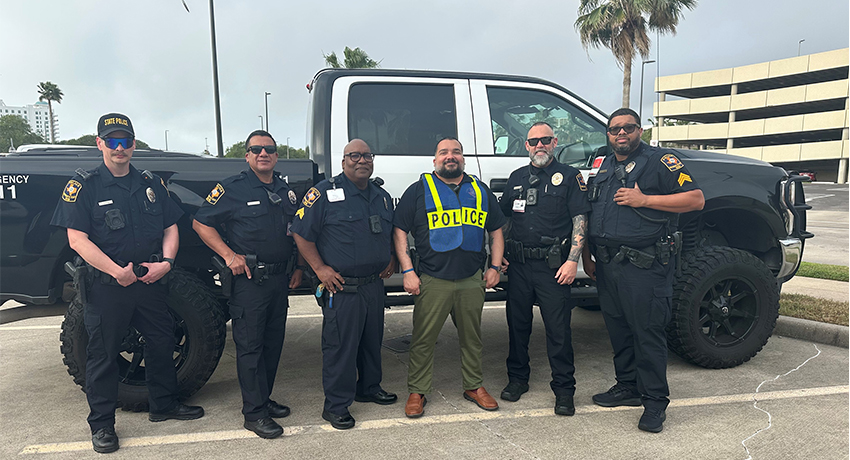
Emergencies are rare, but being ready can make all the difference. That’s why police and emergency teams took part in a drill on April 11 at Jennie Sealy Hospital in Galveston, focused on preparing for an active shooter scenario.
The University of Texas Medical Branch (UTMB) Police Department led the multiagency exercise focused on coordination, communication, and response in a hospital setting. Patient care was not interrupted during the drill.
“Preparation is key in any emergency,” said UTMB Chief of Police Kenith Adcox. “Training together helps ensure a faster, more coordinated response when every second counts.”
Practicing for real life
Active shooter drills are carefully planned to reflect real‑world challenges. Each exercise uses different scenarios, locations, and participants to keep training realistic and meaningful.
“We change things every time,” Adcox explained. “Different people, different settings, and different situations. That’s important because how we respond continues to evolve. We’re always learning and adjusting based on new information and best practices.”
UTMB police officers conduct multiple drills each year and move them across the university’s many environments — from academic buildings to clinics to hospitals — recognizing that each space presents its own challenges.
“This university includes many different types of spaces,” Adcox said. “By training in hospitals, classrooms, and clinics, our teams are better prepared to respond wherever help is needed.”
Working together before it matters
One of the most important goals of the drill was teamwork. Large emergencies require help from many agencies, and strong relationships before a crisis can save valuable time.
“No single police department can handle a situation like this alone,” Adcox said. “We depend on our partners. Training together helps us understand how each agency operates so we can work as one team if a real incident ever occurs.”
Practicing together allows officers and first responders to build trust, communicate clearly, and coordinate their actions — all of which are critical during high‑stress situations.
Support across the institution
Holding a drill inside a working hospital requires careful planning and cooperation, and Adcox emphasized the support his department received from hospital administration.
“We know this is a hospital and patient care always comes first,” he said. “We appreciate the support that allows us to train in these spaces. Everyone understands that preparation plays a key role in keeping people safe.”
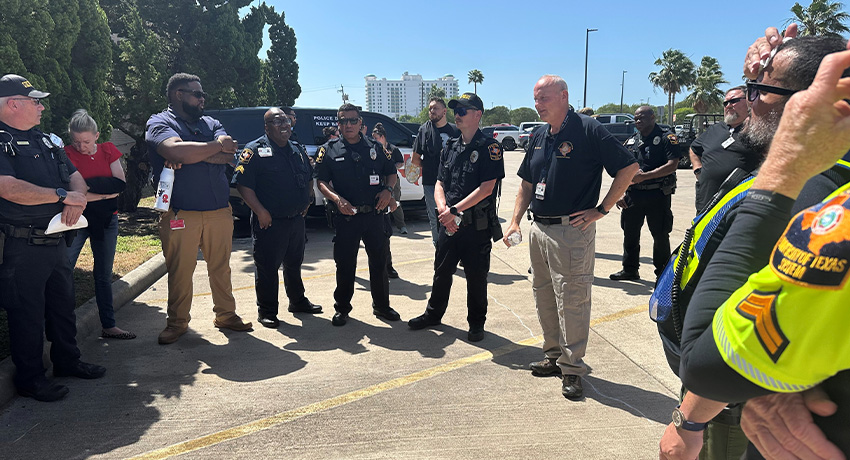
UTMB Police Chief Kenith Adcox speaks with law enforcement and public safety personnel during the wrap‑up review after the exercise.