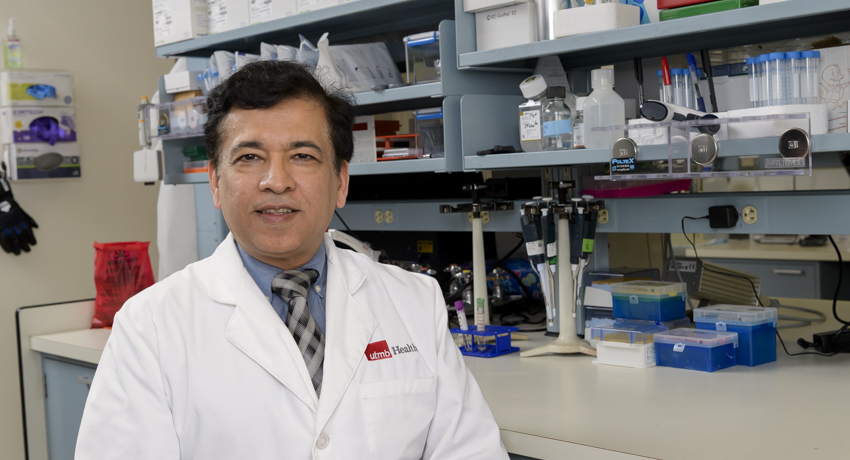
Ajay Israni, MD, chief of the Division of Nephrology at The University of Texas Medical Branch (UTMB), has been appointed by Texas Gov. Greg Abbott to the state’s Chronic Kidney Disease Task Force.
Named to the panel in May, Israni will help guide statewide efforts to improve prevention, early screening, diagnosis, and management of chronic kidney disease while advancing education for healthcare professionals.
"Professionally and personally, I am very honored to be the UTMB Health System's representative on this task force," Israni said. "This is a very exciting opportunity for me."
The task force is charged with implementing Texas' plan to reduce the burden of chronic kidney disease through collaboration with local, state, and national partners. A key priority is educating healthcare professionals about evidence-based clinical practice guidelines that promote earlier screening and diagnosis.
"These guidelines focus on ways to screen patients earlier and detect kidney disease sooner," Israni said. "They also address conditions that contribute to chronic kidney disease (CKD), its complications, and strategies to help healthcare professionals manage those complications."
Israni said his experience caring for patients with end-stage kidney disease, along with his leadership at one of Texas' largest academic health systems, prepared him for the appointment.
"We need to educate people more about CKD," he said. "Kidney disease is a silent killer. Years ago, we had few treatment options. Today, we have dialysis, transplantation, and medications that can slow disease progression, but patients must be diagnosed early for those treatments to have the greatest benefit."
According to the Centers for Disease Control and Prevention, more than 90% of adults with chronic kidney disease do not know they have it.
"There are more than 35 million people in the United States living with kidney disease, and Texas has a significant share of that population," Israni said. "Texas also has one of the nation's highest rates of end-stage kidney disease, and many of those patients have diabetes."
Texas' population also contributes to high rates of kidney disease.
"Research suggests genetics may play a role, but hypertension, diabetes, and other risk factors are also important contributors," he continued.
The task force also works to raise public awareness about chronic kidney disease and encourage screening for people at increased risk, particularly those with diabetes or high blood pressure.
Another priority is improving access to kidney transplantation. According to the Texas Health and Human Services Commission, about 10,000 Texans are waiting for a kidney transplant, accounting for roughly 85% of the state's organ transplant waiting list.
Despite those challenges, Israni said advances in treatment offer reason for optimism.
"In the last decade, we've developed new medications and treatments for specific kidney diseases," he said. "Many more therapies are being tested, and we need to make sure patients have access to them so we can slow the progression of chronic kidney disease."
He also hopes the task force can help improve access to telemedicine and remote monitoring, improve coordination with Medicare, Medicaid, and kidney advocacy organizations, and support individuals interested in kidney donation.
"I would like to ask policymakers to think about removing some of the barriers to kidney donation so patients on the waiting list can benefit," he said.