
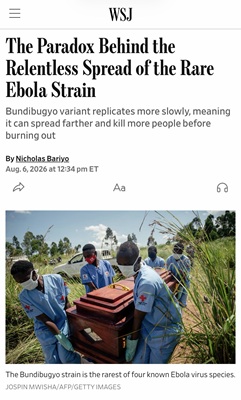
A rapidly expanding Ebola outbreak in East Africa is drawing international attention, and a UTMB SPECTRE expert is helping explain what makes this outbreak particularly concerning.
Dr. Corri Levine was recently featured in The Wall Street Journal article, “The Paradox Behind the Relentless Spread of the Rare Ebola Strain,” which examines the ongoing outbreak of Bundibugyo ebolavirus and why the characteristics of this less common Ebola virus species may contribute to its continued spread.
Unlike more rapidly progressing forms of Ebola, Bundibugyo virus disease may progress more slowly, potentially allowing infected individuals to remain mobile longer before becoming severely ill. In the article, Dr. Levine explains:
“That slower course of the Bundibugyo strain carries an added risk.”
The article highlights how international travel, delayed recognition of illness, conflict, limited healthcare access, and challenges with case identification and contact tracing can complicate efforts to contain an outbreak.
Dr. Levine serves as Associate Director of SPECTRE at the University of Texas Medical Branch (UTMB), where she contributes to efforts focused on special pathogen preparedness, response, education, and research. Her expertise helps inform SPECTRE’s work to translate emerging infectious disease knowledge into practical preparedness for healthcare professionals and partners across the region.
From Global Outbreaks to Local Readiness
The ongoing outbreak is an important reminder that infectious disease threats do not remain confined by geography. Modern travel can connect an outbreak occurring thousands of miles away with healthcare systems around the world.
For frontline healthcare professionals, preparedness begins before the first patient arrives.
Then take the next step in preparedness by joining SPECTRE for our HCID Frontline Response Training on October 16, 2026, at UTMB in Galveston. This full-day, interactive training gives healthcare professionals from across HHS Region 6 an opportunity to strengthen their knowledge and practice skills needed to recognize and respond to high-consequence infectious diseases.