
What one day of discussion at UTMB revealed about health beyond prison walls
At the inaugural Center for Correctional Healthcare Excellence Symposium on August 7, clinicians, researchers and correctional leaders spent a day discussing mental illness, suicide prevention, opioid use disorder, cardiovascular disease, aging, trauma, hepatitis C and liver cancer. The central lesson was that correctional health is not a specialized concern sealed inside a prison. It is public health in one of its most concentrated and consequential forms.
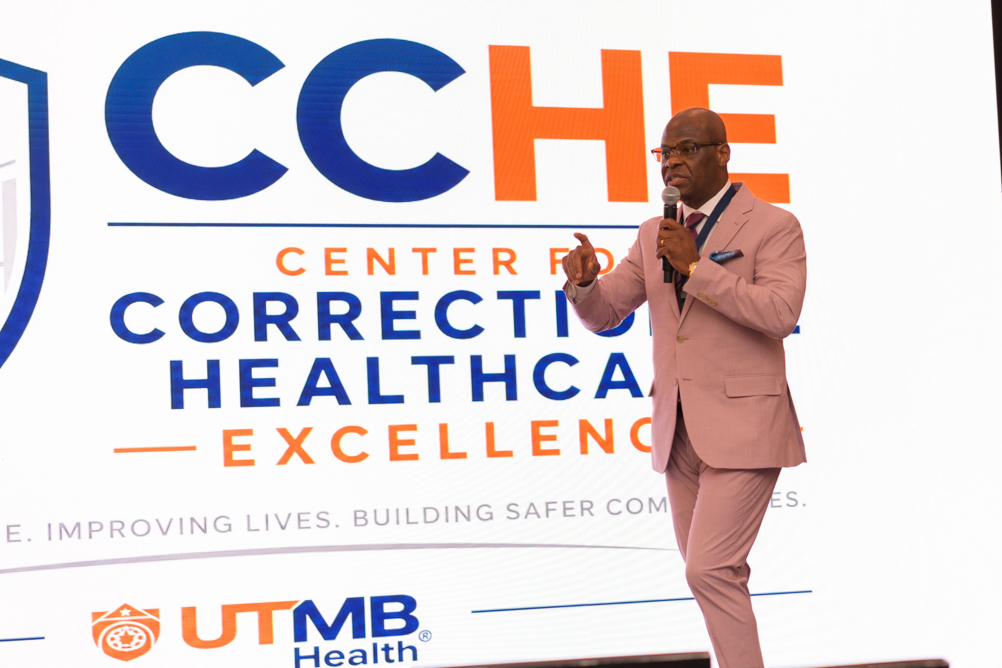
The Center for Correctional Healthcare Excellence, or CCHE, brings clinicians, educators, researchers and system leaders together to improve correctional care through research, education, quality improvement and clinical practice. Its work spans clinical care, research, education and bioethics, creating a shared structure for questions that no discipline or institution can answer alone.
CCHE Director Olugbenga Ojo, MD, set the frame from the beginning. People who are incarcerated often arrive with layered medical and social risks, and most eventually return to families and communities. Preventing infection, managing chronic disease, treating mental illness and substance use, and planning continuity of care therefore affect far more than a correctional facility. They shape community health, public safety and the future use of health services.
A system built for care and research at once
UTMB brings unusual depth to that work. Its Correctional Managed Care program began through a partnership with the Texas Department of Criminal Justice in 1994 and now provides medical, dental and mental health services to more than 126,000 patients in over 100 adult and juvenile facilities, accounting for roughly 4 million visits each year.
Its reach, long-standing electronic health record and experience with telemedicine create a rare opportunity to connect care delivery with epidemiology, quality improvement and workforce education. This scale paired with sustained clinical responsibility, research capacity and an ACGME-accredited Carceral Medicine Fellowship gives UTMB tools few academic health systems possess.
Precision in the mental health evidence
The mental-health presentations demonstrated why those tools are needed. Professor Seena Fazel, MD, emphasized careful methods, precise prevalence estimates and the limits of common assumptions about mental illness in prisons.
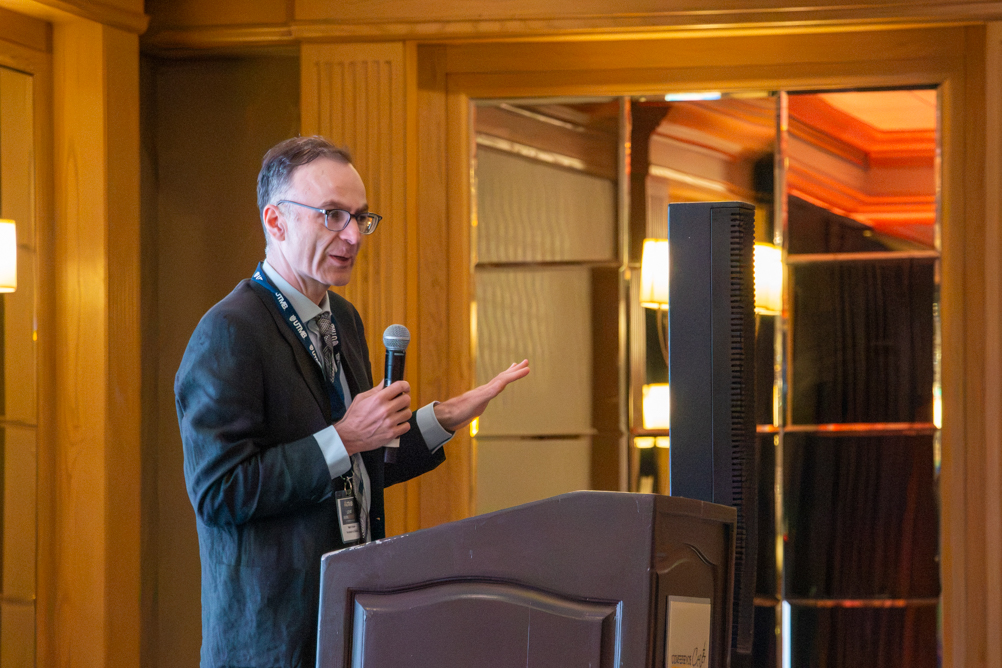
His review of treatment and suicide-prevention research pointed to the need for better trials, targeted risk assessment, adequately resourced services and follow-up that continues after release.
Joseph Penn, MD, traced how the decline of public psychiatric institutions without sufficient community alternatives shifted more people with serious mental illness into jails and prisons.
Jennifer Clarke, MD, MPH, showed the complementary lesson from opioid treatment, that medications for opioid use disorder save lives, but access, financing and community linkage determine whether evidence becomes practice.
Health records as public health infrastructure
Jacques Baillargeon, PhD, on behalf of Rocksheng Zhong, MD, MHS, made the case for treating correctional health data as public-health infrastructure. Drawing on work across Texas adult and juvenile systems, he described how reliable electronic records can reveal trends in major depression, bipolar disorder, psychotic disorders, substance use and medication patterns.
He also showed where biostatistics and data science enter the picture. Strong definitions, careful validation and interdisciplinary analysis are prerequisites for useful prediction. The next step is not prediction for its own sake, but models that help direct limited resources, improve clinical decisions and strengthen care.
Cardiac disease, hepatitis C and liver cancer
The same population-health logic appeared in the physical-health sessions.
Melissa Victory Brodman, MD, described a disproportionate burden of acute myocardial infarction among older incarcerated adults and the opportunity to improve screening, medication use and prevention.
Jessica Khan, MD, presented the Texas correctional system’s progress against hepatitis C through opt-out screening, coordinated treatment and sustained monitoring.
Anne Spaulding, MD, MPH, connected bedside observation to descriptive epidemiology and modeling, explaining why the United States cannot eliminate hepatitis C without addressing the large share of the epidemic that passes through correctional settings.
Mahnur Haider, MD, MPH, extended that analysis to liver cancer, showing why cure does not erase accumulated risk or the need for surveillance.
Context, narrative and the shape of a diagnosis
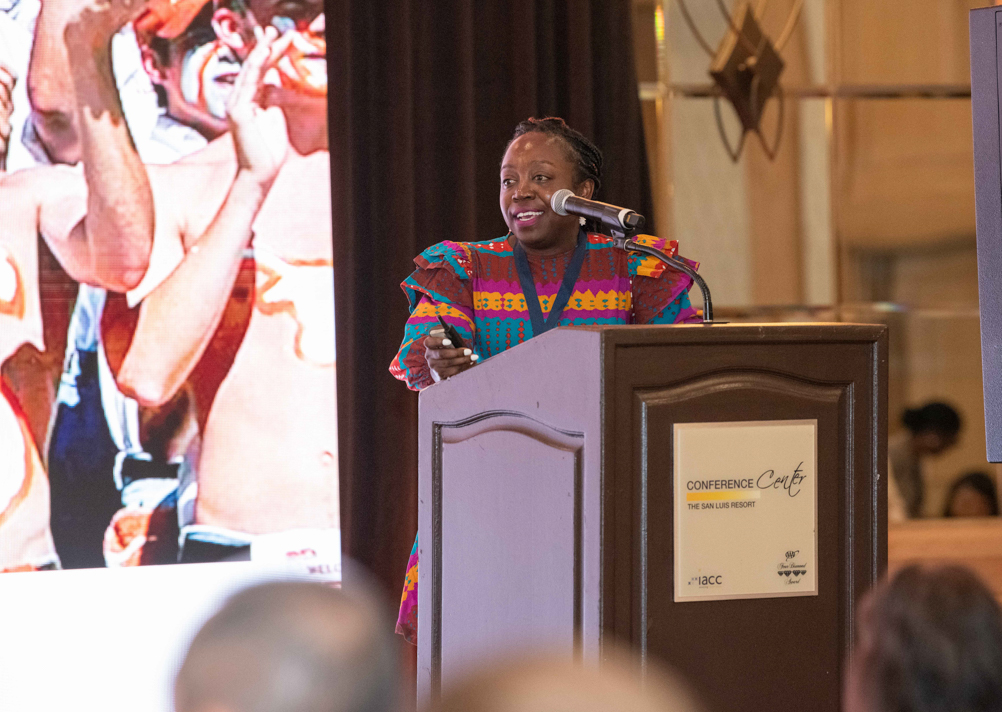
Sarah Vinson, MD, situated behavior within structural trauma, social hierarchy and the environments that shape what people can do. Her focus on narrative, contextual diagnosis, psychologically safe workplaces and justice-informed leadership challenged health professionals to ask not only whether care is technically available, but also whose experience defines the problem and whose voice informs the response.
One population-level question, asked all day
Kristen Peek, PhD, senior vice president and inaugural dean of the UTMB School of Public and Population Health, closed by bringing these threads together. The presentations appeared to cover different diseases and systems, she observed, but they repeatedly returned to the same population-level question. How can health be improved across the full course of people’s lives?
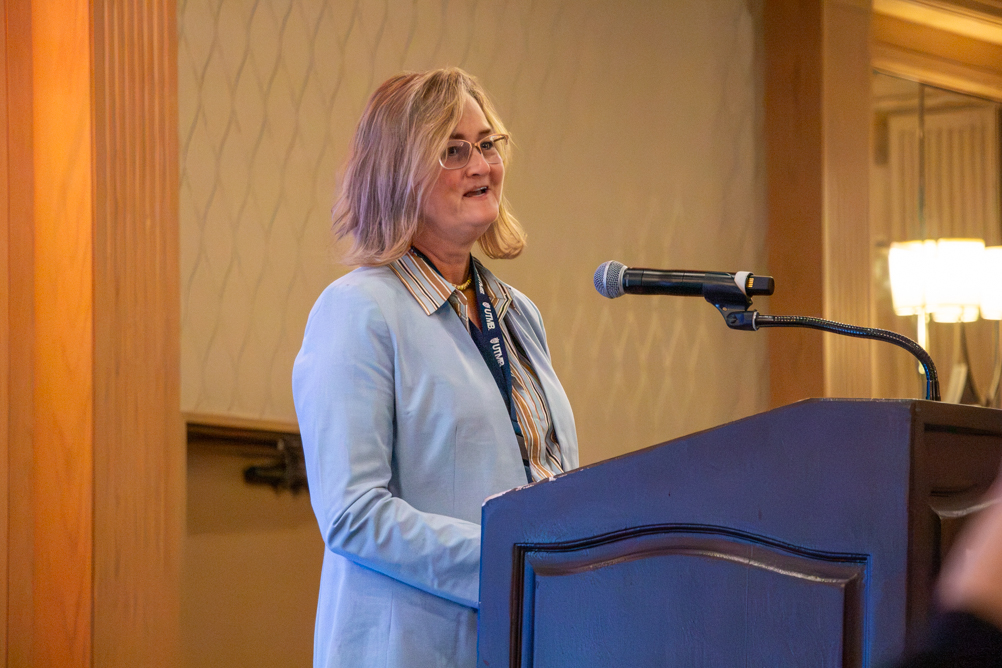
Correctional settings make intersecting burdens especially visible because chronic disease, mental illness, trauma, infection and aging often accumulate within the same people and the same systems of care. What begins before incarceration does not end at intake, and what happens during incarceration does not remain there after release. Prevention, treatment and continuity of care can strengthen families and communities, making investment in correctional health an investment in population health. There is no durable boundary between correctional health and community health.
That is why correctional healthcare belongs in public-health education, research and practice. It offers a setting in which epidemiology can identify preventable burdens, biostatistics and data science can improve decisions, bioethics can test institutional responsibility, and the health humanities can restore context and personhood to systems that too often reduce people to cases.
The walls are real. The health consequences do not stop at them.