Faculty Development & Faculty Affairs News Supporting and Celebrating Faculty Success at UTMB
A Message from the Senior Vice President, Provost, and Chief Academic Officer, UTMB:
What the Librarians are Currently Reading on Artificial Intelligence
Artificial intelligence is rapidly reshaping research, publishing, and clinical practice—and raising important questions about accuracy, accountability, and human judgment. This selection highlights articles librarians are reading on AI’s growing influence in scholarly communication and healthcare.
The authors explore the terminology of AI hallucinations through the lens of social stigma. The phrase "AI misinformation" is suggested as a more appropriate label for the problem as AI becomes integrated into medicine.
The authors posit that research evaluation reforms should be organized around 'distinctly human contributions' which may not be well described by metrics.
Large language models may be generating non-existent references. This article explores the issue of fake citations. "Hallucinated citations that make it into the academic literature can slow down and confuse other researchers’ efforts, and lead to false conclusions. Such errors can also create distrust in science,"" says Weber-Boer. Additionally, some publishers say that hallucinated references can be grounds for rejecting a publication and may not allow for resubmission with corrections.
What the Librarians are Currently Reading on Artificial Intelligence
Artificial intelligence is rapidly reshaping research, publishing, and clinical practice—and raising important questions about accuracy, accountability, and human judgment. This selection highlights articles librarians are reading on AI’s growing influence in scholarly communication and healthcare.
The authors explore the terminology of AI hallucinations through the lens of social stigma. The phrase "AI misinformation" is suggested as a more appropriate label for the problem as AI becomes integrated into medicine.
The authors posit that research evaluation reforms should be organized around 'distinctly human contributions' which may not be well described by metrics.
Large language models may be generating non-existent references. This article explores the issue of fake citations. "Hallucinated citations that make it into the academic literature can slow down and confuse other researchers’ efforts, and lead to false conclusions. Such errors can also create distrust in science,"" says Weber-Boer. Additionally, some publishers say that hallucinated references can be grounds for rejecting a publication and may not allow for resubmission with corrections.
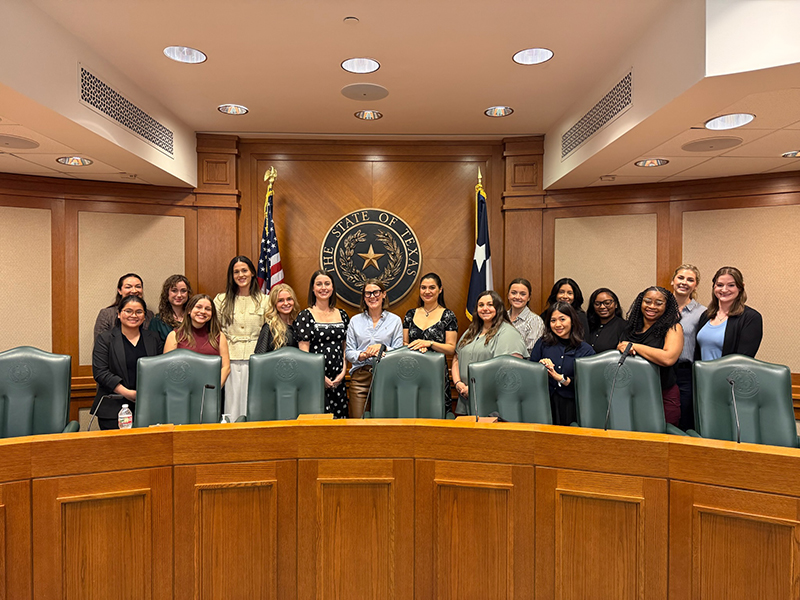
In March, UTMB School of Nursing Policy & Leadership and Health Advocacy Honors students traveled to Austin for an immersive experience at the intersection of nursing and public policy.
Dr. Sheba Luke, Interim Graduate Department Chair, School of Nursing, addressed how the nursing shortage is everywhere in a Becker's Hospital Review op-ed.
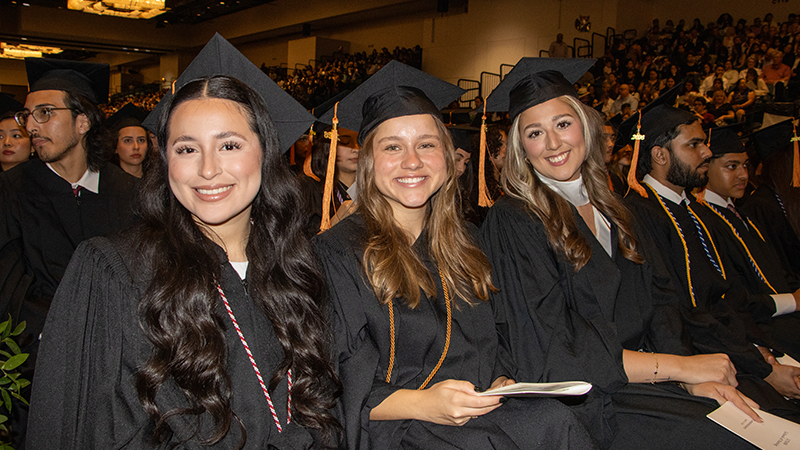
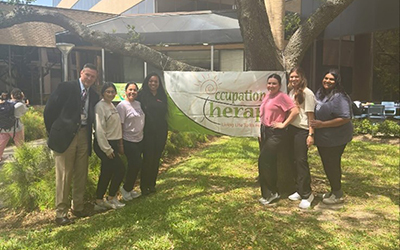
The School of Health Professions recognized faculty and students in two departments in April, observing Occupational Therapy Month and Medical Laboratory Professionals Week.
The Department of Population Health and Health Disparities has awarded its first-ever pilot grant, selecting Dr. Michael Goodman's proposal on AI-enabled community health tools.
Check out these FAQs for the Master of Science in Aerospace Medicine, now open to applicants beyond UTMB's aerospace medicine residents.
New Awards
Exception occured while executing the controller. Check error logs for details.
New Grants
What the Librarians are Currently Reading on Artificial Intelligence
Artificial intelligence is rapidly reshaping research, publishing, and clinical practice—and raising important questions about accuracy, accountability, and human judgment. This selection highlights articles librarians are reading on AI’s growing influence in scholarly communication and healthcare.
The authors explore the terminology of AI hallucinations through the lens of social stigma. The phrase "AI misinformation" is suggested as a more appropriate label for the problem as AI becomes integrated into medicine.
The authors posit that research evaluation reforms should be organized around 'distinctly human contributions' which may not be well described by metrics.
Large language models may be generating non-existent references. This article explores the issue of fake citations. "Hallucinated citations that make it into the academic literature can slow down and confuse other researchers’ efforts, and lead to false conclusions. Such errors can also create distrust in science,"" says Weber-Boer. Additionally, some publishers say that hallucinated references can be grounds for rejecting a publication and may not allow for resubmission with corrections.
What the Librarians are Currently Reading on Artificial Intelligence
Artificial intelligence is rapidly reshaping research, publishing, and clinical practice—and raising important questions about accuracy, accountability, and human judgment. This selection highlights articles librarians are reading on AI’s growing influence in scholarly communication and healthcare.
The authors explore the terminology of AI hallucinations through the lens of social stigma. The phrase "AI misinformation" is suggested as a more appropriate label for the problem as AI becomes integrated into medicine.
The authors posit that research evaluation reforms should be organized around 'distinctly human contributions' which may not be well described by metrics.
Large language models may be generating non-existent references. This article explores the issue of fake citations. "Hallucinated citations that make it into the academic literature can slow down and confuse other researchers’ efforts, and lead to false conclusions. Such errors can also create distrust in science,"" says Weber-Boer. Additionally, some publishers say that hallucinated references can be grounds for rejecting a publication and may not allow for resubmission with corrections.
What the Librarians are Currently Reading on Artificial Intelligence
Artificial intelligence is rapidly reshaping research, publishing, and clinical practice—and raising important questions about accuracy, accountability, and human judgment. This selection highlights articles librarians are reading on AI’s growing influence in scholarly communication and healthcare.
The authors explore the terminology of AI hallucinations through the lens of social stigma. The phrase "AI misinformation" is suggested as a more appropriate label for the problem as AI becomes integrated into medicine.
The authors posit that research evaluation reforms should be organized around 'distinctly human contributions' which may not be well described by metrics.
Large language models may be generating non-existent references. This article explores the issue of fake citations. "Hallucinated citations that make it into the academic literature can slow down and confuse other researchers’ efforts, and lead to false conclusions. Such errors can also create distrust in science,"" says Weber-Boer. Additionally, some publishers say that hallucinated references can be grounds for rejecting a publication and may not allow for resubmission with corrections.





_page_3.jpg?sfvrsn=a41a4f54_5 "Rachel Walden - John Hopkins University")
.jpg?sfvrsn=3dd7a154_3 "Kimberly Skarupski- Blond shoulder length hair white woman in her late fifties in a blue blazer, fuchsia blouse, pearl necklace and gold hanging earrings with a soft smile.")