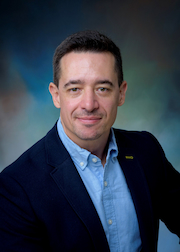
Alberto
Aparicio is an Assistant Professor in the Department of Bioethics and Health
Humanities at the University of Texas Medical Branch (UTMB) and an REC Scholar
in the UTMB Pepper Center on Aging. Trained in Science and Technology Studies
(PhD, University College London), technology policy (MPhil, University of
Cambridge), and biochemistry (MSc, University of Saskatchewan), with
postdoctoral fellowships at the Global Observatory for Genome Editing (Harvard
University) and the Alexander von Humboldt Biological Resources Research
Institute (Colombia), his work examines how ethical limits, policy frameworks,
and governance infrastructures are made—and contested—across the contemporary
life sciences. A central focus of his research is geroscience and longevity
biotechnology: he analyzes how “healthy aging” is being assembled as a new
biomedical and regulatory paradigm, how evidence and expertise are mobilized to
legitimate interventions that claim to slow aging or rejuvenate the body, and
how these developments generate novel subjectivities and reconfigure
relationships among markets, regulators, clinicians, and publics. Across this
agenda, he is especially interested in authorization—the social and
institutional work through which novel biomedical practices become thinkable,
governable, and legitimate under uncertainty—and in “frontier biotechnologies”
that seek to remake experimentation by shifting oversight and responsibility
into market-mediated forms. His current projects examine bioexperimental
regimes and technomoral entrepreneurship in emerging longevity ecosystems,
including how “frontiers” are performed as justificatory repertoires, how
frontier jurisdictions and regulatory infrastructures travel and scale, how
mobile experimental subjects generate biovalue as evidentiary and
entrepreneurial resources, and how builder ethos and identity stabilize
communities organized around the moral necessity of accelerating innovation.
His broader program also addresses the social and policy dimensions of precision
medicine and genomics biobanks in Latin America and questions of preparedness
and responsibility in biocontainment infrastructures, building on earlier work
on safety-by-design in synthetic biology, the ethics and boundaries of human
modification, and the entanglement of biodiversity, innovation, and
state-building in bioeconomic projects.
Affiliations
- UTMB Health Claude D. Pepper Older Americans Independence Center (OAIC)
- UTMB Institute for Bioethics and Health Humanities
- XPRIZE Healthspan
- Society for Social Studies of Science
- Science and Democracy Network
- Global Observatory for Genome Editing