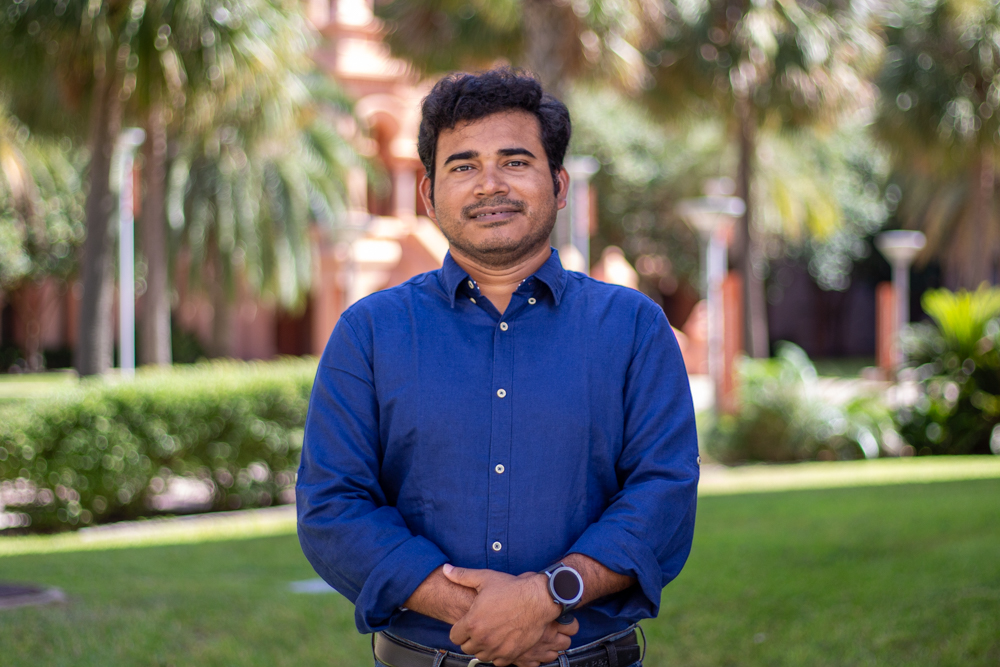
A Career Defined by Purpose
For Utpol Das, the turning point didn't happen in a sterile laboratory. It happened in the world outside, where he witnessed a devastating truth. Children were dying from preventable diarrheal diseases, even as science was making monumental leaps.
“We were investing in sophisticated innovations, yet simple, life-saving solutions were being overlooked,” he recalls. That jarring disconnect sparked a profound transformation, redirecting a promising career in molecular biology toward the front lines of public health.
Now pursuing a Master of Public Health in Epidemiology, Utpol brings a rare dual lens to his work: the analytical rigor of a molecular biologist and the hard-won wisdom of a practitioner.
His journey represents a deliberate shift from bench research to what he calls the "social lab," tackling health challenges where they matter most within vulnerable communities.
A Reckoning and a New Calling
Utpol’s path began with a fascination for revolutionary science. After earning bachelor's and master's degrees in biotechnology, he initially believed laboratory innovations held the ultimate key to human health. His perspective changed dramatically during his graduate work. “I realized there was too much separation between my work and real-world implementation,” he explains. "That realization made me question everything."
This new calling led him to pursue foundational public health training in Bangladesh at the renowned BRAC James P. Grant School of Public Health. There, he learned from a faculty of globally recognized leaders and had the rare opportunity to learn directly from the late Dr. Richard Cash, the public health giant whose co-invention of Oral Rehydration Solution (ORS) perfectly embodied the kind of simple, high-impact solutions Utpol was determined to advance.
From Field Implementation to a New Research Frontier
Before arriving in Texas, Utpol spent eight years applying his training on the ground in his home country. His diverse work included leading programs in water, sanitation, and hygiene (WASH) within the Rohingya refugee camps, as well as family planning and digital health innovation in communities across the mainland.
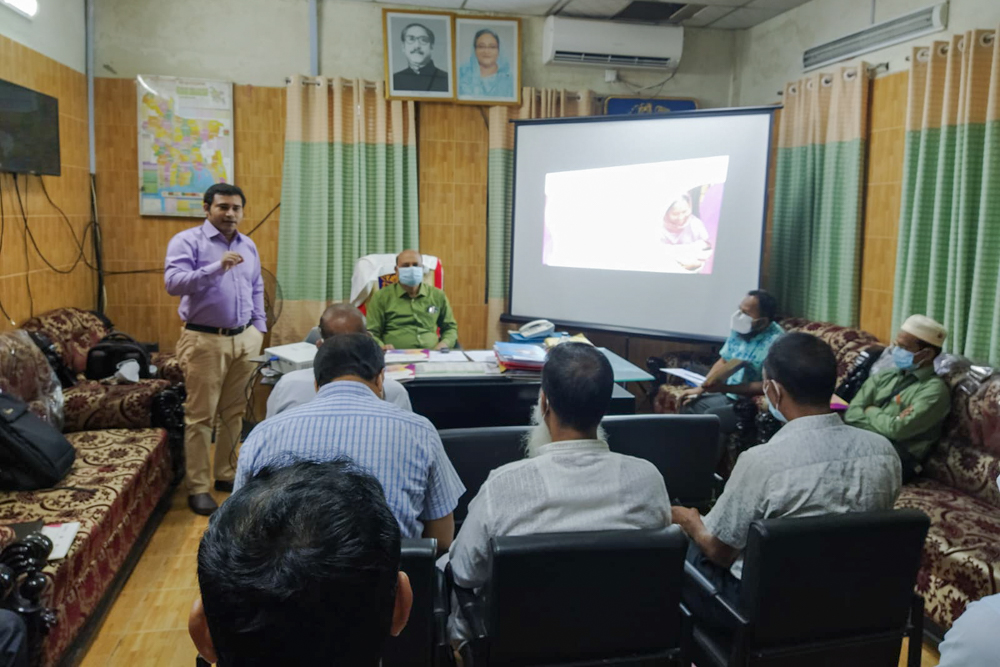
While this fieldwork was deeply rewarding, he recognized its limitations. His passion for research grew, and he knew that to transition from program implementation to leading high-impact studies, especially on complex, chronic diseases, he needed a more sophisticated analytical toolkit.
“My field experience showed me the problems and ignited a deep enthusiasm for research as the way to design solutions. I became fascinated with epidemiology and knew that to truly make an impact, and ultimately pursue a PhD, I had to master advanced biostatistical and analytical skills. That’s why UTMB, with its rigorous, research-focused training, felt like the perfect and necessary next step on my journey.”
Uncovering Insights and Thriving at UTMB
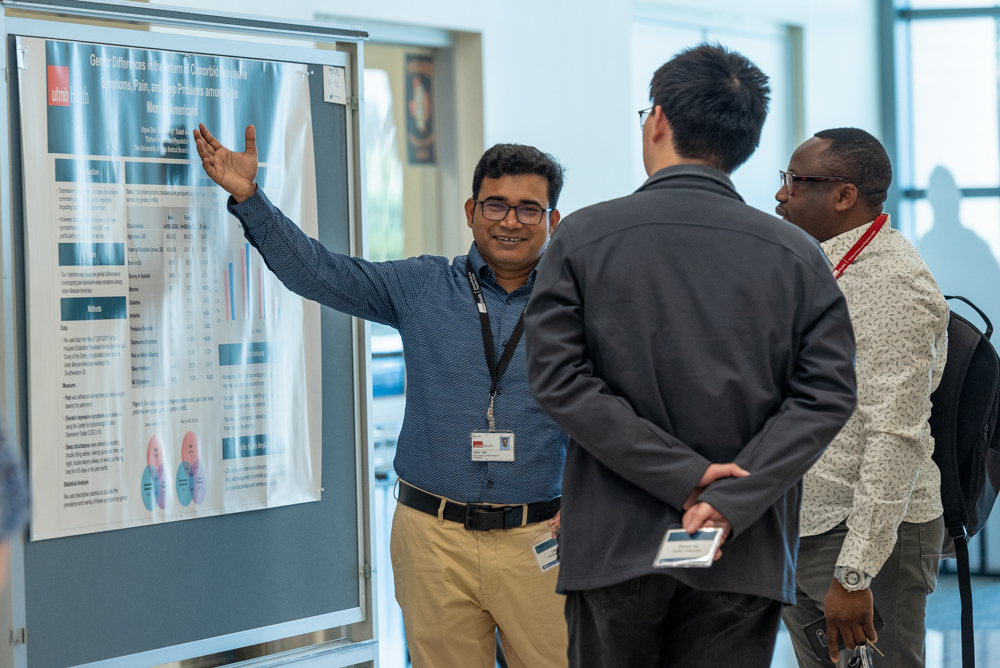
At UTMB’s School of Public and Population Health (SPPH), Utpol is building that exact skill set. Under the close mentorship of Dr. Sadaf Milani, he is conducting a novel analysis of data from the Hispanic Established Populations for the Epidemiologic Study of the Elderly (H-EPESE), a landmark longitudinal study on aging.
His research focuses on the intricate interplay of pain, depression, and insomnia. “My analysis revealed that older Mexican Americans often experience these conditions in distinct clusters,” he explains. “We found a large group suffering from pain only, a second group with pain and elevated depressive symptoms, and a third group experiencing a combination of pain, depression, and insomnia”.
“This is critical because my findings show these symptoms clusters are linked to cognitive decline,” he continues. “Individuals with pain plus co-occurring depression and/or insomnia had worse cognitive function at the start of the study compared to those with pain alone. Furthermore, among those with seven or more years of education, the cluster with pain and depression experienced a greater cognitive decline over time. This suggests that standard, single-condition treatments may not be enough. My goal is to provide the evidence needed to build more integrated care models that can promote healthy aging in one of the nation’s fastest-growing demographics”
This faculty-student collaboration has been so fruitful that it is culminating in a scholarly manuscript with Utpol as the lead author, demonstrating the high level of research responsibility entrusted to SPPH students. Beyond his own projects, Utpol credits the broader SPPH culture with preparing him for professional success. “The faculty are incredibly approachable, and events like the school's research mixers create an environment where you can truly connect and learn,” he says.
This supportive atmosphere helped him build the confidence to successfully secure a competitive position as a Research Coordinator in UTMB's Department of Internal Medicine, applying his academic skills in a professional setting.
A Future Focused on Dignity and Impact
Looking ahead, Utpol plans to earn a PhD and build a career as a faculty researcher who closes the gap between data and dignity. For his doctoral studies, he aims to master advanced epidemiological methods to address major public health challenges like chronic disease and health disparities, with a particular passion for their impact on aging populations. Ultimately, as an independent faculty member, his goal is to apply these skills to the field of implementation science, leading research on how digital health technologies can be best adapted to improve the quality of life for older adults.
“Research provides us with core skills and methodologies, but it’s only the starting point,” he explains. “The real impact happens when we translate evidence into everyday solutions, whether that’s for older adults, children, or any vulnerable group.”
To students considering a similar path, he offers this advice: "Public health isn't just about data analysis. It's about program implementation, policy, communication, and deeply understanding communities. Find the part that resonates with you. Then, use every resource the university offers to build your expertise."
For Utpol, every course, mentorship, and research project at SPPH has been a deliberate step toward his ultimate goal. It’s a philosophy forged in Bangladesh and now being sharpened in Texas, a journey that continues to define the kind of compassionate researcher, teacher, and changemaker he is determined to become.