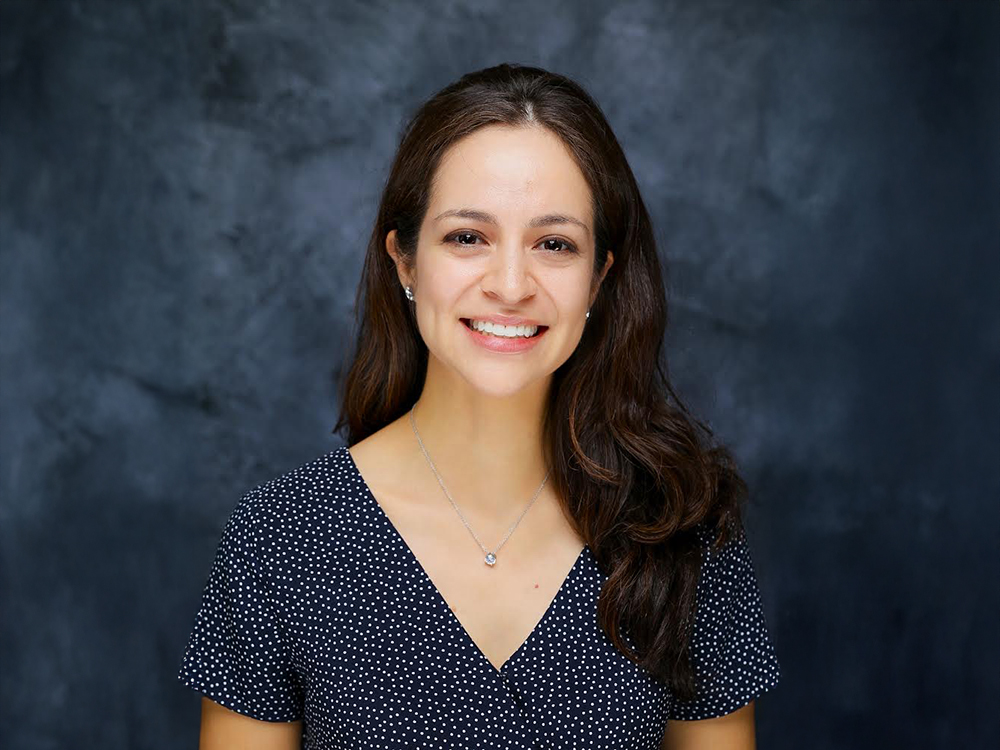
Monica Hernandez describes her path in public health as a steady move toward impact: start in the community, learn how systems and policy shape the work, then build the analytic skills to turn evidence into action. That arc took her from UT Austin to UTHealth Houston for her MPH, to Washington, DC through the UT System’s Archer Fellowship, and back to Texas for doctoral training at UTMB’s School of Public & Population Health.
Community Work to A Systems Lens
Before starting her MPH at UTHealth Houston, she worked in Colombia on an HIV research project with women living with HIV. The experience grounded her in global health and motivated her move into public health. She then joined the UT System’s Archer Fellowship in Washington, where a policy-facing practicum widened her view of how programs are funded and decisions get made. That exposure helped her secure roles with the U.S. State Department’s Office of the Global AIDS Coordinator and the Pan American Health Organization, shaping the systems lens she brought to doctoral training at UTMB.
Methods-Driven Training at SPPH
Monica chose UTMB for a PhD that would let her merge research and practice. She noted that SPPH’s population health program is methods heavy, which helped her build a marketable quantitative toolkit for today’s data-driven roles.
Her dissertation, Essays on the impact of housing insecurity and other socioeconomic factors on health-related outcomes among Medicare beneficiaries during the Great Recession, used nationally representative Health and Retirement Study data to examine how financial and housing strain related to medication adherence and mental health among older adults. Financial hardship showed a slight negative association with medication adherence overall, while mental health stress clearly rose during the period, with patterns differing by age group. The dissertation includes a paper on Black–White differences in forgone medication due to cost and a paper evaluating housing insecurity and depressive symptoms over the course of the recession, reflecting the program’s emphasis on translating methods across real-world outcomes.
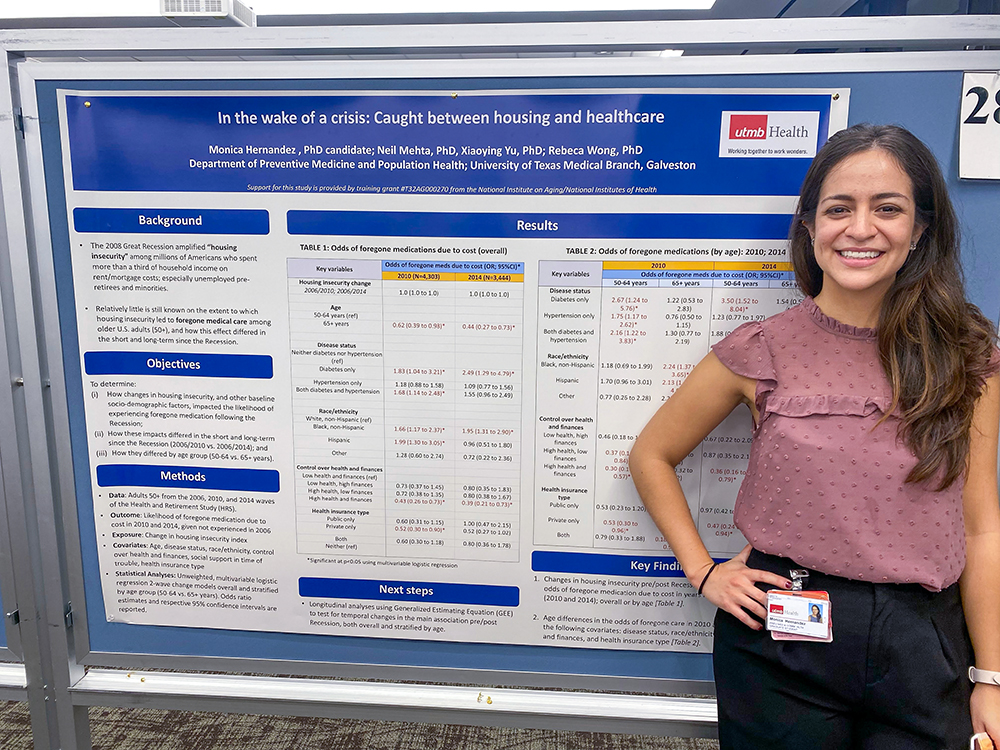
Translational Research at MD Anderson
At MD Anderson, Monica has leaned fully into applied, patient-centered research. She developed an IRB-approved initiative on patient preferences for multi-cancer early detection tests and led analyses of national survey data on lung cancer screening and shared decision-making, resulting in first-authored papers. She describes her group’s approach as blending population datasets with community-collected data to answer what people value and how to support real decisions.
Her current postdoctoral work sits in cancer prevention and decision support, an area that rewards the quantitative training she built at SPPH and her experience bridging research with implementation.
Advice For Students Eyeing Impact Outside Academia
Monica’s perspective for students who want their work to reach clinics, communities, and policy tables is to stay interdisciplinary, expect different styles of doing the work, and use that mix to learn and build together. She also speaks candidly about preparing for varied career paths, noting that employers seek PhDs with demonstrable skill sets and project examples.
What’s Next
Monica is energized by roles where she can continue translating and implementing evidence-based interventions in diverse populations. She is open to opportunities across clinical, community, and policy settings where data and collaboration drive decisions.