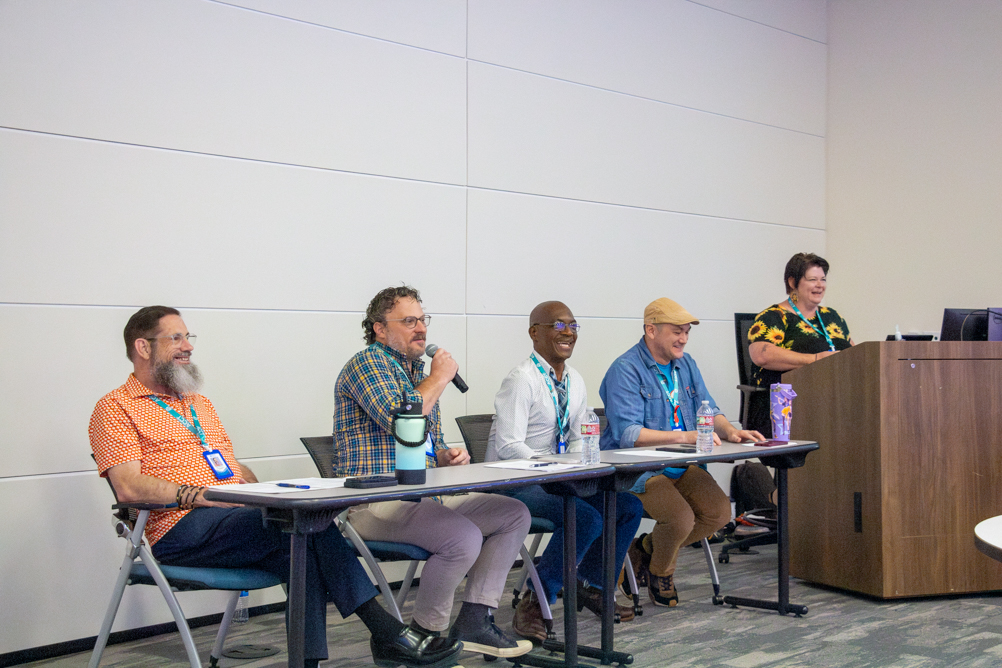
As part of National Public Health Week, the School of Public and Population Health at The University of Texas Medical Branch opened the week with its Community Voices Panel, bringing Access Care of Coastal Texas (ACCT) to campus for a conversation about living with HIV, stigma, and the systems that shape care from diagnosis onward.
The Monday panel was built around voices that rarely get enough room in public conversations about health. Moderated by Katie Markello, the discussion featured ACCT staff members Tom Griffiths, Travis Newman, Thomas Fisher, and Darron Miller. Together, they spoke from both professional experience and a combined, 101 years of living with HIV themselves. The conversation gave the audience a fuller view of support in real life, including medication and clinic visits, along with housing, transportation, food access, mental health, privacy, and the emotional weight of stigma.
A diagnosis does not happen in isolation
ACCT’s work reflects that broader picture. The Galveston nonprofit began in 1985 during the AIDS crisis and now provides comprehensive HIV services, including housing help, nutrition support, medical transportation, behavioral health services, testing, and prevention across the region. That wider frame was central to the panel. HIV came through clearly as a manageable chronic condition for many people today, but the panelists also showed how easily care can be disrupted when someone lacks stable housing, cannot get to appointments, loses insurance coverage, or is overwhelmed by paperwork and fear.
Often the hardest part was not the medication itself. It was what surrounded it. Some panelists described long periods of secrecy, fear of being seen at a clinic, strain in relationships, and years spent carrying shame that kept them from seeking help early. Others talked about how quickly a person can be pulled into a maze of appointments, eligibility steps, and agencies in the first days after a diagnosis. Even when services exist, they are not always easy to navigate when someone is frightened, isolated, or trying to hold together the rest of life.
When othering enters the room
During the Q&A, the panel made plain that stigma often works by treating HIV as something that sets a person apart from everyone else. That can happen in blunt ways, but it also happens through tone, silence, euphemisms, and assumptions about what a diagnosis says about someone’s character, sexuality, or past.
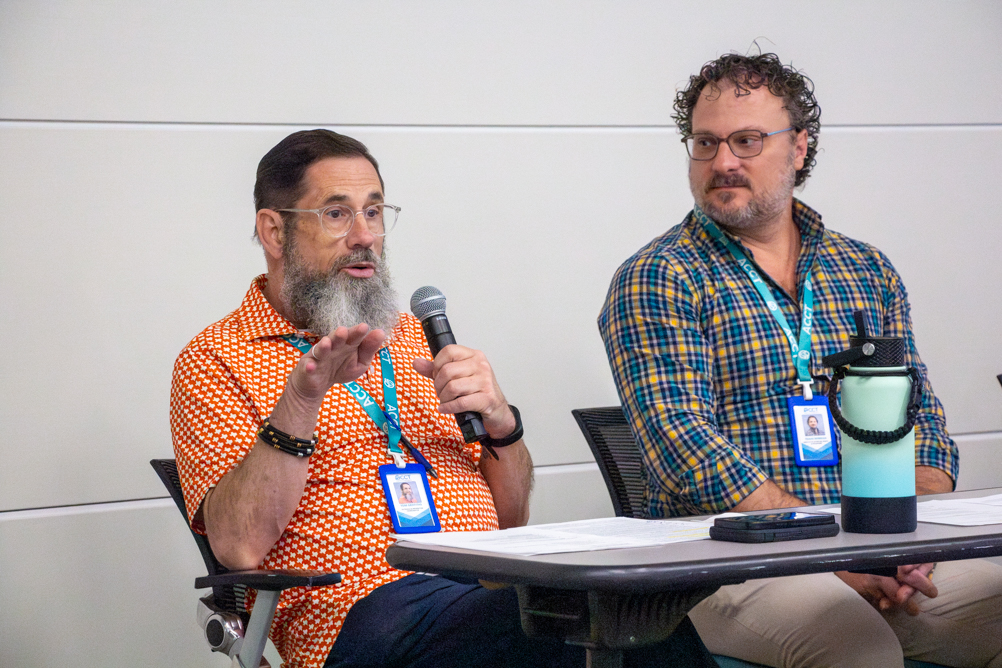
The panelists described HIV as a health condition, not a moral category. They urged the audience to notice how language can quietly reinforce distance, especially when people use outdated terms or speak as though HIV belongs to a separate kind of person. Several stories made clear that this kind of distancing does damage before a clinician ever enters the picture. It can keep people from getting tested, make them hide care from family or coworkers, and leave them feeling as though health is something they no longer deserve.
That point landed because it tied stigma to daily life instead of treating it as an abstract public health concept. The discussion moved from broad awareness to the ordinary moments where stigma takes shape and where it can be interrupted.
What healthcare professionals can do differently
The final audience exchange brought the room to a practical question about how healthcare professionals can avoid making a hard moment worse.
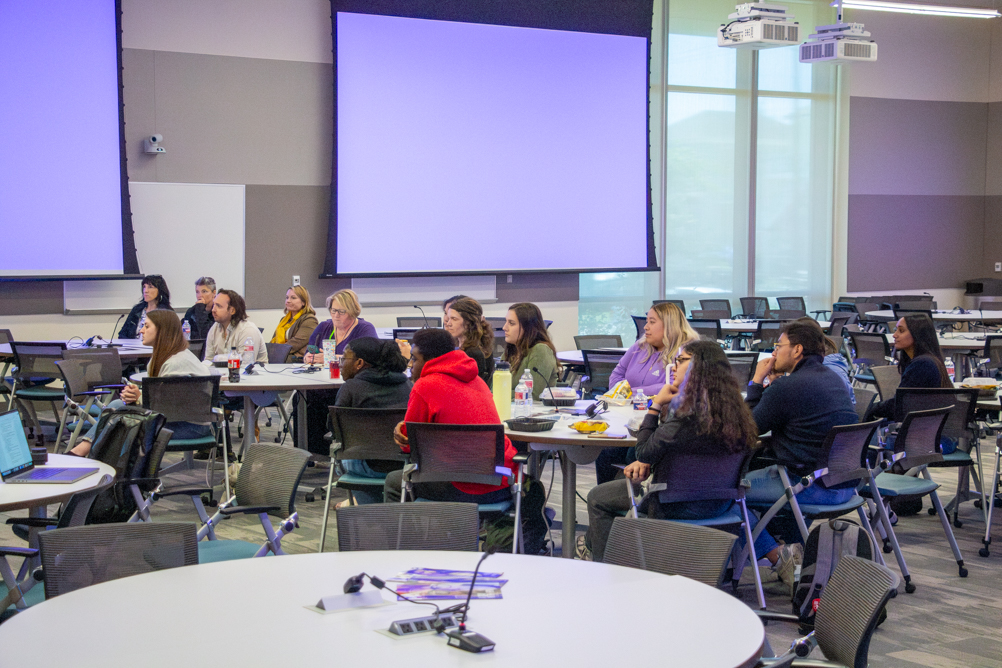
The panel’s answer was steady and specific. Learn current terminology. Do not let facial expressions or dramatic delivery tell a patient how panicked they should be. Ask clear, respectful questions about sexual health instead of avoiding the topic. Do not attach blame to the diagnosis. Give people room to react, then give them a path forward.
Just as important, the panel suggested that good care starts with helping a person regain a sense of control. That may mean explaining next steps plainly, connecting them to support services, or recognizing that mental health needs can be as urgent as the medical ones. ACCT’s model reflects that reality. Its work includes behavioral health support, transportation to appointments, pantry services, and housing assistance because staying healthy depends on far more than a prescription alone.
This year’s Community Voices Panel continues a series that, during National Public Health Week last year, brought attention to stories connected to David’s House and Galveston Housing Plus. This time, the focus turned to HIV care and the human consequences of stigma. The lesson carried beyond one condition. Public health works best when people are met clearly, calmly, and without judgment.
See the full National Public Health Week 2026 schedule for the rest of the week’s programs.