Ask the big questions shaping health, medicine, and innovation.
Every area of health and innovation raises ethical, social, and profoundly human questions. Bioethics and Health Humanities focuses on these questions.
Students ready to conduct original interdisciplinary research on the ethical, historical, and human dimensions of health and medicine. Strong applicants bring focused research interests, substantial preparation in the humanities, social sciences, or a related health field, and an interest in connecting conceptual analysis with historical, narrative, legal, or empirical inquiry.
Strong Backgrounds Include
Bioethics
Health Humanities
Philosophy
Social Sciences
History
Literature
Religious Studies
Public Health / Policy
Clinical / Professional Fields
Research Areas
Examine complex questions in health, medicine, and science using ethical analysis, humanistic inquiry, historical interpretation, and interdisciplinary research. Learn to connect conceptual, normative, historical, narrative, and empirical approaches when investigating complex questions and developing recommendations for policy or practice.
Applied Ethics
Ethical reasoning for care, research, and institutions.
Clinical ethics
Research ethics and integrity
Health policy
Biomedical research
Humanities Research
Humanistic perspectives on health, knowledge, and practice.
Historical perspectives of health
Public health studies
Science and technology studies
Literature and narrative studies
What you could do with this degree
Academic Research
Postdoctoral and faculty research in interdisciplinary fields.
Clinical Ethics
Consultation, education, and ethics committee leadership.
Research Ethics
Develop responsible research policies, protocols, and practices.
Government & Policy
Research, analysis, and guidance for public institutions.
Nonprofit & Industry
Ethics, research, policy, and program strategy roles.
Health Education
Teach clinicians, researchers, students, and professionals.
After you earn this degree, you'll be able to...
Interpret health and medicine through humanistic perspectives
Analyze ethical questions using theories, principles, and cases
Construct rigorous arguments through ethical reasoning and conceptual analysis
Integrate conceptual, narrative, historical, legal, and empirical approaches
Use qualitative, quantitative, and mixed methods in research
Apply historical context to contemporary and emerging health challenges
You Belong Here
Small cohorts. Sustained conversations.
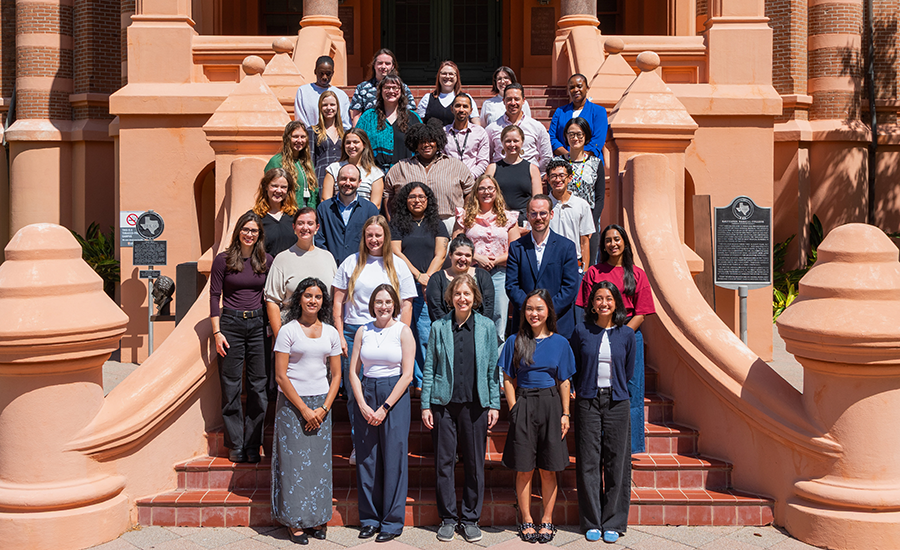
Join ethicists, social scientists, historians, literature scholars, and fellow doctoral students in a close intellectual community. Develop your work through faculty mentorship, weekly works-in-progress discussions, monthly seminars, teaching, collaboration, and engagement with the health professions.

Requirements
Bachelor’s degree with relevant preparation, or master’s or professional degree.
Grounding in humanities, social sciences, or related health fields.
Capacity for critical reading, conceptual analysis, and scholarly writing.
CV, transcripts, statement, three letters, and writing sample.
Available funding mechanisms: Competitive applicants may be offered funding, including a graduate assistantship stipend and waived tuition and fees.
Consideration for funding: Automatic with an application to the PhD program; no additional funding application is required.
Duration and work expectations: Graduate assistantships are renewed annually, for up to 4 years. Work expectation is 20 hours per week.
Testimonials
Peyton Swanson
"I chose UTMB’s Bioethics and Health Humanities PhD program for its rich history, proximity to cutting-edge biomedical research, and faculty with diverse expertise. My mentors have been deeply invested in my development as a scholar by encouraging fellowship opportunities and training me in Bioethics, Science and Technology Studies, and Humanities Scholarship. They also continue to support and encourage my dissertation research."
Hannah Parker, PhD
"Throughout my training, I benefited from the guidance, encouragement, and advocacy of multiple faculty members, including during my transition to the academic job market. UTMB’s Bioethics and Health Humanities PhD Program is truly a unique and transformative experience that has prepared me exceptionally well for the next stage of my career as a Clinical Ethics Fellow and for continued scholarly and professional growth."
No. Applicants do not need to select a faculty advisor before applying. Students explore their research interests and identify potential supervisors as they progress through the program. We recommend you review the faculty and their research interests.
Describe your academic and professional preparation, research interests in bioethics and health humanities, reasons for choosing UTMB, career plans, and any relevant strengths or gaps in your background.
Competitive applicants may be offered funding, including a graduate assistantship stipend and waived tuition and fees. Applicants to the PhD are automatically considered for funding; no additional funding application is required.