PhD in Rehabilitation & Health Services Research

Improve rehabilitation and health care through research.

The PhD provides multidisciplinary training in rehabilitation science, health services research, population health, and clinical and translational research. Students work with nationally and internationally recognized faculty to study health care quality, outcomes, access, and delivery and translate evidence into practice.

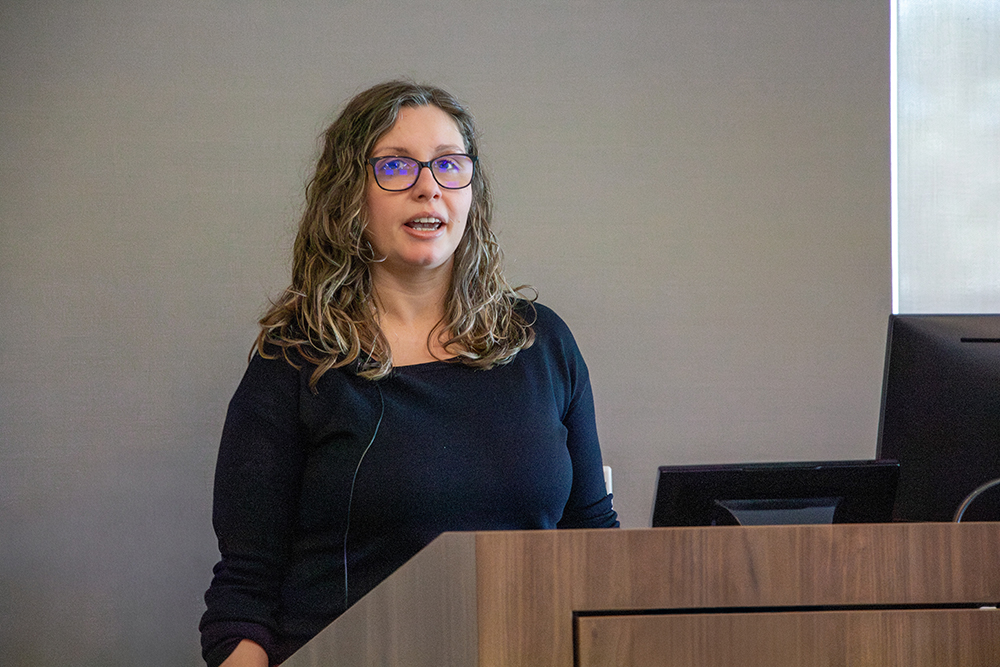
A former PhD student presents at a seminar

55 credits

~4 years; ~$10K/year; in person; Galveston, TX

At a Glance

Who this degree is for

This degree is for students who want a research career and are interested in understanding health care: how the health system works, why different populations receive different care, and how research can improve quality, outcomes, access, and delivery. 

A research career can take place in a university, health system, rehabilitation institute, government organization, nonprofit, or industry setting. The program is not limited to students seeking a traditional faculty career.

See SPPH Research 
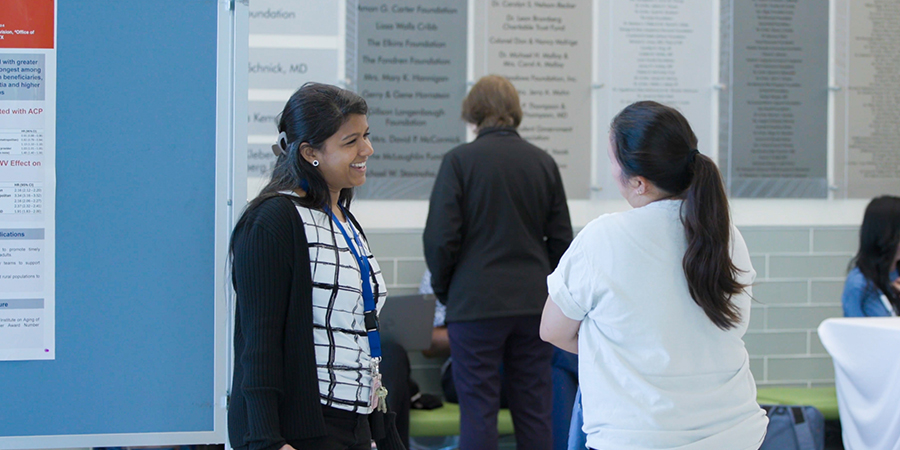
Two researchers discuss a scientific poster during a UTMB research event.

Research and Training

Students receive advanced multidisciplinary training in rehabilitation science, health services research, population health, and clinical and translational research.

What you could do with this degree

After you earn this degree, you'll be able to...
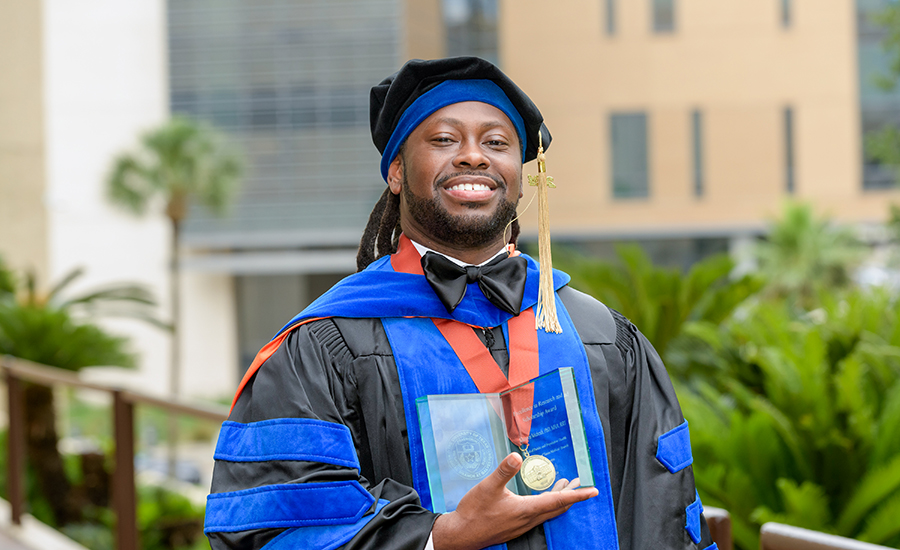
A Rehabilitation and Health Services Research PhD graduate poses in doctoral regalia while holding an award.

You Belong Here

Rehabilitation and health services research is collaborative.

  • Learn in a typical incoming cohort of one to three students while connecting with students across SPPH programs.
  • Build a strong working relationship with a mentor whose expertise and availability align with your research direction.
  • Collaborate with clinical, population health, rehabilitation, and research teams across an academic health system.
  • Develop as a researcher through grant writing, publications, presentations, and original dissertation work.
Requirements

  • An undergraduate degree or equivalent; a master's degree is not required.
  • Well-defined career goals that require doctoral research training.
  • Research interests that align with faculty expertise and current mentor availability.
  • Familiarity with multiple potential faculty mentors and their research.
  • Knowledge of current public, population health, rehabilitation, or health services challenges.

PhD Application Requirements 

Funding

Funding may be provided through research assistantships, teaching assistantships, or traineeships and may include:

  • A stipend
  • Tuition and fees
  • Health insurance

Funding is not guaranteed for every applicant. Prospective students should discuss current funding availability and the terms of any offer with the program before enrolling.

Testimonials

Common questions

  • Is this program funded?

    Funding is available to qualified full-time students, pending available funds. A package may include a stipend, tuition and fees, and health insurance through a research assistantship, teaching assistantship, or traineeship. Funding is not guaranteed for every applicant. Funding is reviewed on an annual basis and is conditional on the student being in good academic and professional standing.

  • Do I need a master's degree to apply?

    No. A master's degree is not required. Applicants should hold an undergraduate degree or equivalent.

  • Is research experience required?

    No. Research experience is not required but it can strengthen an application.

  • Do I need to secure a faculty mentor before I apply?

    No formal mentor agreement is required before you apply. Review the faculty and identify several people whose research or professional background aligns with your interests. During application review and interviews, the program considers research fit, faculty availability, and possible mentor matches. A strong, available match is an important part of the admission decision and the student's success.

  • How do I know which faculty members are accepting students?

    The program does not currently publish a formal 'accepting students' designation. Faculty availability can change. Identify several faculty members of interest in your application and discuss current availability during the interview process.

  • Are there opportunities to collaborate across UTMB departments?

    Yes. Students are encouraged to work with faculty from different UTMB departments. UTMB's academic health system and multidisciplinary research environment create opportunities to work with clinical and research teams across departments. Specific collaborations depend on your mentor, research interests, and project needs.

  • Can international students apply?

    Yes. International applicants are welcome and must complete the current course-by-course academic-record evaluation and English-language proficiency requirements. Review the international applicant instructions before applying.

    View International Applicant Information

  • How long does the program take?

    The program is designed to be completed in four years with full-time study. Students generally complete about two years of coursework followed by qualifying examinations and independent dissertation research.

  • What kinds of data can students work with?

    Projects may use Medicare and other insurance claims, electronic health records, clinical data, or studies that implement and evaluate changes in hospital or clinic practice. Research can address health care quality and outcomes, rehabilitation, disability, aging, frailty, traumatic brain injury, post-acute care, and health services delivery. The exact data and methods depend on the mentor and project.

  • Is this a teaching-focused PhD?

    The program is primarily designed to prepare independent researchers. Some graduates may teach as part of an academic career, but the curriculum and mentorship emphasize research methods, scientific communication, and original investigation rather than formal teacher preparation.

  • Can I pursue this degree while working full time?

    The PhD is an in-person program designed for full-time doctoral study. The published time-to-degree and funding information apply to full-time students. If you plan to maintain full-time employment, contact the program director before applying to discuss whether your circumstances can be accommodated.

Ready to Improve Rehabilitation and Health Care Through Research?

Request information to discuss your research interests, faculty alignment, funding, and the application process with the program team.