Tissue Culture Core Facility
Director: Jiaren Sun, MD, PhD
Manager: Yixiao Sun
Technician: Alexi Garza
T.G. Blocker Medical Research Building (MRB) 4.128Department of Microbiology & Immunology
224 11th Street
Galveston, TX 77555-1019
Phone: (409) 772-4903
Monday - Friday, 8:30am - 5pm
The investigators served by the TCCF are affiliated with clinical and basic science departments have research programs that include patho- and immune-biology of BSL-2, -3 and -4 level infectious agents (viruses, bacteria, parasites), as well as research on a wide range of human diseases linked to chronic inflammatory processes, drug abuse, behavioral disorders, and aging and age-associated diseases.
Mission
 The Tissue Culture Core Facility provides a variety of services and technical support to enhance the ability of UTMB investigators to conduct high-quality collaborative research that is dependent on a variety of cell culture systems and cell biology methods to address biomedical questions at the cellular and molecular levels with an emphasis on human systems. This mission is accomplished by providing appropriate technical and intellectual assistance to UTMB investigators in a functional, cost-efficient, and multi-user environment that will enhance productivity in both their individual and collaborative research programs. Another important aspect of the core’s mission is training investigators (students, new investigators).
Services
TCCF Services
-
Quality Control of Cell Culture with Mycoplasma Testing
Quality Control of Cell Culture with Mycoplasma Testing
- Mycoplasma Testing
- Staff available on site for training and discussion (cell immortalization, development of primary cell cultures, etc.)
- Cell Line Authentication via the UTMB Molecular Genomic Core
Studies have repeatedly shown that the incidence of mycoplasma contamination ranges from 25% to 87% of cell cultures (G.J. McGarrity and H. Kotani. In: The Mycoplasmas, Vol. IV. S. Razin and M.F. Barile (eds) Academic Press. pp. 353-390, 1985). Mycoplasma can be introduced into cell cultures by laboratory personnel and into newly introduced contaminated cell lines as well by reagents. Their small size (approximately 0.2 µm) allows them to pass through most 0.22-µm sterilization filters, and they are resistant to common antibiotics such as penicillin and streptomycin (C. Lincoln and M. Gabridge. Methods Cell Biol. 57:49-65, 1998).
The TCCF is recognized as being vigilant in monitoring cell culture quality, giving advice to investigators on handling and, importantly, preventing mycoplasma contamination. Investigators are encouraged to use antibiotic-free media to prevent the development of antibiotic-resistant bacterial and mycoplasma strains and to avoid the effects of antibiotics on cellular metabolism.
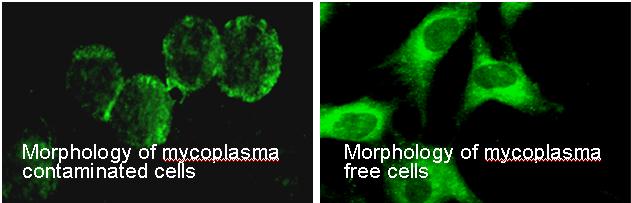
Contamination by mycoplasma species can easily lead to unreliable and unreproducible results and experiments (J Tang, et al. Microbiology Methods. 39: 121-126, 2000).
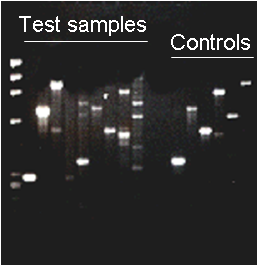 Several methods have been developed to detect mycoplasma contamination.
The TCCF uses nested PCR and fluorescent microscopy simultaneously to ensure the best and most accurate results. The primer set used allows detection of various mycoplasma species (M. fermentans, M. hyorhinis, M. arginini, M. orale, M. salivarium, M. hominis, M. pulmonis, M. arthritidis, M. bovis, M. pneumoniae, M. pirum and M. caprocolum), as well as Acholeplasma and Spiroplasma species, with high sensitivity and specificity (an example is shown in this figure). TCCF also offers mycoplasma testing of culture media and serum and media supplements.
Questions? Please contact Steve Boldogh, Director, at (409) 772-9414 or Yixiao Sun at (409) 772-4903. -
Repository and Cryogenic Preservation of Cells
Cryopreservation enables investigators to store cell cultures and to prevent the need to have all cell lines in culture at all times. Storing cells is invaluable when working with primary cells due to their limited life span. MOREOVER, CRYOPRESERVATION DECREASES RISK OF:
- microbial contamination (bacteria, yeast, fungi, viruses)
- mycoplasma contamination
- cross contamination with other cell lines
- genetic drift due to genomic instability resulting in physiological and morphological consequences)
IMPORTANTLY, cryopreservation allows investigators to conduct collaborative studies by using cells at a consistent passage number Centralized cell storage decreases costs (consumables and staff time)
To ensure successful cryopreservation and resuscitation of a wide variety of primary and established cell lines, essential steps should be followed. The precise requirement may vary among cell lines and as a general rule, cells must be cooled at a rate of –1°C to –3°C per minute and thawed quickly by incubation at 37°C (for 3-5 minutes). General considerations:
- Cell cultures must have a viability of >95%
- There should be no signs of contamination by microbes (mycoplasma and other infectious agents (see mycoplasma detection service).
- Cell population should be in the log phase of growth; this can be achieved by using pre-confluent cultures (consult TCCF director).
- Use a cryoprotectant such as dimethyl sulphoxide (DMSO) or glycerol and/or a high concentration of serum/protein (>20%) or combination thereof to protect the cells from rupture by the formation of ice crystals. The most commonly used cryoprotectant is DMSO at a final concentration of 5 to 10%, it cannot always be used due its toxicity or its impact on cell differentiation.
- The TCCF distributes ready-made cell freezing media for cryopreservation (DMSO, glycerol and serum-free formulations)
NOTE: The use of DMSO may not be appropriate for all cell lines (e.g. where DMSO is used to induce differentiation). In such cases an alternative such as glycerol should be used.
Following controlled-rate freezing (see above) in the presence of cryoprotectants, cell lines can be cryopreserved in a suspended state for indefinite periods provided a temperature of less than -165°C is maintained. TCCF uses ultra-low temperatures, attained by use of specialized containers (usually by immersion in liquid or vapor-phase nitrogen). The advantages and disadvantages can be discussed with the TCCF director.
Our liquid nitrogen storage vessels are equipped with alarms system. TCCF personnel ensure liquid nitrogen delivery in a timely fashion. It is highly recommended that valuable cell stocks should be backed up by storage at a second site.
Inventory Control
The TCCF storage vessels should include a racking/ inventory system designed to organize the contents for ease of location and retrieval. This should be supported by accurate record keeping and inventory control incorporating the following:
- Ampules are individually labeled, using low temperature-resistant labels.
- The location of each ampule is recorded in an electronic database, and on a spreadsheet (back-up). A paper record is also maintained.
- There is a system to ensure that no ampule can be deposited or withdrawn without updating the records.
-
Cell Separation by Use of Magnetic Cell Sorter
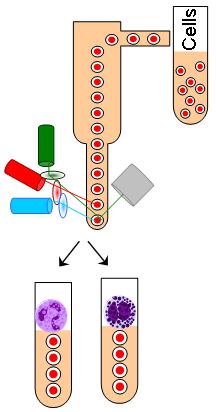 The TCCF provides a cell separation service by means of a Miltenyi Biotec autoMACS magnetic cell sorter. Magnetic Cell Separation is an extremely efficient separation technology for many cell types. For sorting by autoMACS technology, cells of interest are labeled with super-paramagnetic MACS MicroBeads.
The magnetically labeled cells are retained on the column and separated from the unlabeled cells, which pass through. Target cells are eluted. Both fractions, target and non-target cells, are recovered (at 97% viability).
Researchers may schedule an appointment to use the autoMACS by contacting the TCCF staff at (409) 772-4903. Please give at least one day of advance notice. A $40.00 per day charge will be applied on the day of service, which allows researchers as many applications as needed per day.
- Distribution of Cellular & Molecular Biology Reagents & Kits
-
Assessment of Cellular Genomic Integrity
COMET Assay
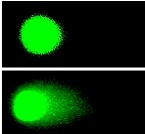 The Tissue Culture Core Facility now offers Comet Assays for measuring DNA strand breaks in individual cells. Using state of the art software and equipment, all recommended measurements are computer. Statistical analysis and charting may be obtained via hard copy and/or sent as email directly to the researcher. To begin the process, download and fill out the Comet Assay Form. Standard rates are $20.00 per half hour for this service.
Researchers requiring independent research time should contact Dr. Istvan Boldogh via TCCF for approval and training. A usage fee will be charged to all eligible applicants.