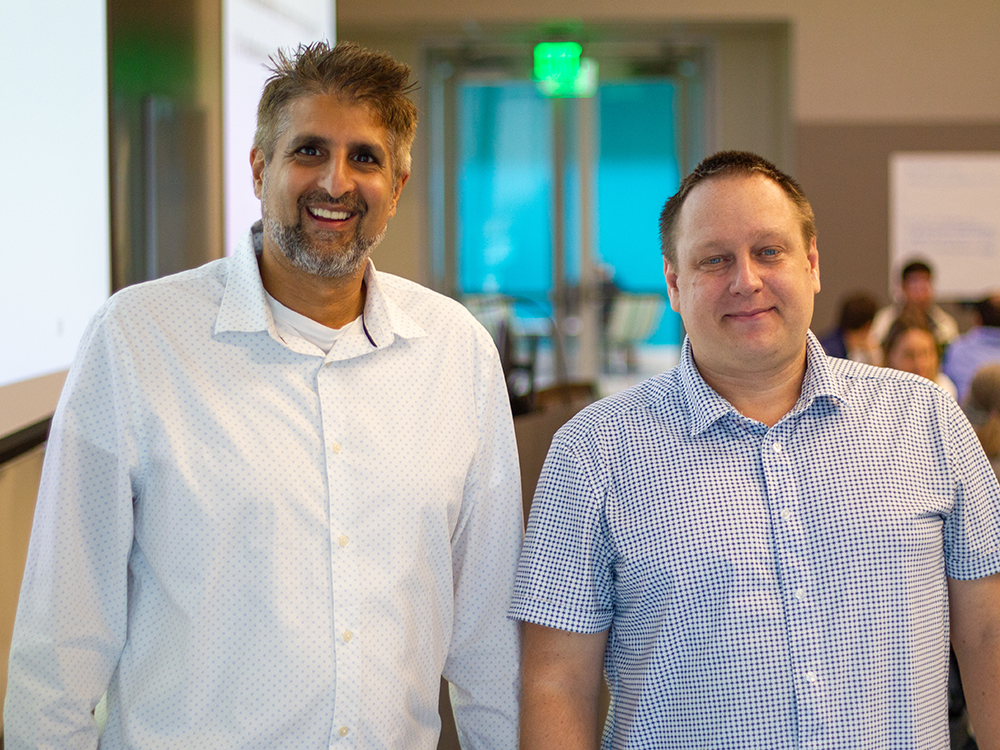
Faculty from across UTMB gather to shape the future of outcomes research through collaborative planning and partnership building.
The Center for Health and Clinical Outcomes Research (H-COR) convened its first strategic planning retreat on August 20, bringing together over 30 faculty members, administrators, and clinician-scientists from across UTMB to define priorities and forge collaborations for the newly launched center.
The half-day working session focused on three critical areas: scientific priorities, education and training, and collaborations and infrastructure. The retreat drew participants from all five UTMB schools and multiple departments, reflecting the center's university-wide mission.
Building on UTMB Strengths
Throughout the morning's breakout sessions, participants identified several areas where UTMB has unique advantages in outcomes research. These include the institution's large and diverse patient population, strong clinical trial infrastructure through the recently renewed Clinical and Translational Science Award (CTSA), and distinctive programs such as correctional health and aerospace medicine.
"We have all the pieces to make this work," said Dr. Neil Mehta, H-COR Director. "We have a very large health system embedded in an academic health sciences center, strong schools across the health professions, and exceptional data infrastructure. Our vision is to bring all of this expertise together."
Faculty groups emphasized leveraging UTMB's existing strengths in aging research, cardiovascular and metabolic health, and population-based studies. Several participants noted the opportunity to differentiate H-COR by focusing on translating research findings back into clinical practice and policy.
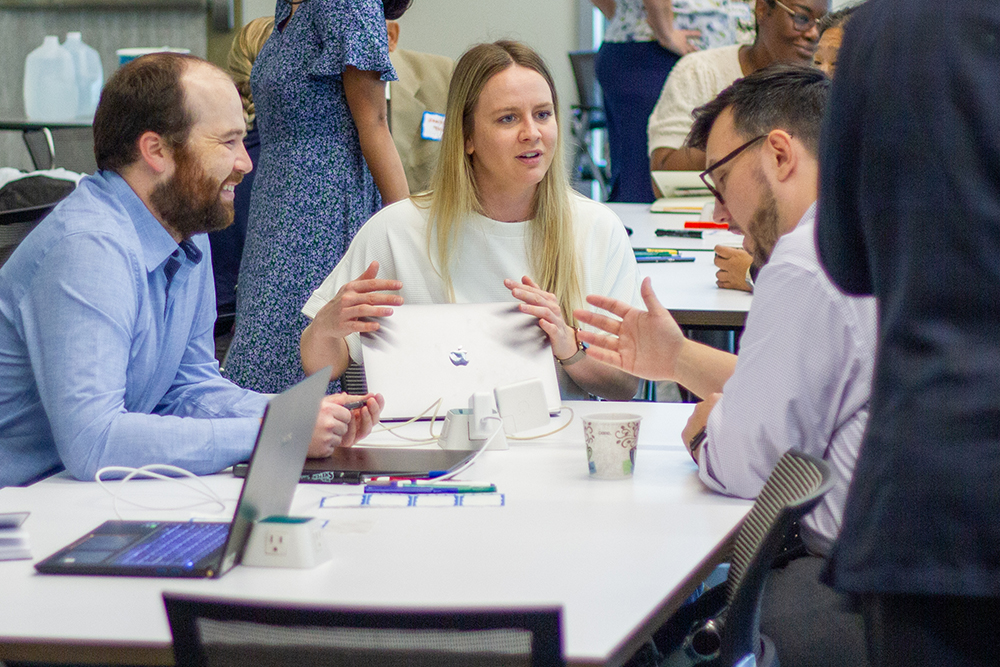
Training the Next Generation
Dr. George Golovko led discussions on educational priorities. Participants identified critical training needs across multiple career stages, with particular emphasis on supporting postdoctoral fellows and early-career faculty.
"We have world-class scientists and clinicians who are extremely skilled in their areas," Dr. Golovko said. "The challenge is bringing together computational expertise with clinical knowledge to prepare researchers who can navigate the full spectrum of outcomes research."
Key training priorities that emerged:
- Developing targeted workshops on data analytics and machine learning applications
- Creating mentorship programs for early-career investigators pursuing K awards
- Building capacity in implementation science and health policy research
- Establishing micro-credentialing opportunities for clinicians and residents
Looking Ahead
As the retreat concluded, Dr. Mehta outlined next steps for the center, including forming working groups around external partnerships, emerging research domains, and education initiatives.
The center plans to launch its pilot funding program this fall, with priority given to projects that bridge clinical and research enterprises. Monthly works-in-progress seminars will resume in September, providing a forum for researchers to refine their projects and build interdisciplinary teams.
Faculty interested in participating in H-COR working groups or learning about collaboration opportunities are encouraged to contact the center directly.
About H-COR
The Center for Health and Clinical Outcomes Research was launched in May 2025 as a university-level initiative to advance outcomes research by leveraging UTMB's data infrastructure and multidisciplinary expertise. H-COR will partner with faculty on research projects, host seminars, and support training for the next generation of outcomes researchers.