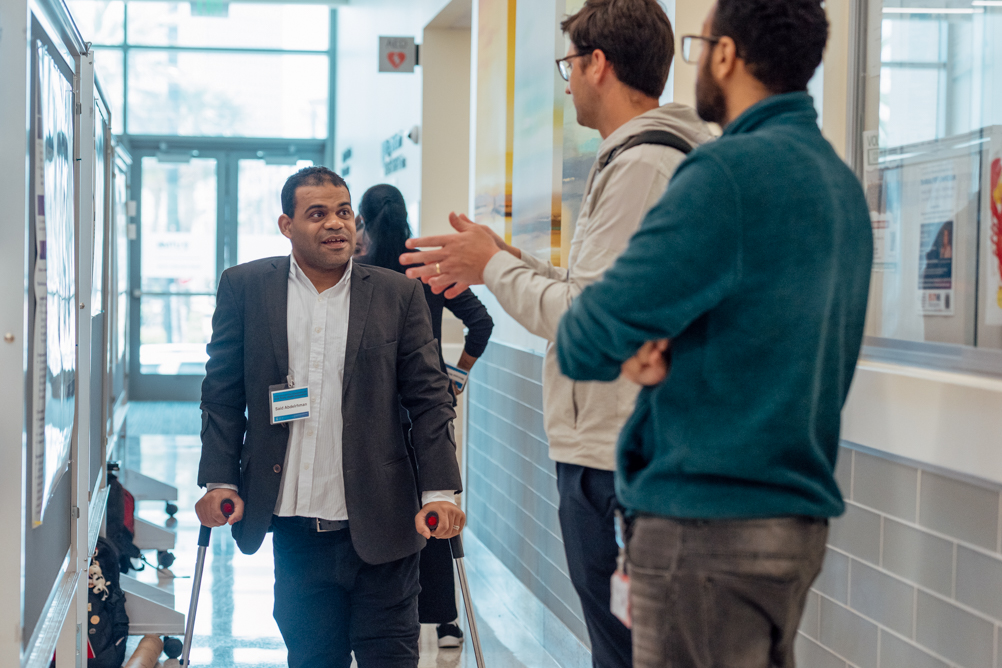
The poster session at UTMB's 2026 Public Health Symposium filled the first floor of the Health Education Center on April 8 with student researchers from across all five UTMB schools.
The symposium, held during National Public Health Week, drew presenters from the School of Public and Population Health, the Graduate School of Biomedical Sciences, the School of Health Professions, the School of Nursing, and the John Sealy School of Medicine. For some graduate students, the poster session was their first time presenting original research and fielding questions from faculty and peers in a formal setting.
Leslie Stalnaker, who has organized National Public Health Week and the symposium for nine years, said the quality of work stood out. Students spoke about their research with passion, confidence, and clarity, and it was evident that faculty mentors had invested real time in preparing them. This year, attendees got to spend more time at each poster, and the conversations were more substantive.
"Every year, the poster session re-energizes me. The general enthusiasm that comes across as our presenters share their work is a good reminder of why I do what I do."
Leslie Stalnaker, MPH - Director of Public Health Practice, School of Public and Population Health
Sleep, Cardiovascular Disease, and Late-Life Disability
Said Abdelrhman, a PhD student in Population Health Sciences, presented baseline findings from a study examining whether sleep disturbances act as a modifiable risk factor between cardiovascular disease and late-life disability. His analysis drew on the 2006 wave of the U.S. Health and Retirement Study and included 17,299 participants aged 50 and older.
The results showed a clear pattern. Participants who reported trouble falling asleep or waking during the night also tended to report that they rarely or never felt rested in the morning. Poor sleep was significantly associated with higher odds of disability in activities of daily living, and that association held after adjusting for cardiovascular disease and other covariates. In the fully adjusted model, poor sleep remained strongly linked to disability independent of CVD status.
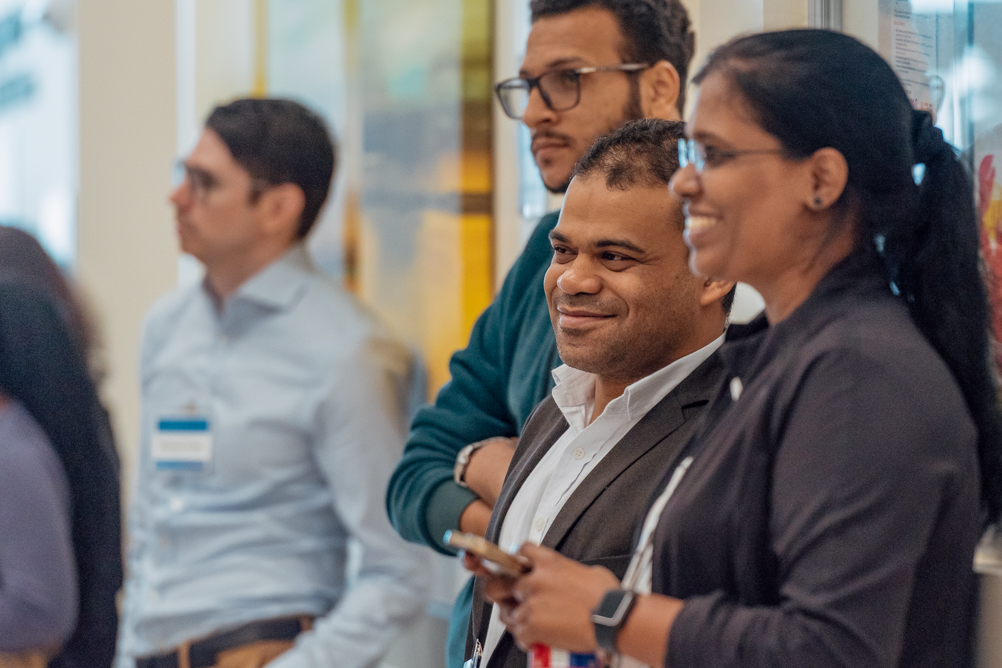
Said described this study as a building block for his dissertation, which will take a life-course approach, following participants from childhood health conditions through to late-life disability using the same HRS dataset across waves from 2006 through 2022. Faculty reviewers Dr. Monique Pappadis and Dr. Brian Downer offered guidance on strengthening the analysis. Dr. Pappadis suggested adding income and neighborhood-level variables to better account for the relationship between race, education, and sleep outcomes. Dr. Downer recommended a deeper description of the sleep variables themselves and the relationships among them.
Said said his research skills had improved substantially over the past year under the mentorship of Dr. Downer and Dr. Neil Mehta. Building his own R code and running his own statistical analysis marked a significant step forward from where he was twelve months earlier. He sees the mentoring relationship as essential to doctoral work. His advisors provide technical guidance on unfamiliar methods while pushing him to do the work himself, a combination he described as the most important thing about the mentor's role.
Oral Health Gaps in Texas Medicaid Coverage
Sinaan Momin, a second-year MPH student concentrating in public health practice, presented a literature review on oral health disparities among low-income adults in Texas. His poster mapped the structural and policy barriers that keep adults on Medicaid from accessing preventive dental care, a cycle that leads to delayed treatment, worsening conditions, and costly emergency department visits.
The numbers frame the scope of the problem. An estimated 68.5 million U.S. adults lack dental insurance, and more than two million emergency department visits each year are for dental conditions. In Texas, adult Medicaid dental coverage is limited to emergency-only services, which means the system addresses pain after it becomes severe rather than preventing it. Low reimbursement rates compound the issue. Many dental providers opt not to treat Medicaid patients because the reimbursement does not cover the cost of services.
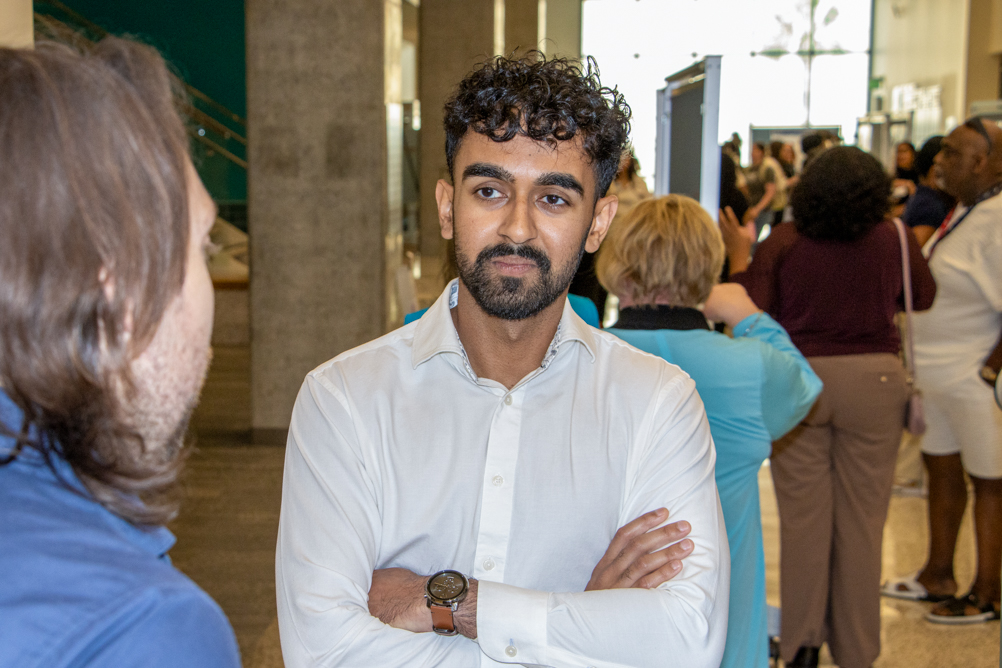
Sinaan's recommendations included expanding adult Medicaid dental benefits, increasing provider reimbursement to improve participation, integrating oral health into primary care, and supporting community-based dental programs in underserved areas. He also emphasized the role of patient education, noting that many adults on Medicaid do not realize their coverage includes preventive visits like cleanings twice a year.
His interest in the topic is personal. Sinaan grew up spending a lot of time at the dentist and eventually became drawn to the field through that experience. He is applying to dental school this cycle, with the long-term goal of opening a practice that serves underserved communities alongside paying patients. His MPH, he said, opened his eyes to the policy and population-level dimensions of oral health that a clinical education alone would not have covered. The cohort's small size meant close relationships with faculty and classmates, and his Applied Practice Experience gave him hands-on work with a community partner rather than a simulated project.
From Posters to Keynote
After the poster session wrapped up, attendees gathered for Dr. Umair Shah's keynote, Navigating Health in a Divided Nation: Trust, Transformation, and Technology, which addressed why science alone has not been enough to sustain public trust and how public health professionals can bridge the gap through better storytelling, cross-sector partnerships, and a willingness to meet communities where they are.
The symposium was part of a full week of programming during National Public Health Week 2026 at UTMB, which also included a community voices panel on HIV/AIDS care access, a career connections mixer with more than 20 participating organizations, a biocontainment preparedness panel, and a beach clean-up service day.